
I love being black. I love every single thing about my culture; you can see it proudly displayed on all of my social media accounts. I live and breathe Black Excellence, Black Girl Magic, and Black Lives Matter. However, I didn’t always feel this way. As a child and throughout my teenage years, I struggled greatly with owning and accepting my blackness. I grew up in a relatively quiet, predominantly black, working-class community in Mobile, Ala. As a child, I was blinded by certain stereotypes of what it meant to be black in America. My mother and father grew up in the 1960s, during the Civil Rights Movement and told me stories about the severe mistreatment of blacks in that era. Perhaps the most moving story was when my mother was 8 years old and was denied service at an ice cream counter. To this day, that story resonates within me; how could someone be so hateful to my dear, sweet mother? As a child, I thought we had grown past times like these. Little did I know, I would experience my own forms of racism in my lifetime. Those experiences would shape my perspective about my own race and my thoughts on racism.
I have experienced both institutionalized racism, as well as internalized racism in my 25 years of life. Perhaps the earliest form of racism was one I would never understand until I was older. My parents were hard-working, educated people who instilled in my siblings and me the value of education. I remember sitting through many speeches about how it was a privilege for me to go to school; my mother’s father stopped his education in the 8th grade, while my great grandmother only had a 3rd grade education. I felt an obligation early in life to be educated and successful, seeing as many people had bled, fought and died for me to have this right. Because my parents believed in education, they sent me to one of the best schools in Mobile. It was a rite of passage to attend this certain elementary school, especially because all of my siblings and cousins attended this school growing up. I loved the school due to its rich diversity and the warmness that could be found in the classrooms. Unfortunately, I only attended there for kindergarten and first grade; I later learned the principle of the school sent out a letter to all transfer students stating that the bus program, which brought many Blacks into the school, would no longer be available. Ironically, two new schools were built in all-black neighborhoods the following school year.
Attending a new, all-black school where the staff was less friendly and the students came from low income families made it hard for me to adjust. I was often made fun of because I “talked white” and listened to “white people music.” I felt so different when I learned a lot of the kids at my school had single parents in their 20s, while my parents were married and in their 40s. A lot of kids said I thought I was “better than them” because of the way I carried myself. I felt so bad I didn’t fit in with the other kids that I started to identify as “black on the outside, but white on the inside.” As a result of the criticisms I faced growing up, I began to think negatively of my community; certain things I now see as beautiful and wonderful and unique were then “ugly” and “ghetto.” There were times when I would wish I weren’t black, but maybe Latino, instead. I grew up with Hispanic relatives and loved the culture ("Selena" was my all-time favorite movie as a kid), so I thought it wouldn’t be so bad. It wasn’t until I became a young adult that I started to see things differently.
College
When I was 18, I had my mind set on attending some type of HBCU (Historically Black College or University). I felt that by attending an HBCU, it would somehow make me “black enough.” My top choices were: Howard, Alabama A&M, Alabama State, Clark Atlanta, Spelman, Jackson State, and Southern University. However, God had other plans for me. I didn’t officially start college until the fall of 2011. Where I ended up was the farthest thing from an HBCU. For the last three years, I’ve been attending a Predominantly White Christian College. Let me be the first to tell you, it has been quite an experience for several reasons. Perhaps the biggest challenge for me is my age, being in college at 25 sucks. I’m a planner and my life hasn’t gone according to plan. I’ve been struggling with the fact that I don’t have it together, but I’m learning that it’s OK. The second biggest factor for me is that I’m a black, liberal, intersectional feminist, semi-socialist female, attending a predominantly white, conservative, Christian university. It’s not that I have anything against my school; it’s just not what I envisioned for myself when I thought about college.
When I first arrived at my school, it was great. I was happy to finally be attending an actual four-year college after being at a community college for so long. The class sizes were small and pretty much all of my teachers knew me by name. I absolutely loved the academic presence. The school may be a Christian school, but they push you to think beyond what you know. It was hella expensive, but I enjoyed being there. The fact my school was predominantly white didn’t bother me…much. I didn’t realize there was a problem with racism and diversity until one of my white teachers pointed it out to me. I began to pay attention to the fact that none of my teachers really talked about or discussed race or racism in much detail. I also noticed there weren’t many minority faculty members (currently, we have two: A Hispanic male and an Asian female). Perhaps the biggest shocker for me was the only place I saw people who looked like me were in lower positions of authority, such as janitorial workers and kitchen staff.
No one seemed to notice how foreign this was but me, and it saddened me. I had just begun to realize the importance and beauty of my culture and I wanted to share that; I wanted to celebrate it. Unfortunately, my school didn’t offer any way for me to do that. I became discouraged when I listened to my other friends talk about their experiences and how they felt that black culture was deeply celebrated at the HBCUs they attended. I yearned to celebrate Black Excellence and I felt like I couldn’t do it at University of Mobile. So, with a heavy heart, I decided transferring would be the best decision for me.
Before I did it, however, I had a conversation with my advisor. She told me that while she understood my reasons for wanting to leave, she encouraged me not to. "We need more voices like yours on campus, Dee" she said. Soon, I had several other professors begging me not to leave. At first, I felt like they didn't want me to leave because they needed a black girl, but I soon realized they didn't want me to leave because I was black girl, they wanted to hear my perspective. They wanted to hear my voice; soon, I would learn my voice would become extremely necessary to help usher in a long overdue conversation about race and culture.
The Incident
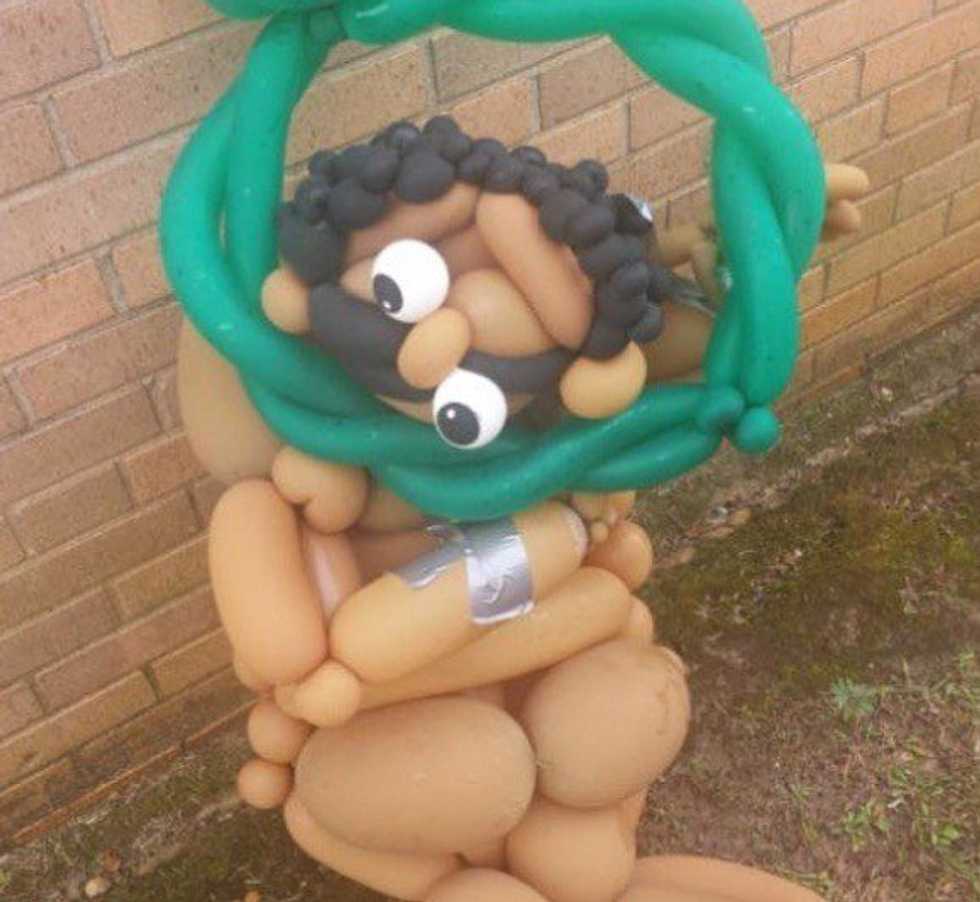
On Feb. 1 of this year, as I was sitting in my Intro to Family Therapy class, a classmate turned to me and asked, “Oh my God, have you seen what’s going on?” I shook my head; I didn’t really care much about what happened on campus. She proceeded to show me a picture of what looked to be a dark-skinned man made out of balloons with something tied around its neck, similar to a noose. By the time I left class an hour later, the school was slowly starting to erupt into chaos. The image of the “balloon man” was all over social media, causing people within the community to become concerned. Apparently, someone had taken the “balloon man” and sat it outside of one of the dorms as “a prank.” Unfortunately, the dorm the balloon figure was placed outside of housed a large portion of African American students.
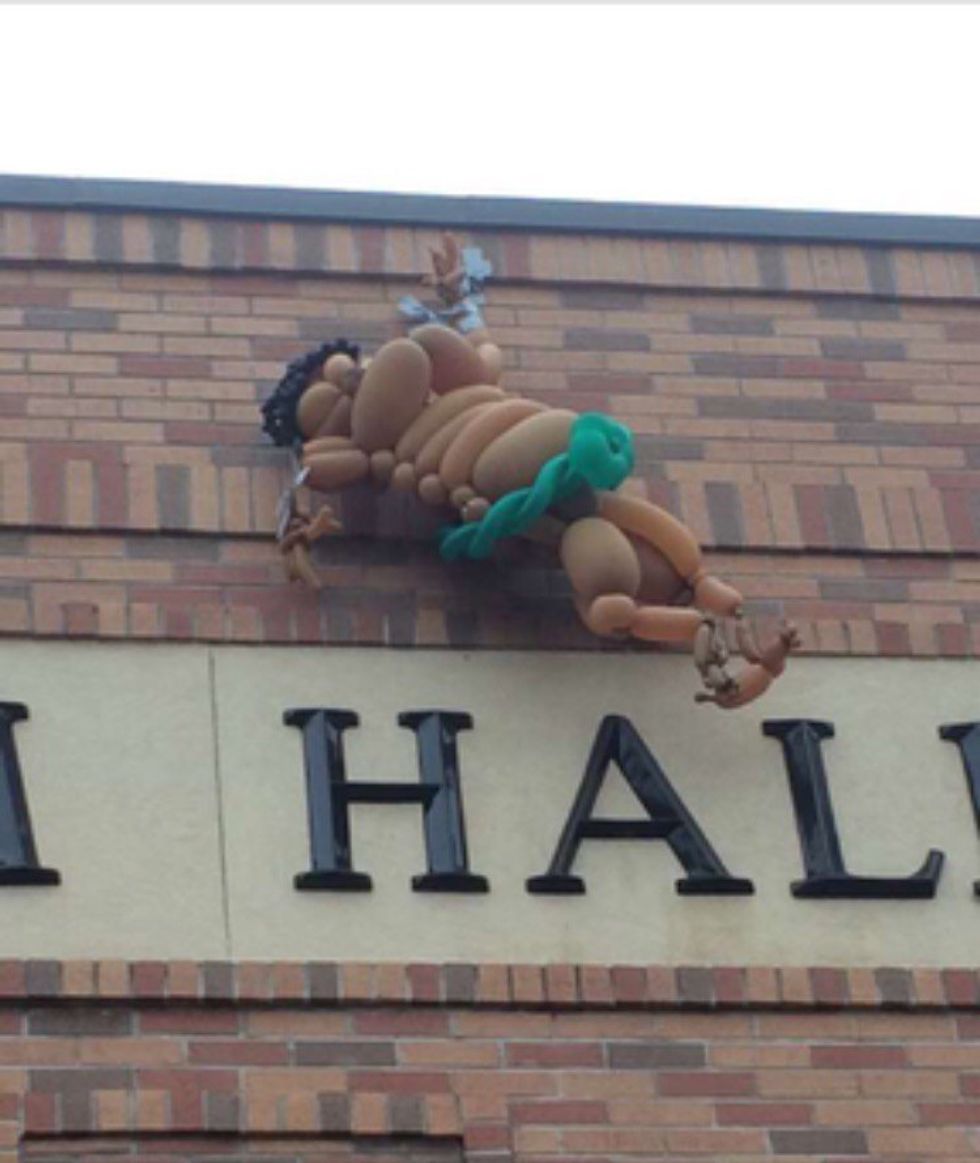
In the days that followed, we began to receive information about the events that led to this horrible incident. We eventually learned that what started out as completely innocent "prank" soon turned into a cruel and hurtful joke. Many students couldn’t understand why and how something like this could have happened on our campus. I, personally, wasn’t surprised that this had happened and made sure that everyone knew it. While I love my school, I also understood the culture which resided on campus. To the untrained eye, University of Mobile is a wonderful Christian college, which it is. However, there is an undertone of elitism, classism and racism that exists. The students on our campus are really sweet kids, but most of them were sheltered and don’t understand the adversities that students of color face. As the information began to pour in, I became outraged by what happened and immediately took to social media to express my concerns.
I let people know, as a black student at the school, that what happened was unacceptable. I shared photos and talked about the lack of diversity and activities available to minority students. Needless to say, by the end of the week, the school called an emergency meeting to discuss what had happened on campus. I can personally say that since that incident the faculty, staff, and student body have began to make a more conscious effort to try and include race and diversity, not just in the classroom setting, but within the campus itself. Since then, several school groups like The Community Table, a group of students from different walks of life who gather together to severe others, have been organized. As I walk around campus, I see students of different races, genders and ages conversing with one another. Teachers are beginning to stress the importance of being culturally competent in the classroom. I have been talking with advisors and administrators about creating a student minority organization, or setting up some type of campus activity that involves celebrating the culture of minority students.
Diversity never stops.
Again, it’s funny how life works out sometimes. If you had told me seven years ago I would be leading the discussion about race and culture at a predominantly white university, I probably would’ve laughed in your face. Seven years ago, I was so sure the only thing I needed to do was convince other blacks I was just as good as them. In that time frame, I would learn to embrace my culture, but I would also be teaching and learning about racism on a level as I am now. My discussion and passion about race and culture extends beyond my school walls. I have friends of different races and walks of life with whom I can share my concerns and passions with.
Not only that, but I’m able to enlighten family members about things they never would have thought to think about when talking about race. Talking about race isn’t easy, especially doing it with someone of a different race as you. However, it takes coming out of your shell and being bold enough to engage with people of different cultures. This make fostering a conversation about race much easier. I often times ask myself, "what if I had transferred to an HBCU?" "What if I hadn’t been on campus when the 'balloon man' incident occurred?" "What if I hadn’t spoken up about the lack of diversity on campus?"
One of my teachers recently told me, “someone has to get out there and set the example,” and with the outcome of what’s happened since the “Balloon Man” incident, I’m glad that I stepped outside of my comfort zone and spoke up. Not only did I help myself, but a lot of others, as well.