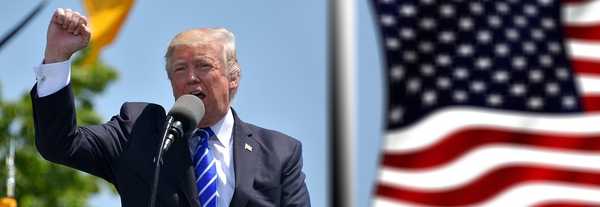
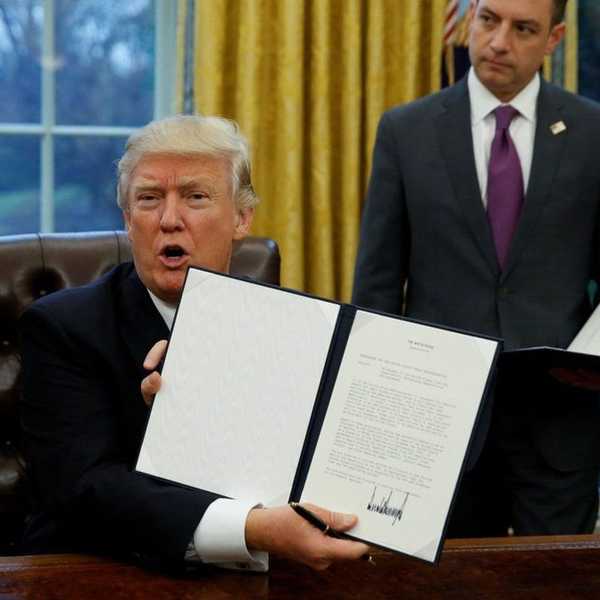
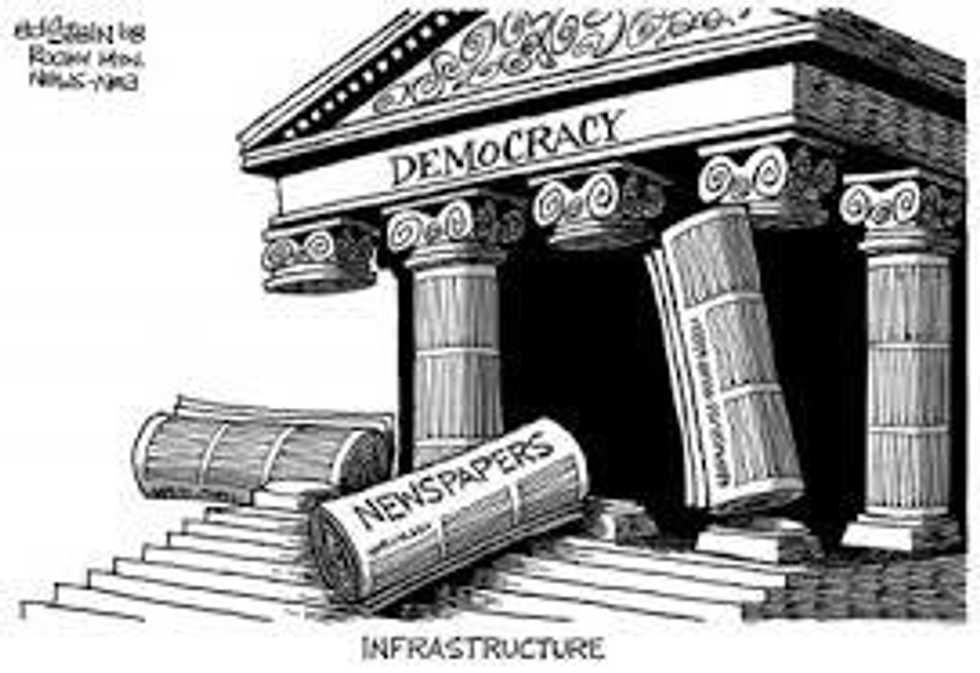
Whether a Democrat or a Republican, I believe it fair to say that Donald Trump's concrete policy initiatives are vague and questionable at best and downright impossible at the worst. They have been well covered in the press so I will spare you a comprehensive list. One Trump proposal receiving less attention than I believe is warranted is his desire to "open up" libel laws in the United States.
Mr. Trump wants to make it easier to sue news corporations if he can prove that they published false information about him. Currently, the burden of proof in such cases is quite high; the individual must prove the news outlet was intentionally malicious in publishing false information about them. They also must have known the information given to them was false and published it anyway.
Trump cites two of the best-respected news organizations in the country, the Washington Post and the New York Times, as examples. Both have written pieces highly critical of Mr. Trump and his presidential campaign. Still, it would be more understandable if Mr. Trump was talking about the NY Post or TMZ. Mr. Trump has always been critical of the press, but this seems to take it to a new level. Still, even for a moment let's give Mr. Trump a chance.
When Mr. Trump gave this proposal he also said that the "Freedom of the press is vital". Hm. These somehow don't seem to line up. Okay, well what exactly was proven wrong in pieces by NYT or WaPo? Oh, nothing was proven wrong? You mean these two award-winning publications didn't publish false information in a deliberate attempt to smear Mr. Trump? I can't believe it. Could it be that the Donald just does not like facts being used against him? No, it could not be. He must just mean he wants to change the federal law a little bit, with a tweak here or there. He surely has a strong command of freedom of speech laws right?
Oh, you mean there is no federal libel law? Only the states have libel laws? No way! But I thought Mr. Trump would know what he was talking about? So he would have to create a federal libel law with a lower burden of proof than all of the states and force them to comply? Well, that couldn't be hard could it?
The first amendment? What's that? So you're saying that it would be a dangerous precedent to set against investigatory journalists if they could be sued for making a mistake in publishing an article? Or, more likely, if the person in charge (like our president perhaps?) does not like what they are saying? That does not sound too dangerous to me! I am sure that Mr. Trump would never use such a thing to silence any of his critics. Perhaps it stems from Mr. Trump's admiration for Vladimir Putin, who has been accused of silencing and killing journalists in Russia. He seems like a guy with a good handle on things right?
So what about say, the New York Times' articles was incorrect or maliciously written? The part by the Editorial Board saying that Mr. Trump's role in New York real estate and finance was not as strong as previously thought? Or his hiring of foreign workers to build his club in Palm Beach, Florida? Well, let's break those down.
One is written by an Editorial Board. Surely Mr. Trump realizes they write for the opinion section of the New York Times right? That is why they make policy recommendations, have ridiculed Ted Cruz for his carpet bombing statements and endorsed presidential candidates? Surely he knows when they say Trump isn't as high and mighty in New York real estate as everyone says, that is their personal conclusion based on research? And that you cannot sue someone for publishing an opinion? Well let's assume the Donald made a mistake on this one, and he was actually talking about the hiring of foreign workers in Florida.
Wow, you mean research turned up the fact that Mr. Trump's company had applied for more than 500 work visas for foreign workers, workers that were not American? Despite Mr. Trumps pleas for American workers and bringing jobs back home? So would Mr. Trump sue for this? Maybe if he read the piece he would understand better? Because let's be honest it's doubtful he got past the first paragraph.
Moving on from WaPo and NYT, Trump went after the political press corps as well, saying that 50 percent are absolute sleaze well 10 percent are outstanding. My guess and this is a guess (Mr. Trump please don't file a lawsuit against me), is that those 10 percent he calls outstanding are those who do not bother to question him on things like concrete facts, policies that are feasible or his actual plans for our country instead of stump speech sound bites that have helped him gain such a rabid following.
The 1st amendment, the freedom of the press and ability for journalists to write pieces critical of our leaders is, in this amateur writer's opinion, the thing that sets countries like ours apart from many others. If a journalist writes something negative about their leader in some countries, they are whipped, beheaded or jailed. I am not comparing this to opening up libel laws in the United States. However, you may be familiar with the slippery slope analogy. It could not be used more perfectly than here. What starts as a seemingly innocuous attempt by Mr. Trump to stop supposed defamation, could quickly become a hostile environment where journalists are unable to do their job out of fear of retribution.
Now though all this it is important to remember that even if Mr. Trump gets the nomination, reaches the White House and tries to pass this law, there are many mechanisms in place to stop it, namely the US Constitution. The fact that a front-runner for the Republican nomination would disregard freedom of speech so easily should concern even the most die conservative. There are other proposals of his that have more human effects, that is not something I am trying to contest.
What I am saying is, for all of his outrageous statements that contrast true American values so starkly, this might be the most harmful to the concept of freedom that we all hold so dear.