


As someone who reads and edits other people’s work for a living, I see a lot of grammar and spelling errors. Most of all, punctuation seems to be what students have the most trouble getting right. Whether it’s using semicolons, commas or punctuation within quotations, here are the most common errors I’ve seen and why they’re so annoying.
1. The Unnecessary Comma
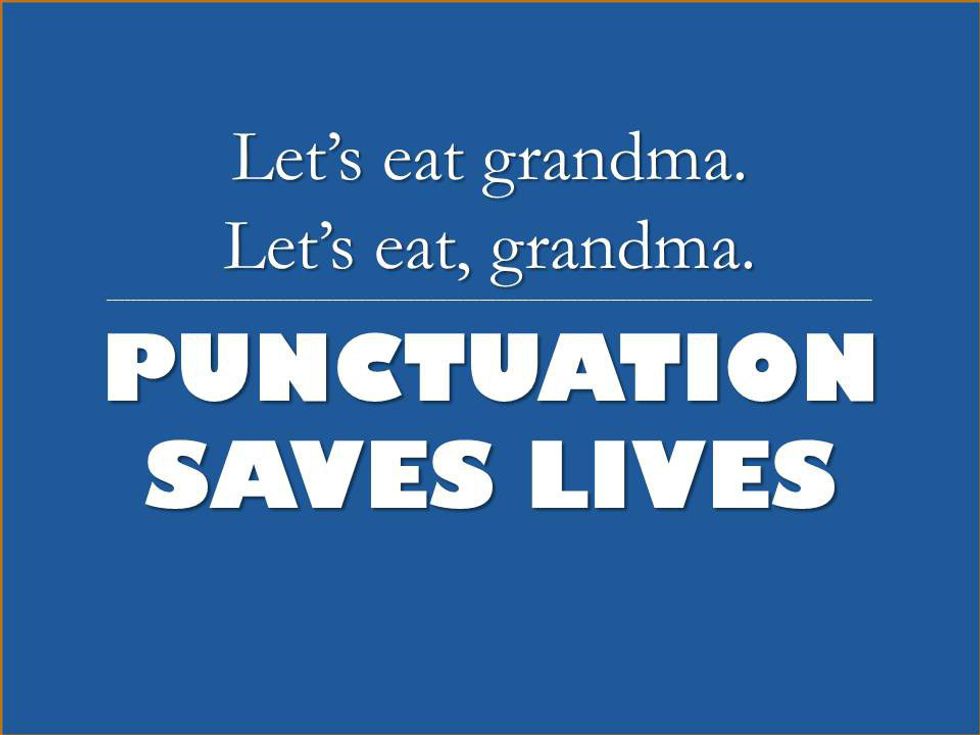
Commas are a necessary part of writing. Whether you’re listing, making compound sentences or separating quotations from the main part of a paragraph, commas are a key factor in writing well. As a result of this, commas are also a good indicator for good and bad writers. People who misuse commas in simple ways are typically not going to get very high scores on essays, and will have a hard time in the professional world.
Example of good comma usage: “I went home, took a shower, ate dinner, cleaned up and went to bed. The next day, I went to see my friends.”
In this sentence, the commas are used for listing and legitimately needed clause separations only. By using the comma effectively, clarity is guaranteed.
Example of bad comma usage: “Oh, my, god. Look! I went home, made coffee, got some stuff together and like, totally, totally got ready for bed. Isn’t that just, so exciting? Let's go friends.”
In this example, the comma is used so often that it’s like being repeatedly hit over the head with a bat made of stupid. Don’t overuse commas and avoid looking like an idiot to potential employers. Saying "Let's go friends," makes no sense. It should be "Let's go, friends." Commas are a great tool for clarity.
2. The Overused Semicolon
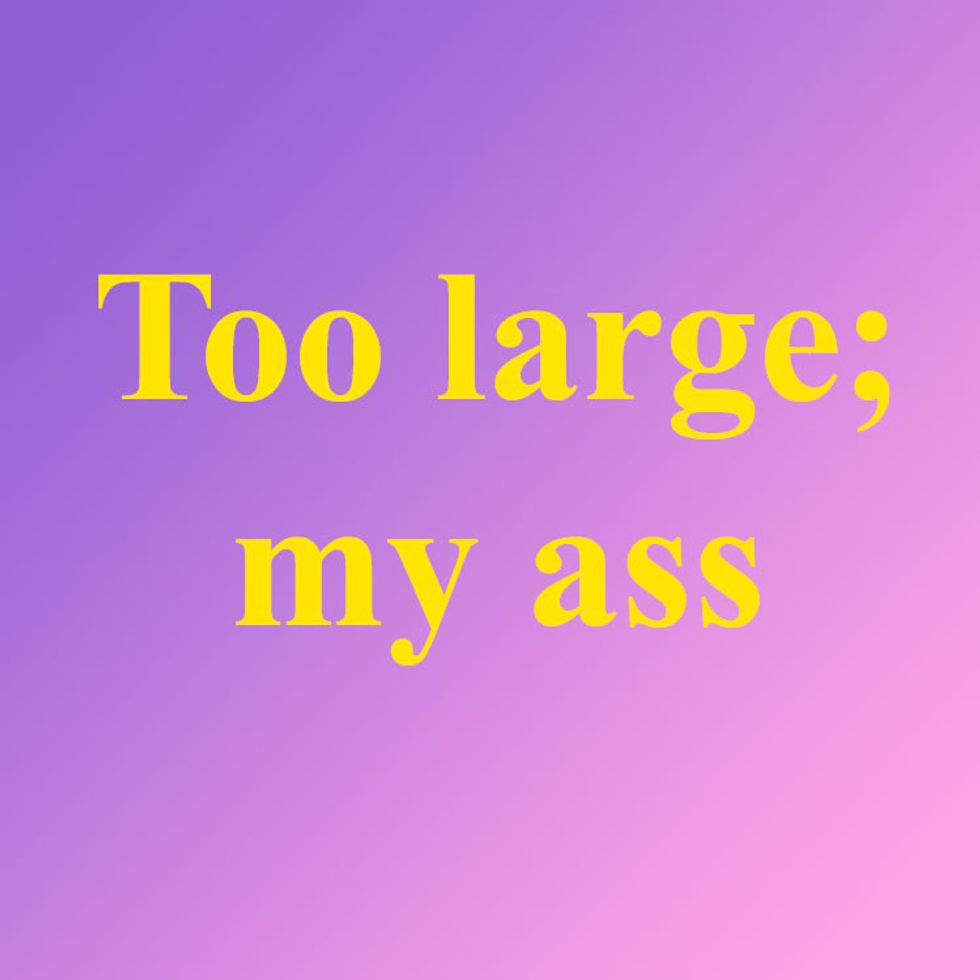
Semicolons are an interesting beast of a punctuation mark. You should only use a semicolon for connecting two big ideas of equal value without a compound word. Instead of using commas with words like and or but, you can use a semicolon.
Example of good semicolon usage: “My favorite food is popcorn; Jack’s is chocolate.” This is used instead of “My favorite food is popcorn and Jack’s favorite food is chocolate.”
Example of bad semicolon usage: “When I went to the store, I bought chicken; crackers; and cheese.” This should have used commas instead to say “When I went to the store, I bought chicken, crackers and cheese.”
Don’t use semicolons unless you’re absolutely sure it’s appropriate. Not using the semicolon properly leads to overly unnatural pauses, bad grammar and can cause you to gain a reputation as a grammatical fool. Do everyone and yourself a favor, learn how to use semicolons the right way.
3. The Wrong Use of Quotations, Punctuation Included (Seriously though, put punctuation inside of quotation marks).
It’s a small issue, but it says a lot about someone’s ability to proofread their own work. When you use quotations, punctuation goes inside the quotation marks. Using quotations on only specific words of a sentence incorrectly can change a sentence completely.
This means that if Johnny says “I had a great time,” the comma goes inside the quotation. Punctuation should absolutely never go outside of the quotation marks.
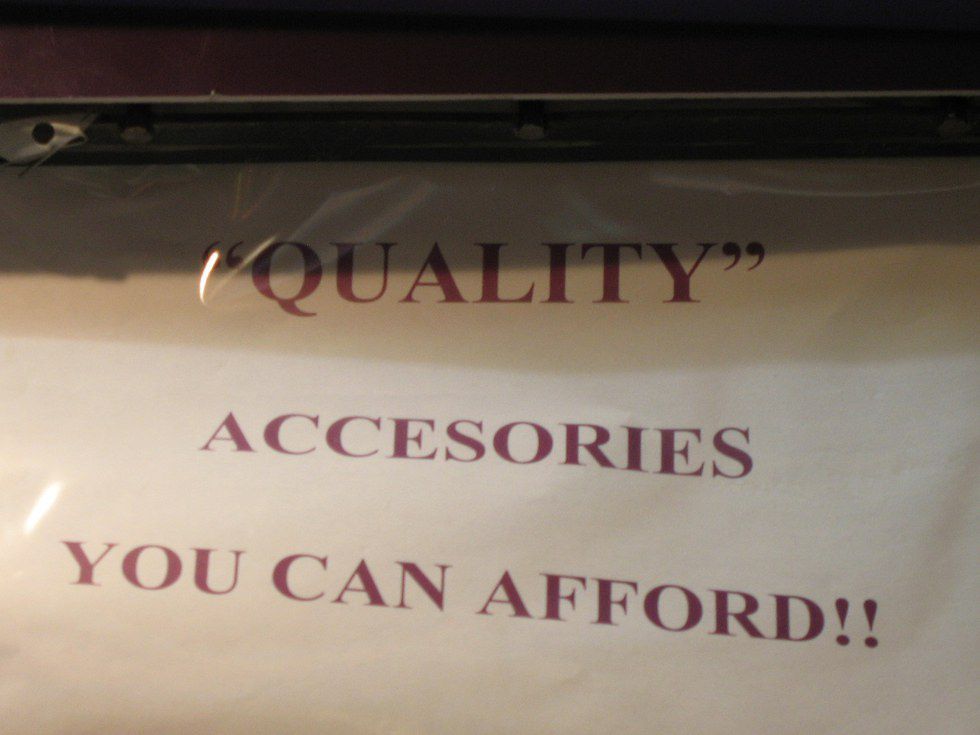
It also means that if you put the word "quality" in quotations while making an advertisement, you could actually say the quality is bad. Quotations can be used to doubt truth in certain situations.
Example of good quotation mark punctuation: “John went to the store,” said Mark.
This sentence makes sense and has everything where it should be.
Example of bad quotation mark punctuation: “Mary Sue had a great time with me”, said nobody who improperly punctuates their sentences.
In this case, the quotation is inside of the comma instead of the other way around. Simply going back through your work and making sure everything is where and how it should be isn’t difficult or overly time consuming, and it can sometimes save your grade on a paper. Don’t be stupid, proofread your work and avoid easy mistakes like this one.
4. Improper Use of the Oxford Comma
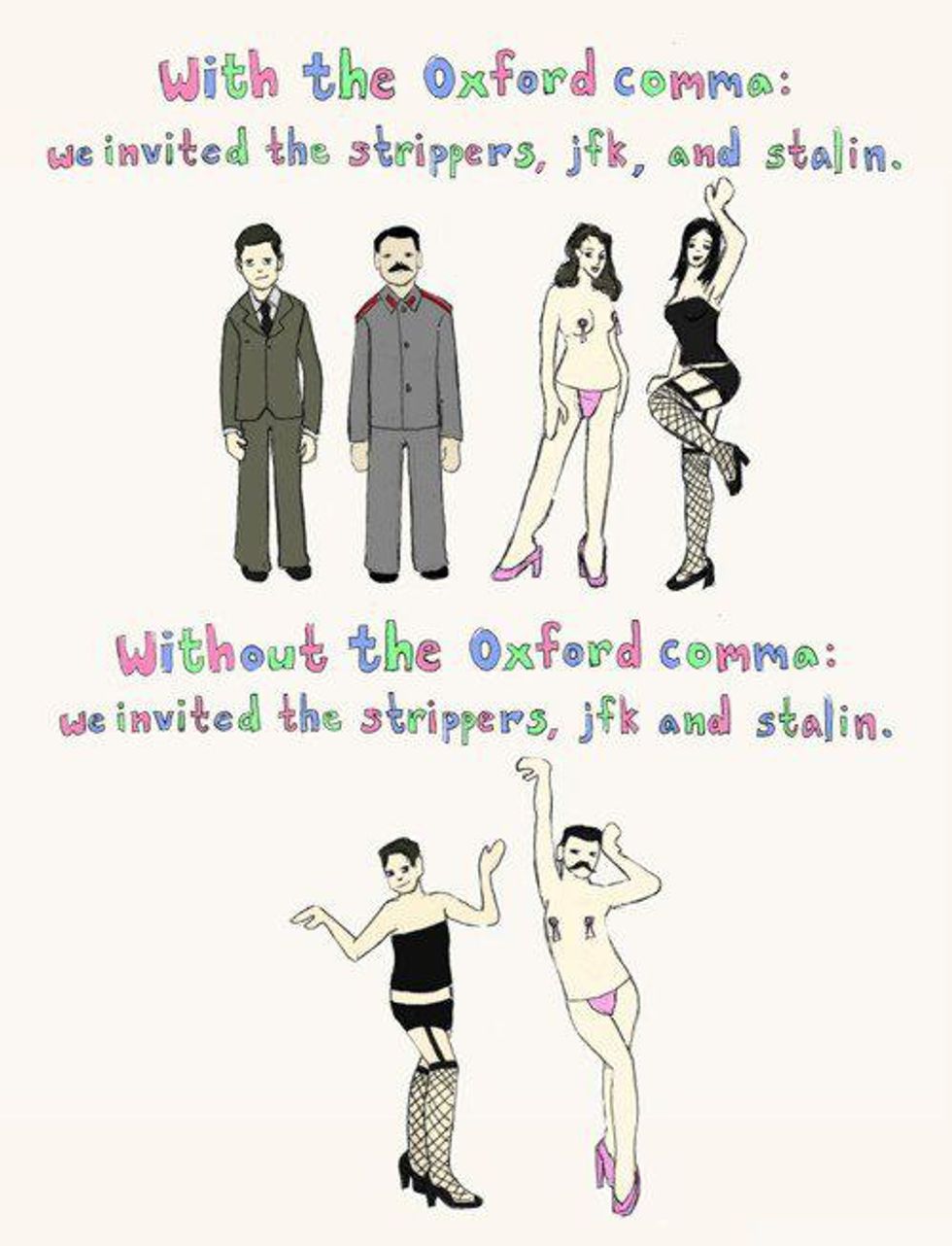
Oxford commas are a hotly debated topic in the world of English grammar. They are used for listing, but it’s more complicated than that. Some formats don’t use Oxford commas at all, and this can occasionally make things confusing. Not using an Oxford comma can make what you say unclear.
Example of good use of the Oxford comma: “We invited the strippers, JFK, and Stalin.”
Basically, we’re saying that strippers and JFK and Stalin are all here.
Example of bad use of the Oxford comma: “We invited the strippers, JFK and Stalin.”
In this version, JFK and Stalin may or not be the strippers. From the examples, the Oxford comma provides clarity in a potentially awkward situation. However, the use of the Oxford comma for clarity also depends on the format or style being used.
5. Too! Many! Exclamation! Points!
The most irritating grammar issue I’ve come across is the overuse of exclamation points. Nothing says “I didn’t pay attention in English class” like someone who uses exclamation points for! Every! Word!
Don’t use exclamation points often or regularly, as they don’t make things exciting, they make things look like you don’t know how to write.
Example of good use of exclamation points: “Holy crap! I just saw an Elton John concert.”
One exclamation point, used for an actual exclamation. This is how it should be.
Example of bad use of exclamation points: “Oh my god! Hi!! How are you doing?! I’m great!!! Thanks!!!!”
This is obviously too much. Don’t be an idiot. Using so many exclamation points sounds either like you don’t have a subtlety button or you’re constantly yelling. At some point you’re either going to have to breathe and rest your throat or learn how to write effectively. Make the right choice and use exclamation points sparingly.
These are just a few of a long list of common mistakes found in student work. They drive proofreaders, tutors and teachers crazy. Do yourself and everyone who reads your work a favor, please learn these basic rules and pay attention in the classes where they teach this stuff.

















