
In the first political science course I took in my four-year-long journey to earn my undergraduate political science degree at Roanoke, our professor and my future academic advisor asked the class to define conservatism. Seeing as this was my perfect opportunity to introduce myself as a strong student of political science, I wanted to answer. (A courageous time to raise my hand for the first time in college.) I defined conservatism as “the idea that government should be reluctant to radical and rapid social change and should be inclined to play a limited role regarding fiscal policy.” While this may or may not be the best definition of conservatism, I thought it was a well thought statement for an answer off the top of my head. Without sounding conceited, my professor agreed.
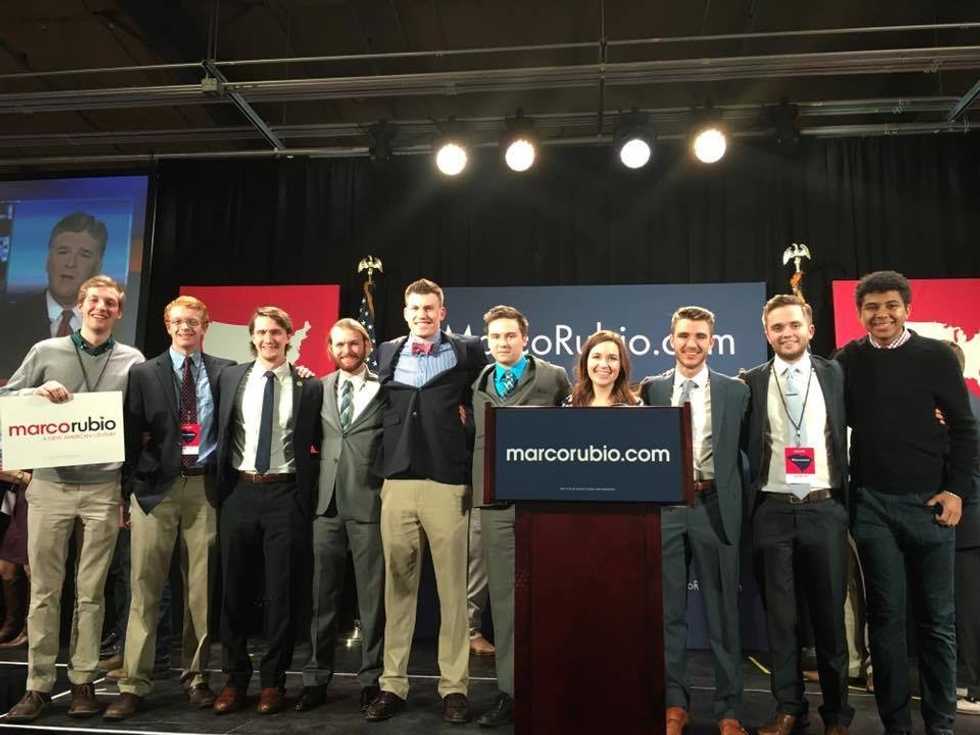
Nevertheless, what does it truly mean? While certain people would have you believe it means building a wall and treating women and minorities with absurd disrespect, please do not be fooled into agreement. Different people have different versions of conservatism. Florida Senator Marco Rubio offers his vision of optimistic conservatism. He defines it as the idea that government can take conservative principles and be used to help the most vulnerable in our society: children and the poor. Texas Senator Ted Cruz took to voters the view that evangelical Christian values are the best way to “restore the promise of America,” whatever that means. Former President George W. Bush described himself as a compassionate conservative, meaning he still held conservative principles, but he was not afraid to utilize the full scope of his powers, sometimes exceeding those powers, to help his fellow Americans. Donald Trump’s version of conservatism is much different from any other Republican. I’m actually not quite sure what you would even call his version of conservatism, but I am certain someone in the alt-right could come up with something.
But what does it mean to me? What would the Alex Boone version of conservatism be? To me, conservatism goes far beyond optimism, evangelism, compassion, and…building the wall. As a conservative, I believe a rising tide lifts all boats. If we want to help people help themselves, then we need an economic environment where the poor are able to find jobs, keep jobs, and then be able to keep more of their money. If we want the government to provide basic services like infrastructure, schools, defense, and so on, then we need to be fiscally responsible. We need to stop excessive spending, especially on entitlements, which keep people down instead of helping them succeed. We need to be active in world affairs, which does not mean policing the world, but it means exactly what Republican president Teddy Roosevelt meant when he said, “Speak softly and carry a big stick.” We need to be in favor of something the Clintons have never practiced: accountability from government and elected officials.
Lastly, it does not mean we act the way we have been in the last year or so. We do not mock people with physical disabilities, we do not degrade women, we do not degrade minorities, we do not disrespect Gold Star families or war heroes, and we absolutely do not seek to remove or ban people of an entire religion from our society. It does not mean we stick our heads in the ground when it comes to other people’s choices, but it does mean we stand up and fight for economic liberty from the stench of government bureaucracy.