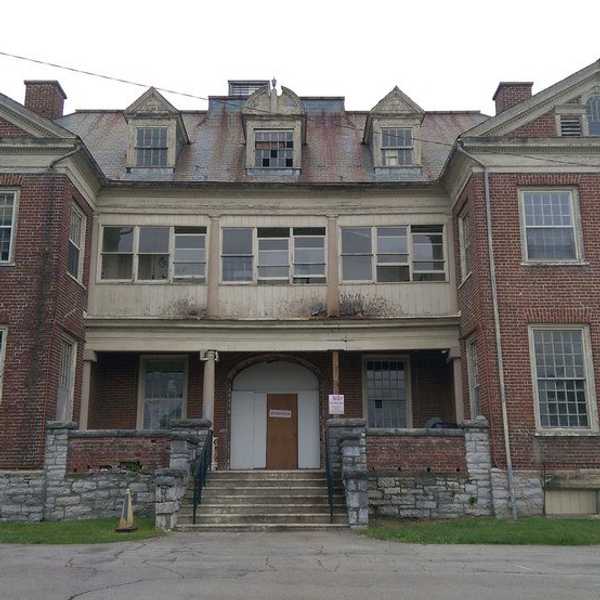
This past week, my family and I visited the lovely Greenbrier resort nestled in the Allegheny mountains of West Virginia. The resort contains golf courses, pools, barns, a state forest, and a bunker designed during the Cold War that stayed a secret for 30 years.
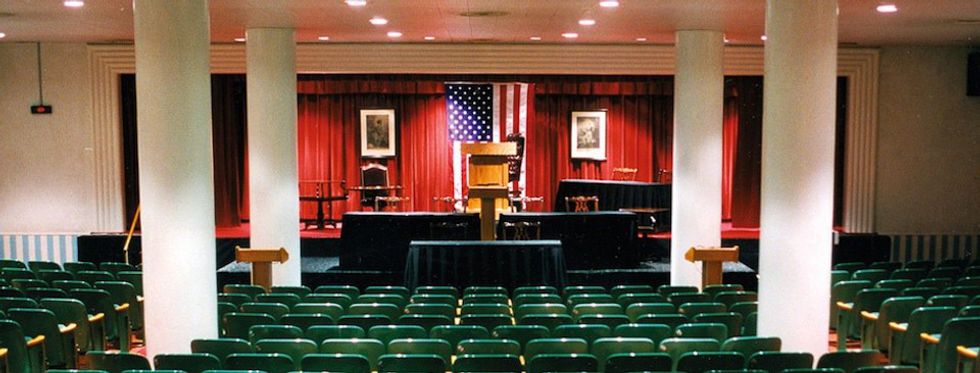
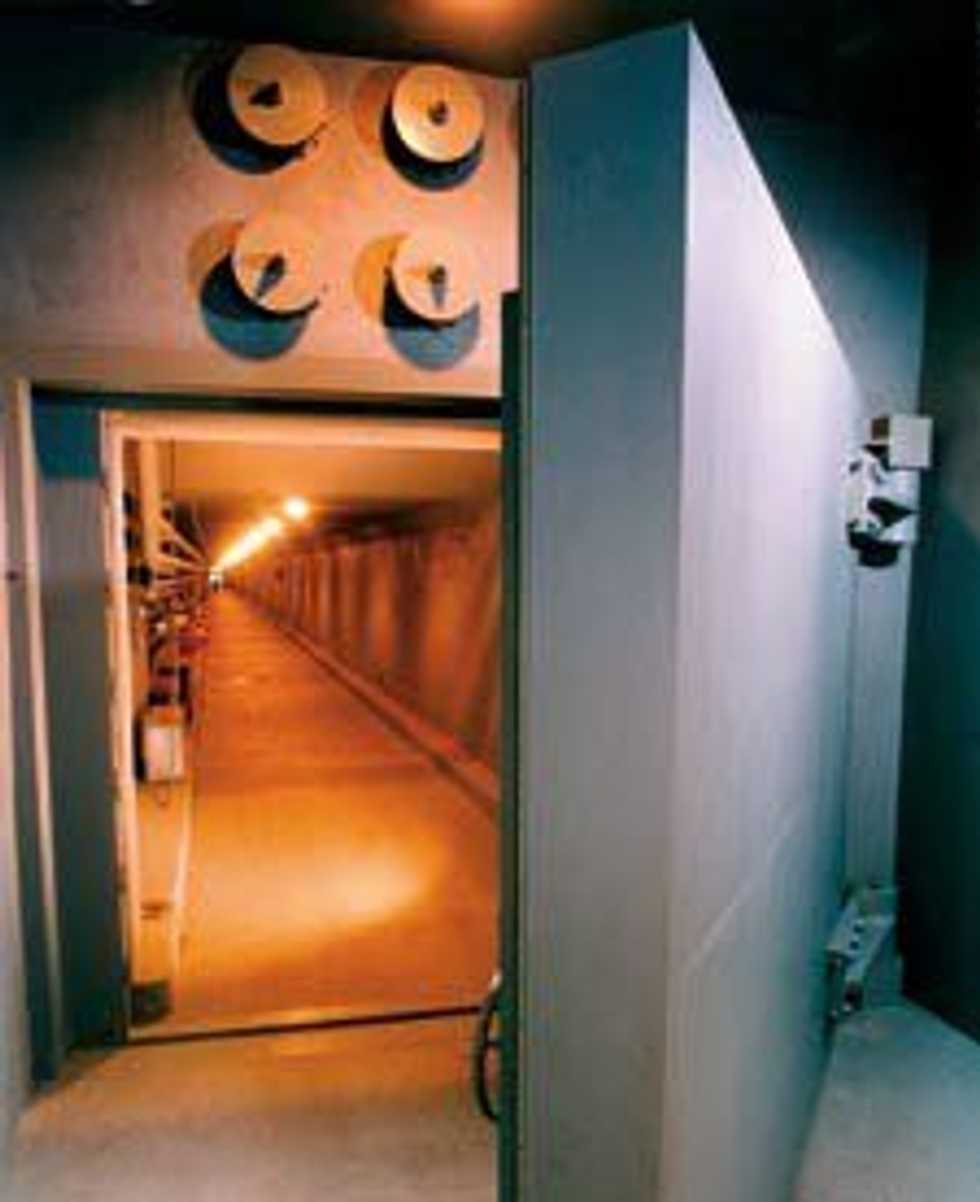
When my dad first mentioned touring the bunker, I expected a small cement room with 20 bunk beds and dusty lights. Instead, I ended up walking through a two-level facility of 112,544 square feet, including the exhibit hall, two meeting rooms, several dormitories, a shower, a dining room, a power plant, and three huge blast doors. President Eisenhower commissioned the bunker as a retreat for the U.S. Senate and House of Representatives in the case of a nuclear attack by the Soviets. Because of its purpose, the bunker became a top-secret project referred to as Project Greek Island.
Planners designed the bunker to have office space for the congressmen, congresswomen, and their aides. It had a meeting room for both the Senate and the House of Representatives. It also contained four large pictures of Washington D.C. -- one picture for each of the four seasons. If the Legislative branch ever had to retreat to the bunker, they would have stood in front of these pictures to broadcast their messages, creating the ruse of being in the capitol and protecting their location.
The Greenbrier resort was the perfect location for the bunker, nestled between mountains and far from any major cities. It would hardly have been a priority target in the case of a nuclear war or an easy target if discovered.
In addition to its location, organizers could attribute the food, energy, and communication equipment required to keep the bunker ready for use to the needs of the resort. The massive blast doors were hidden behind false walls and painted or wallpapered over. One door let out into the woods but warded off the curious with a sign reading, "Danger High Voltage."
After hiding the doors, The Greenbrier staff used the exhibit hall for numerous functions, and the guests were unaware of the five feet of concrete that surrounded them in preparation for the day the exhibit hall would be transformed into office space. An airport and highway were built nearby to make the bunker accessible to the Legislative branch in case of emergency but ostensibly to make the resort more available.
The bunker was completed in 1961, and one year later, the Cuban missile crisis flung its operators into anticipation and near panic. The brand new employees were almost certain they would have to use the bunker, and they had only just begun to run it. However, the crisis ended, and the Legislative branch never needed the bunker.
So for 30 years, a group of government employees kept the bunker stocked with provisions, maintained communication with Washington D.C., updated the interiors of the lounges, and adjusted bed assignments after every new election.
From the confusion of the man who wallpapered the room with the main blast door, to the curiosity of the Greenbrier historian, suspicions were addressed and dismissed, and the bunker remained a secret even after the fall of the Berlin Wall in 1989.
In 1992, Ted Gup wrote an article for The Washington Post that exposed the secrets of the bunker. It was decommissioned and opened to the public in 1995. The bunker was never used, nor could it be used now. However, the intense preparations and cement rooms stand as a reminder of a dark, uncertain time in history--a time in which many people believed the whole world could burst into the flames of nuclear war. The leaders of nations watched one another in distrust and waited for the terror and destruction that could be unleashed at any moment. The bunker is the grim necessity of a world that depends on the balance of fear and power.