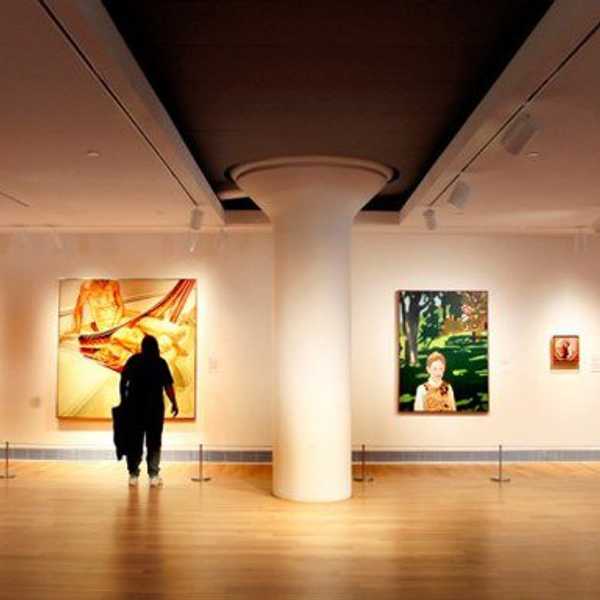

“It’s not that I don’t get most abstract art, but rather, most abstract art doesn’t get me.”
This winter break, I met up with one of my friends I met while conducting an internship in Israel. She took me to the Museum of Modern Art, an institution I haven’t visited since I was in high school. Now, you may ask, what self-respecting New Yorker who also claims to be an Art History major passes up 5 years of opportunities to go to the MoMA? And my response would be… c’est moi!
Just because the MoMA isn’t my preferred museum to attend when I’m on break from college, I’m in no way suggesting that I had a bad time. The commentary that my friend Leeza and I made about every Picasso we saw was truly something that made me chuckle. Picasso did do something for me that day… he provided me with opportunities to reconnect with someone I hadn’t seen for months, and build on a friendship I hope will only grow. And to hand it to Picasso, those opportunities turned out to be pretty awesome.
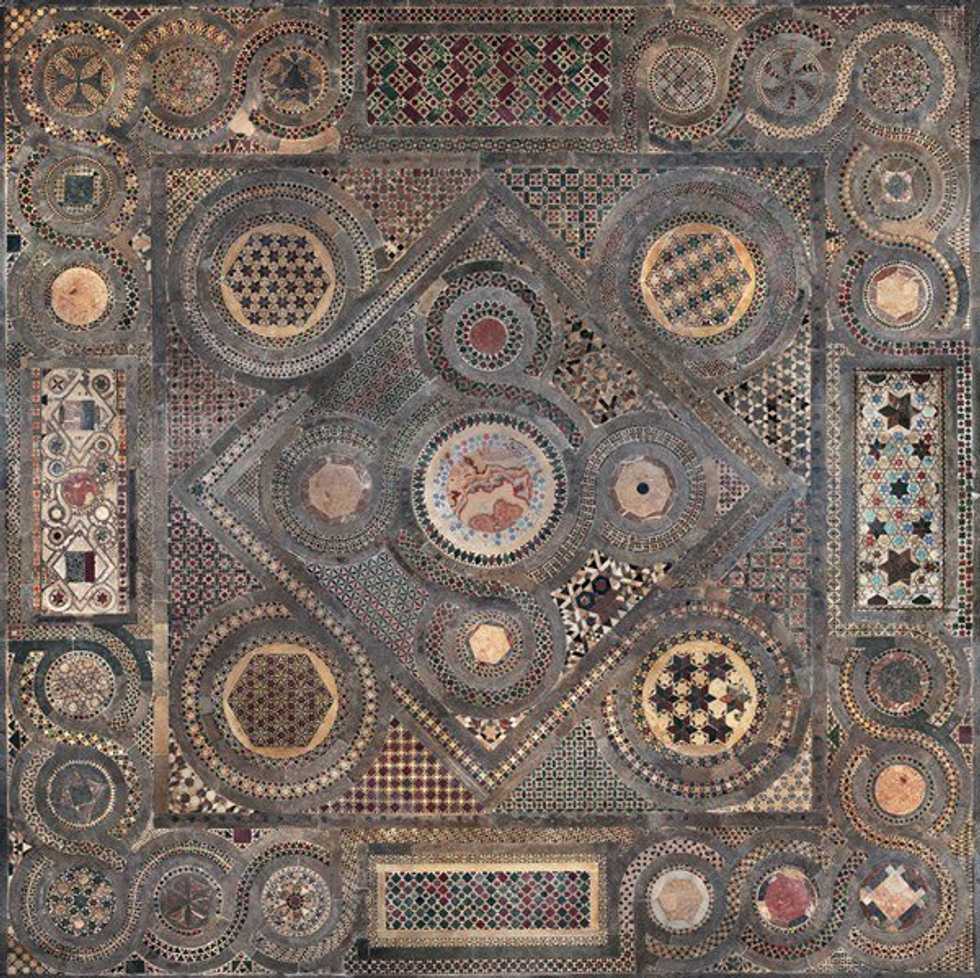
However awesome my museum visit was, Picasso’s sculptures don’t normally find themselves graced by my range of sight. In fact, I’m not even interested in modern art. One of my favorite works of art is the Cosmati Pavement in Westminster Abbey, dated to approximately the 1260s. Henry III enlisted Italian marble cutters to install a mosaic in the floor of the renovated cathedral that would mimic the life cycle of the universe. A riddle was inlaid with the mosaic that claimed that the universe would last as long as the life cycles of three sea monsters (Time Team Special, 2010, Secrets of Westminster Abbey), which should be about twenty thousand years. This “universe” would be looked over by the king from his coronation chair, which used to be used as a pew when he attended services, and god, from his high altar. To me, this is art.
I don’t reject modern art, but I definitely don’t enjoy it. Some would say that I’m closed-minded for not even trying to understand it. Having wrestled with modern art is almost a prerequisite for membership in any accredited university’s art history faculty. But rarely are the tables ever turned: those who chose not to visit the European Paintings at the Metropolitan Museum are never chided for it. In fact, they’re often lauded for having a mindset that isn’t enamored with Western culture. People who don’t have a taste for Renaissance Paintings or Medieval Religious Statues are seen as incredibly intelligent for shifting their tastes elsewhere: totem poles from Oceania, modern sculptures from Japan. All these are incredible personality resume-boosters in an increasingly PC world.
When I was in high school, I began to explore a deeply held interest: the history and culture of Eastern Europe. Just last year, I curated an exhibition at the Binghamton University that showcased Binghamton’s rich collection of Soviet Propaganda. I was approached by a fellow student who remarked about the interesting “tastes” I had. Russia has, from time immemorial, always been considered an unwelcomed guest in the Western World. It’s exotic. It never had a renaissance, nor a reformation, and was barely touched by the enlightenment (and by barely, I mean only a select few upper-class urban families in St. Petersburg). To most people, my love for this culture is a “taste” because Russia is so far from the western history and culture we’ve all become accustomed to.
It comes down to this: an individual is apparently closed-minded if they have a preference for non-modern Western visual culture. No, in the contemporary world of art history academia, galleries, and museums, this preference is not a “taste.” That word is reserved for proclivities dealing with both modern art and art from non-Western cultures. If my friend is enamored with Japanese art from 1905 to 1910, she has a “taste,” where as the lover of English art from the 1700s has a prejudice. If my colleague can adequately explain at a cocktail party why he only studies the art of the Benin people in Africa, he is considered the man of the hour, whereas those enamored with Dutch pottery remain a kind of pariah.