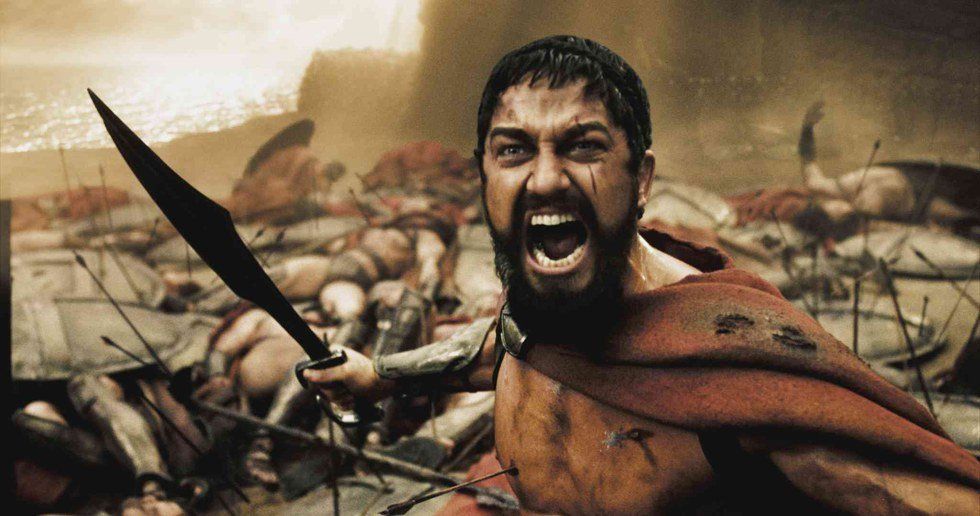
There can be no doubt in anyone’s mind that the Greek and Roman worlds forever changed the world's stage. Their accomplishments and advances are still seen today, in our politics, infrastructure, and even in our arts. Greek and Roman myth even extends to our movies, with films like 300, Gladiator, and Clash of the Titans all earning enormous amounts of popularity. However, the importance of the study of these two ancient empires (to which “Classics” will be referred to) extends far past these motifs. The study of Classics can change the face of the world.
I got into college not knowing what I wanted to do. I knew I was good at History, so I decided that it would suffice as a major. It wasn’t until I took a course in the Classics department that I realized how much I loved the topic. Like any little kid, I liked playing gladiator in the backyard, and Greek mythology was interesting to read. The interest was there, but the first Classics course I took really ignited the passion. It was some survey class on warfare, but the professor is what made the difference. I’ve come to understand how passionate each professor is about their subject, and the Classics professors at UNL are no different. Take, for example, the Sparta class that’s currently in session. What better way to learn about the city than to run the class as its government was run?
It’s also important to realize that Classics still has real world application. Arguably, no other civilization known has contributed more to public speaking than Greece and Rome. In fact, our modern democracy (and even the American government) find their origins in the Greek/Roman world. How can one presume to be a learned individual, but have no public speaking skills? The study of not what we know, but how we know, is just as important as the facts themselves. These people wrote the book on that stuff. If you’re still not a believer, look at our last classically trained president: JFK. The man had more memorable quotes than anyone following him, and all because he knew how to speak. Oration was vastly important in the ancient world, and it’s changed our modern world. It used to be that one was considered uneducated if he didn’t study Greek and Latin works. I am a fan of that idea.
Call it “nerding out” or whatever you want; everyone I’ve come to meet in this department is passionate about the subject. Now, I’m sure it’s the same way in other fields. An umbrella view of our realm around us will show you how important it is to look at these peoples’ ways of life, and how they did things. We owe a lot to these people: our public works, the idea of public games, religion, politics, etc. If you don’t want to major in it, by all means don’t. I strongly urge you to at least take one class, and I know you won’t regret it.