
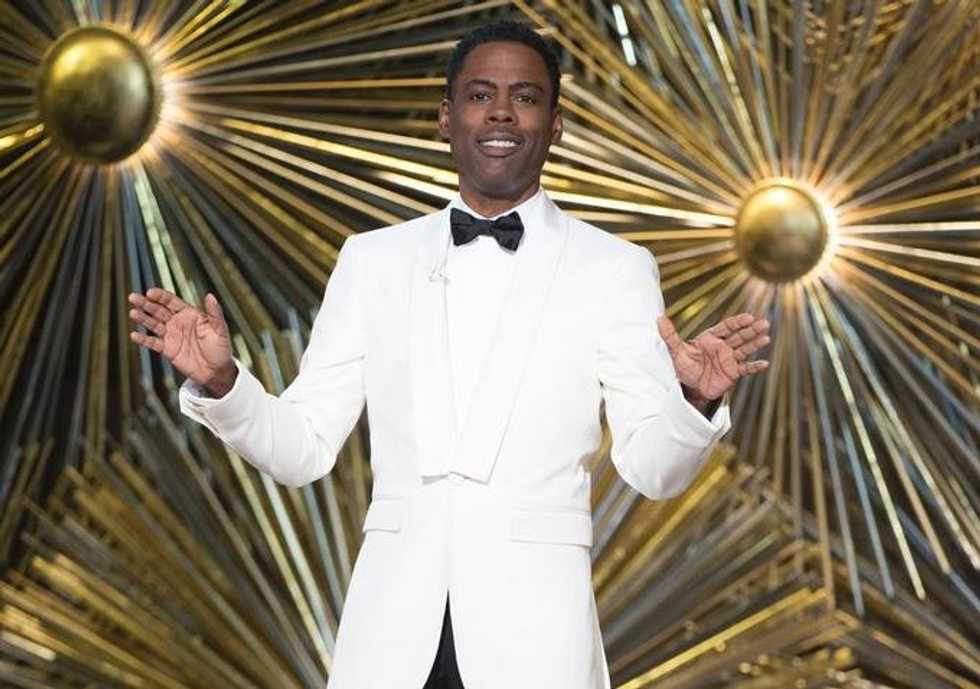
Chris Rock opened up the 88th Academy Awards with a bang. He didn't waste any time when he took the stage and said, “Man, I counted at least 15 black people on that montage. I’m here at the Academy Awards, otherwise known as the White People’s Choice Awards.”
With hilarity and flair, he left Hollywood A-listers squirming in their seats as he focused on the clear racism in the movie industry. He addressed the issue head-on, not only in his opening monologue but in comments and pre-recorded segments throughout the show.
Rock’s opening monologue was funnier than most in recent memory and aimed to make the Oscars about something more than handing out awards to millionaires. One of his most stinging lines was, “This year, in the In Memoriam package, it’s just going to be black people that were shot by the cops on their way to the movies.” He employed clever jokes to make the audience laugh and feel uncomfortable -- a combination that accomplished his goal of forcing them to think about the existence of racism in Hollywood.
He regularly spewed thought-provoking one-liners, many borderline savage, but perhaps the most memorable phrase that may linger the longest is “sorority racist.” He called out Hollywood for being racist, but not the racist we have grown accustomed to. Instead, he said Hollywood is sorority racist, as in “We like you Rhonda, but you’re not a Kappa.”
As the night continued, Rock didn’t fail to repeatedly make light of the issue. From his post-commercial welcomes (“Ah, we’re black”) and sly introductions of the presenters (“Shoulda-been nominee Michael B. Jordan") to the excellent pre-recorded segments, he didn’t disappoint.
In the pre-recorded segments, black actors were introduced as characters in some of the nominated films. One segment brilliantly featured Rock as the stranded astronaut in “The Martian.” To highlight racism in the segment, the white characters contemplated leaving the “black astronaut” stranded because it would cost “2,500 white dollars” to bring him back.
An accompanying segment consisted of Rock's man-on-the-street interviews with black moviegoers in Compton. Most moviegoers had never heard of the nominated films and some believed he was making them up. The responses of moviegoers in Compton effectively exposed the gap between non-white audiences and the nominated films.
To close the show, Rock wrapped up the same way the show began -- with a stirring song. After he signed off with “Black lives matter!” and “Brooklyn!” the credits rolled to the sound of Public Enemy’s song “Fight the Power,” which was featured in Spike Lee’s film “Do The Right Thing.” In opening and closing the show with such a powerful song, Rock set the tone and reset it to emphasize the lack of diversity in the show's nominees and in Hollywood.
Rock certainly lived up to the hype. The night will ultimately be remembered for its thorny, racial politics and for the way that Rock held the industry accountable on its biggest night.

















