We've all been there. The meal is over, you both have enjoyed a fair amount of chatting, and the date is going great, but now it's time for business. The waiter asks the question, "Will the check be together or separate?" Of course, in all that time spent discussing each other's interests and what happened in that class with the totally bogus professor, neither party thought to figure out who would cover the check. Is it the guy's responsibility? What if both parties are male? What if neither are guys? What is the chivalrous thing to do in this situation?
We've all heard the word "Chivalry" before, but what does it mean? Well, Dictionary.com defines chivalry as "the medieval knightly system with its religious, moral, and social code." As thrilling of a read that would be, I'm not really interested in redefining the code of knighthood.

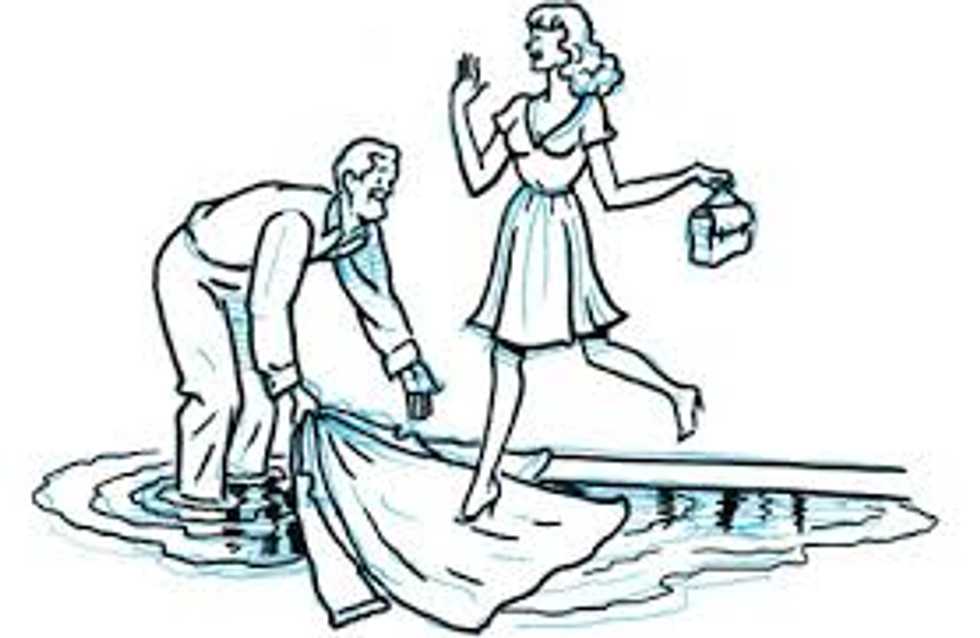
Let's look at a more contemporary definition. Chivalry has been treated as the notion that, in order for a man to be a gentleman, or a worthy match for a woman, he must be courteous and mannerly and take any chance he can to make a woman's life easier. Many women have complained that chivalry is dead, and if that is the case, is that really so bad? I personally think that the idea that a man should always be looking to make a woman's life easier just because she's a woman or because he is interested in pursuing her is straight-up patronizing.
Now, when I decided to write this article I knew I was treading into something bigger than my own perspective. I know that a member of an one group does not get to decide what is and what isn't offensive to the another group, so I interviewed some ladies who agreed to express their opinions on the matter.
In these interviews, I asked for their perspective on a few common tropes defined as chivalry. Among these questions were who should pay the bills, who should drive, and who should hold the door for the other. Growing up, I was always taught that the man should pay for a date, but almost all of the women interviewed stated that they would rather take turns or split the check. One woman said that whichever party invited the other should pay. Many of the women even admitted that they felt bad when a guy paid every time. So guys, maybe it would be a good idea to make discussions of payment the norm for date situations. Another characteristic I noticed growing up was that men seemed to do most of the driving when they were with their significant other. When questioned about who should drive, most women said that they don't care who drives, but that it would be polite of the other party to cover a check or two to make up for the gas spent. Conversely, one woman actually stated that she would feel more comfortable if she did all the driving. The third question seemed to get the most animated responses. I inquired about how the women felt when a man didn't hold the door for them. Each woman said that they feel offended, but not for the reason I would expect to come with that answer. Unanimously, the women explained that men shouldn't hold the door for women because they're women, but that anyone, regardless of gender, should hold the door for anyone else. One woman explained that she was sick of hearing men complain about women not being grateful when men are chivalrous. "Would you not open a door for someone unless you're trying to sleep with them?" She asked. The women proceeded to explain that most of the guidelines for chivalry were just rules of common human decency, not guidelines for a specific gender to follow... Which was going to be the next point I intended to touch on.
I wanted to ask the women how they thought chivalry would play out in a same-sex relationship. It's important to talk about this because we can't just treat heterosexual and heteroromantic relationships as the default. LGBT relationships are just as important! However, I didn't even really need to ask these ladies the intended question. All of their answers fit perfectly into a relationship with any gender combination.
So maybe chivalry isn't actually dead. Maybe our generation is already in the process of redefining the word, and maybe that definition will change again and again in these coming years. As for right now, chivalry is becoming a gender-neutral trait, meaning it's no longer just the responsibility of men to be chivalrous. However I guess if I have to give any advice to my fellow men out there who are still striving to be that knight in shining armor, it would be this: don't be so eager to reach for the check, and don't assume you know what your partner wants. Always ask what they want and what they're okay with. After all, communication is key.