

The United States was founded on brotherhood, solidarity, and patriotism over two hundred years ago. The main reason the country has been so economically, politically and socially successful is due to the document that acted like the glue to the puzzle a number of decades ago, and continues to do so today: the Constitution.
A vital world power for now two centuries, the United States has accomplished immense success in diverse areas of life. Like other countries, this document is essential for the survival of the country because in order to have order and success with a large group of people, they must have laws and other regulations in place to establish such a precedent. Collective action problems such as the prisoner’s dilemma, tragedy of the commons and free riding unfortunately become larger problems as the population grows exponentially. As time passes, however, things change and procedures need to be amended. If given the opportunity to amend the Constitution, one of which would include the requirement of citizens to pay taxes in order to participate in elections. In addition, the President and Congress should have to forfeit their salaries for everyday that the budget remains unpassed for the next fiscal year.
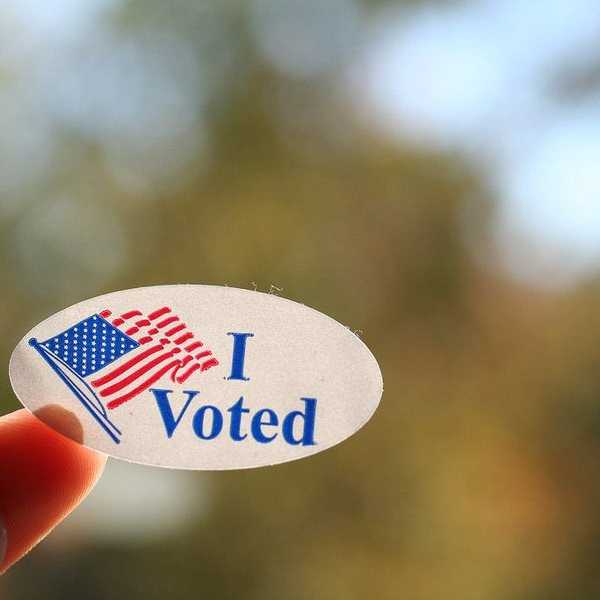
In our country today, there is no regulation that enforces paying taxes as a prerequisite to vote for political officers. In a broad sense, the only people that should have a say or vote in any type of situation should be people that are actively contributing to the wellbeing of the collective unit. If one isn’t contributing fiscally, why should he/she have a say in such matters? Collective action problems occur in all types of groups of people and they are inevitable. In the United States, many of these conflicts encountered are solved through elections. Voters elect officials and delegate power to make collective decisions. In the United States today, we require that in order to be eligible to vote, one must be over the age of 18 and a citizen either natural born or through the process of naturalization. Currently, paying taxes is not required in order to exercise one’s civic duty to vote. Oftentimes, citizens are voting on taxation and other monetary matters that directly affect them, because they are the people paying the tax. Therefore, the people paying the taxes and financing the most government programs should be exercising the power in choosing who they want in office. As of right now, the United States has people voting for office holders and propositions that do not even potentially concern them. They do not directly concern or affect them in any way, shape, or form because they are not contributing; therefore they should not have a say in the matter.
Suppose Joe does not pay taxes. Citizens are then preparing to vote on a new proposition that wants to elevate taxes to the upper class, wealthy Americans. Bill, on the other hand, makes an immense amount of money due to the fact he works diligently and put his heart and soul into starting his own law firm. Joe then votes in favor of the proposition because it favors his financial situation and he will reap the benefits of the government programs. Bill is then forced to pay an extensive amount in income taxes because Joe, who does not contribute whatsoever, voted in favor of the tax. What is wrong with this picture?
Unfortunately, most countries today only have minimal requirements to vote in elections. No known countries practice this specific idea; however, Cyprus practices a similar idea. In Cyprus, one must be a citizen and fulfill the residential requirements in order to vote. In countries such as Austria, Italy, and Peru (among numerous others), specify that elections are to be “free.” While endorsing a polling fee is not necessary, it is necessary that one must be paying the nation's taxes to the federal government. Without this policy in place, countries around the world are without a doubt receiving more votes and voter participation is (or should be) extremely high. Without requiring citizens to pay taxes in order to vote, this solidifies and encourages anyone to voice their opinion and right as a citizen of the nation in which they reside. On the downside, however, governments are receiving opinions from people who are not affected by the decisions they are voting for. They continue voting for issues (specifically financial issues) that do not concern them.
If adding this amendment to the Constitution was a possibility, it would clearly state: “In order to vote one must not only be a citizen and at least 18 years of age, but one must mail tax documents clearly proving financial contribution to the United States government.” In adding this amendment some may be concerned that voting percentages would be cut nearly in half. Although voter turnout would be decreased substantially, this would essentially benefit the United States as a whole. The citizens voting for issues and politicians would be those actually affected by such matters. Voter turnout is reasonably low without instituting this policy, so it is highly unlikely that it would decrease percentages to record time lows. Oftentimes in local elections voter turnout could be as low as five percent. Adding this amendment would tailor the governmental policies and fiscal matters to desires of those who contribute to the well being monetarily.
Following adding an amendment that requires paying taxes in exchange for suffrage, the United States should also add an amendment that clearly articulates that the President and Congress should both forfeit their salary everyday past the end of the fiscal year that a budget for that year remains unpassed. Without this amendment, the United States has confronted unnecessary problems. The larger the group, the more difficult it is to arrive at decisions and check items off the to-do list. What makes it even more conflicting is when the president and congress are from diverse political parties still attempting to arrive at solutions. President Obama, for example, currently has to make decisions as a collective unit with a very republican congress. Doing so makes everyday tasks much more difficult than they need to be. In past years, not having this amendment has caused government shutdowns. The president could not come to terms with congress on a budget for the next fiscal year, and as a result the government experienced a shutdown. With a government shutdown the government remains further behind in making decisions until there is an agreement between both the president and congress as a whole.
Although this specific type of amendment was not found actively practiced in other countries around the world, the main idea of establishing such an amendment is to facilitate and catalyze the government to agree and work together in order to get the budget passed; it is to incentivize teamwork and solidarity. Other countries such as Benin, Côte d’Ivoire, and Gabon have similar incentives innately established in their constitution. In Benin, for example, if the end of the National Assembly does not establish the budget, it is put in place permanently by edict. In Côte d’Ivoire, on the other hand, if the budget is not established within seventy days it can be put into law through ordinance. In Gabon, it would be taken into the Council of Ministers to be signed by the President. Having such actions that take place in this particular circumstance facilitates and encourages the federal officials to compromise and work together in order to arrive at a decision. In doing so, they may face some consequences that either delegate budget powers elsewhere; however, if they get their job done effectively these problems will no longer be in the equation.
The purpose of a government is not only to set laws and regulations in place to maintain order, but the purpose is also to model a way in which others can replicate solidarity and coherence as a collective unit. Governments are made up of numerous officials that work together and utilize their delegated power to make the decisions that in the best interest for the rest of the country. This amendment would encourage people and other elected officials to look past their opposing views and put the country’s best interest as the main priority. The president and congress would most likely be working even more diligently to approve the budget on time due to the fact that they would not be receiving extensive amounts of income for each day that the conflict remains unresolved. If one is faced with consequences if they do not get their job done in a timely manner (especially financial consequences), the president and congress would be more likely to work even harder to solve collective action problems to avoid, at all cost, losing their salaries. Republicans and Democrats would come together and compromise in order to put food on the table and provide for their families.
While the Constitution has served its purpose effectively for the past two centuries, as times change, the need for alteration in formal political documents is also necessary. It would benefit the nation exponentially if an amendment was added that forced citizens to pay taxes in order to voice their opinions during elections. In addition, it is imperative that an amendment be added that stops both the president and congress from receiving their salary everyday past the end of the fiscal year that a budget for that year remains unpassed. Enforcing the first amendment would prevent free riding; while the second amendment would encourage government officials to look past differing opinions to make the country’s best interests a priority in a timely manner. In the establishment of both amendments, the United States would solve more collective action problems and continue down the path of success.