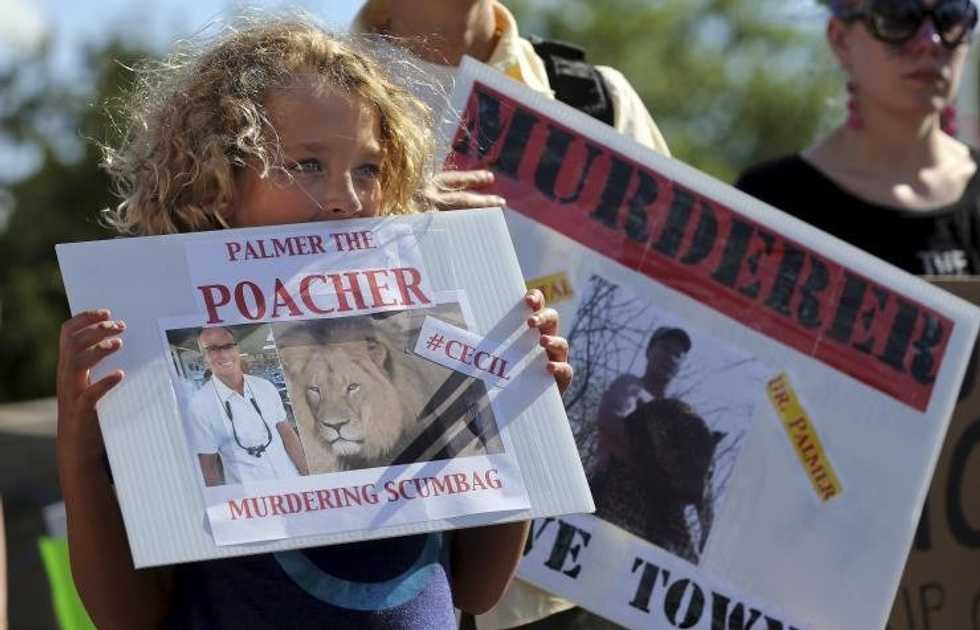
If you’re a frequent Internet surfer and take part in social media, then you probably remember how U.S. dentist Walter Palmer was harassed over the Internet and essentially “hunted” in the cyber world for allegedly illegally killing Zimbabwe’s most-prized living relic, Cecil the Lion, last July. I’m not going to type out an elaborate essay that sophisticatedly places me into a Palmer hater, the group of people that thinks Palmer deserved the threats that he got; a Palmer lover, the group of people that sees nothing wrong with what Palmer did; or even somewhere in the middle that can see both sides. The take-away of this story dives far deeper into the spectra than Palmer’s morality; the take-away of this story can be found in the response of the U.S. public to Cecil’s killing. Let me just start off by saying that while I don’t think killing animals for recreation is the greatest extracurricular activity, I’d still technically consider myself to have a “scientist” mindset—animal testing is a reality in my future field. In neurology, poking and prodding around mice brains is one of the only ways that we as a global community have found out about how human brains function. However, I’m also not one of those people that will tie myself to a tree if it’s threatened to be cut down so as to save the ecosystems that reside in the tree. And while the entire Cecil the Lion story is incredibly shady (and quite frankly, the details of the story change every single time I read a new article about the topic), it should be important to our generation of high school and college students for another reason: how we are slowly becoming desensitized to everything. So no, I’m not going to provide my opinion on if Palmer should be considered a murderer, a criminal, or innocent. I’m not going to discuss in detail why killing animals for sport is or isn’t an idiotic thing to do. What I am going to do is to simply tell you what really bothers me about this whole fiasco, and what I hope bothers you a little bit as well.
Throughout history, each successive generation has become more and more accepting at witnessing violence. There are numerous examples, but the most prevalent being how in Greek tragedies, scenes of violence were never allowed to be shown on stage. Granted, it would have been unprecedented for a Greek playwright to do so, given it was taboo to even think to do something so disturbing in the eyes of the Greeks, but let’s say Sophocles decided to show Oedipus gauging his own eyes out onstage—Sophocles would have been banned from writing plays ever again. It was just not a thing you did back in the day. As the Renaissance eras, revolutionary wars, and the Enlightenment came and went, displaying violence on stage was starting to be more of a thing. In fact, today, violence on stage/in movies is technically considered one of the main influences that draws an audience in to seeing said movie (how many times have you wanted to see a movie because it had awesome “action scenes” in it… I’m looking at you, "Fast and Furious" fans). While in a way it’s very messed up that seeing others get hurt is a huge crowd getter, it’s also all our generation knows. We grew up in the midst of the Iraqi war, 9/11, and so many other terrible things. But somewhere along the way, war started to become glorified. And out of that glorification grew shows like "Game of Thrones," which a portion of the overall premise by the directors is essentially, how bloody and gory can we make these war scenes?
For those of you that don’t watch "Game of Thrones" or don’t know what it’s all about, just imagine a huge war breaking out with the most absurd amount of blood and violence you could ever imagine. Now I’m talking some episodes you are quite literally witnessing torture techniques like hungry rats eating through human intestines, beheadings, and so much blood. I’ve watched episodes with people and they don’t even bat an eye at these scenes… scenes where you’re literally watching people’s heads being chopped off aren’t causing any discomfort to the viewers at all—but this is oddly understandable. This is the norm. This is what we grew up with. But then comes a scene where a dog needs to be killed as a form of punishment to one of the characters. Now, when the knowledge that a dog must be murdered is comprehended by the people watching, the viewers (myself included) panic: “they can’t show a dog being killed!” “They wouldn’t show something like this! …would they?” However, when it came to it, and the one character had a sword up to the dog, the scene switched before showing the dog being killed. I knew immediately they did this because if they didn’t, half of the viewership would be so angry/distraught, they might even stop watching. But the other 58 minutes of the show where humans are being treated as rag dolls, we don’t even flinch.
This isn’t an uncommon thing. Any scene where animal violence is present, the general public freaks out. For example, recently I was watching a video in which a dog was killed, and scrolled down to read the comments out of curiosity and stumbled across one that said, “A person is one thing, a dog? Who in their right mind would ever kill a dog?!?!” This is how our generation tends to think. One idea is that this mindset is due to the inevitable helplessness that arises when dogs are compared to humans in the way that dogs and animals can’t really defend themselves against human beings. It is this media tactic that makes Sarah McLachlan so successful in making the entire nation instantly sad upon hearing her name and likewise so successful in obtaining money from Americans to pay for care of neglected animals. However, when world hunger or poverty are brought up, people tend to shrug it off, because “that’s just how life is.” This is what our generation grew up surrounded by… this is life.
This is also where Cecil the lion is tied back into the story. I truly don’t believe Palmer is a purely evil human being. Even after reading the shady details (and there are plenty), I really don’t think he would have killed Cecil if he knew just how much the lion meant to the people of Zimbabwe. What I do think is that he didn’t deserve death threats over social media; what I do know is that he got them… and he got a lot of them. Isn’t this ironic to anyone? He kills a lion and suddenly everyone on Facebook turns into animal rights activists, threatening to kill him back? The sad reality is, if he killed a human, I don’t even think the story would have gotten this much attention. And I believe this ties into how desensitized our generation is becoming as a whole toward human deaths. Human deaths are becoming so commonplace in the news and subsequently in our own lives, that familiarity is beginning to set in. International stories that should be more about the legality of an American entering another country and killing an animal for game and the proper judicial steps that should be taken to properly take care of the issue are in reality more about death threats since Palmer killed an animal. This is something that our generation should at least understand is happening if nothing else—we should realize how backwards this is and we should act accordingly. Or soon enough, after human deaths have no more effect on our moral makeup, possibly animal deaths will start to not have an effect, either. What happens next? We are immoral creatures that just roam the Earth? We should understand that mostly all of us are unknowingly acquiring this quasi-immoral mindset and we should try to correct that thinking every time we watch a gory movie scene in a movie or an episode of "Game of Thrones"—we must make sure that we first have the same morality that we seek and expect out of others.