Wow. This film blew me away for all the right reasons and significantly raised the bar for future superhero films. One goes into a Marvel film expecting to see a celebration of superpowered people saving the day, but "Civil War" is an exploration of the mayhem and devastation that comes with having great power. Rather than feeling a sense of pride for all the people they’ve saved, "Civil War"’s heroes feel guilt and face persecution from not only the world at large but also each other. If you are expecting a spectacle of a traditional good vs. evil narrative, you will be pleasantly surprised because this film is about conflicting ideologies revolving around freedom and control that threaten to rip the Avengers apart.
"Civil War" takes inspiration from the 2006 Marvel Comics crossover event of the same name, and although there’s a variety of story arcs occurring within "Civil War," you never feel burdened or whiplashed by the amount of story content because it’s all handled expertly by the film’s directors, the Russo brothers.
The dynamic duo come from writing television comedies such as "Community," where it’s essential to have a balance between every character’s comedic moments, and you can definitely see how well this skill has translated to "Civil War"’s numerous character arcs. Every character in "Civil War" had a standout scene, and when I think of how strained "Age of Ultron" felt under the weight of all the characters and story arcs it had to juggle, you will appreciate how masterfully the Russo brothers handled the similarly daunting task of giving each character meaningful scenes and setting up future story arcs within the Marvel universe.
In "Civil War," you follow the continued story arc of Bucky Barnes', the Winter Soldier, complicated friendship with his longtime friend Captain America. There’s a new unknown villain that poses a threat to all of society but the crux of "Civil War"’s story lies in the battle between Captain America and Iron Man regarding a piece of legislation that would restrict their freedoms. Following the events of "Age of Ultron," humanity demands that the Avengers sign the Sokovia Accord; this is a legally binding contract that would make it compulsory for the numerous superheroes on Earth to become employees of the United Nations which would essentially restrict their superhero prowess by requiring proper clearance from the U.N. before engaging in any conflicts that would require entering sovereign states.
Tony Stark (Iron Man) has an emotional confrontation with one of the victims of Sokovia’s destruction that makes him realize the importance and benefits of having oversight by a third party. Siding with him is Paul Bettany’s "Vision" who argues that they must agree with the legislation because it would go a long way to gaining the respect and trust of normal people after all the collateral damage the Avengers have caused. On the polar end of the ideological spectrum is Captain America, who believes that having their freedom revoked is a slippery slope where other aspects of their rights could be compromised, such as their right to privacy.
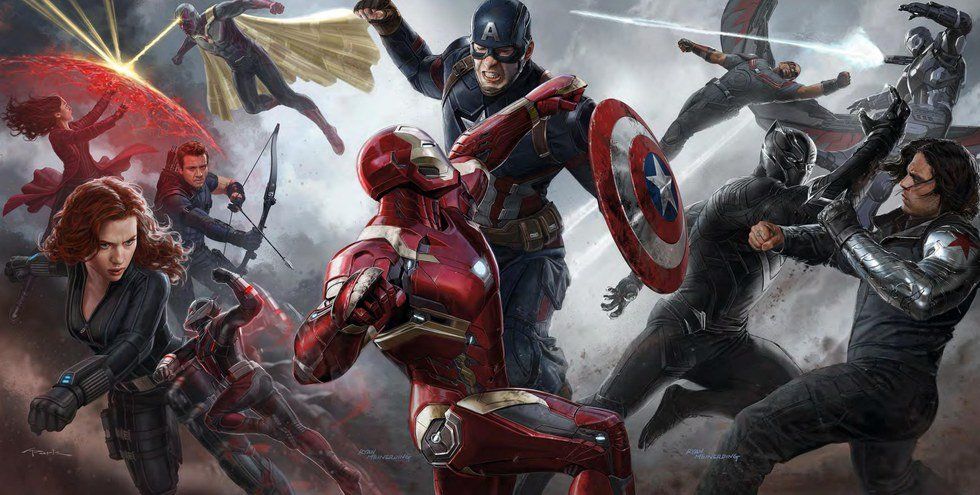
On top of this internal team dispute is his good friend Bucky who is being hunted by every government in the world for a crime he was framed for, and Captain America has no choice but to side against Iron Man and stand by Bucky. In the middle are the other members of the Avengers ensemble who interact with each other in meaningful ways that perfectly articulate their stand on the Sokovia Accord, which results in the best action scene of any Marvel superhero movie to date. Captain America vs. Iron man, Black Widow vs. Buckeye, Falcon & the Winter Soldier vs. Spiderman are just a few of the jaw dropping confrontations that will leave you immensely satisfied.
The action in this film isn’t as bombastic as other Marvel films in the past, but that doesn’t matter because the set pieces in "Civil War" are incredibly well-paced and choreographed, more so than any Marvel film to date. A standout action sequence is the introduction of Chadwick Boseman’s the Black Panther, who is on a revenge mission that feels justified and you root for his success even though the individual he’s after is a victim himself. Additionally, "Civil War" introduces Spiderman, who absolutely steals every scene that he is in. He’s probably in the film for only 10 minutes, but my God is he put to good use. Although he doesn’t add anything to the plot of the film, his presence enhances the overall scope "Civil War"’s hero vs. hero confrontations.
If there’s anything to complain about, it’s maybe the third act, which defies conventional movie storytelling. Tradition would have the climax of the film be at the end, but it actually happens at the end of the second act where our heroes face one another. The third act circles back the main antagonist of the film, who himself isn’t entirely evil but is motivated by human notions of pain and vengeance. I rather liked the different take on the villain with "Civil War" because it shows how you don’t need superpowers to create chaos. I’ll leave it at that because the reveal is rather heartfelt, and you almost sympathize with the villain’s actions.
"Civil War" really redefines the superhero genre because it’s a story about a family of human individuals whose superpowers come at a great cost regardless of if their intentions are warranted, and even then the power dynamics of their differing ideologies threaten to tear them apart. "Civil War" feels like the Avengers movies we’ve been waiting for, and I’m thoroughly excited to see where our heroes go from here.