
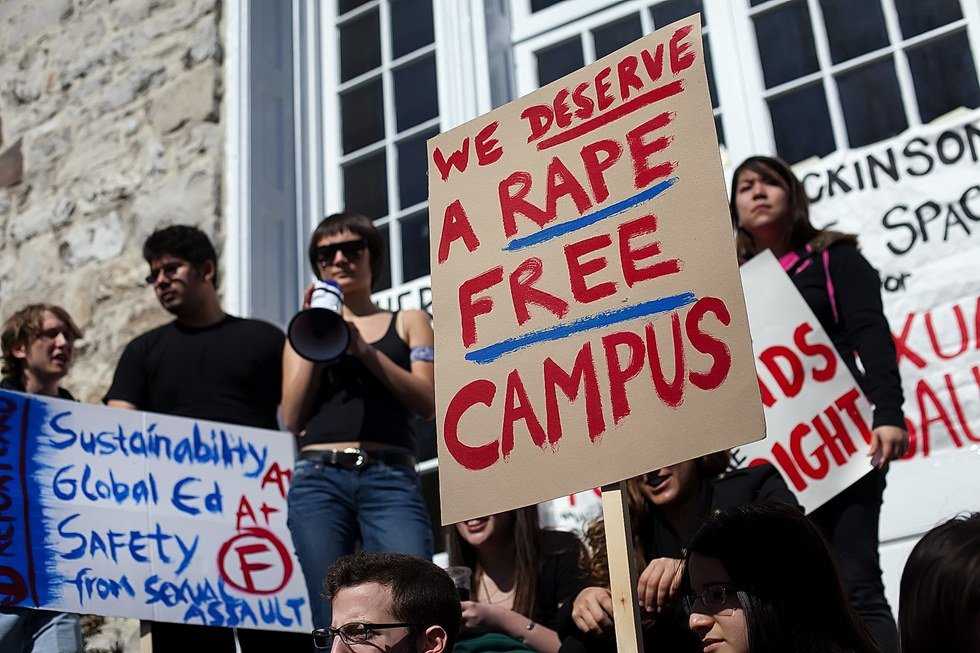
On April 18th, PSA (Preventing Sexual Assault) is teaming up with Zeta Tau Alpha and Alpha Sigma Phi for Occupy McKeldin, an event dedicated to spreading awareness and celebrating victims of sexual assault. The event will feature several activities, including yoga and acupuncture, music, and a speaker every half hour.
One of Bill Cosby’s many targets, Lili Bernard, is one of the most anticipated speakers. Bernard will be sharing her story of survival, which can also be found here, where you can sign her petition to abolish the statute of limitation on rape and sexual assault protection.
Whether you are in Greek life, or just another student taking your daily walk to class, there is no doubt that the 12-hour event on McKeldin Mall will catch your eye at some point that day. But after the event is over at 9 p.m., what are you going to take away from it?
The idea of sexual assault has always seemed so foreign to me; that is, until last Tuesday.
Before I give you the wrong idea, I have never been assaulted; but there are too many students at colleges and universities across the country that have. These victims have been undermined and ignored by peers, faculty and law enforcement officials; their stories have gone unrecognized.
All of this became apparent to me upon watching Hunting Ground, a documentary about sexual assault on campuses across the country. Quite honestly, I was not looking forward to an hour and 43 minutes of a Greek-life sponsored event, preaching about yet another social issue in a sea of awareness programs that have been rubbed in my face since arriving to school.
By the end of the film, I knew that my pre-conceived notions were far from reality. I won’t bore you with an extensive review (refer to Google), but there are a few facts I picked up that I must share:
1 in 5 women are sexually assaulted while in college.
2-8 percent of sexual assault claims are found to be false, meaning at least 92 percent are not false.
At U. Va, there had been 0 expulsions for sexual assault between 1998 and 2013, but have no fear; 183 students were expelled for “cheating and other honor board violations.”
Phew, I’m glad we cracked down on the real criminals.
The ratio of reported sexual assault cases to the number of expulsions exposed in the film was repeatedly disproportionate as well.
There is a reason I, like many people, did not perceive sexual assault on campus as a legitimate epidemic:
88% of women sexually assaulted on campus do not report the incident.
While I understand the implications of why a victim may be reluctant to speak up, this robs the public of gaining a better understanding of how serious the problem is.
McLaine Rich, a senior psychology major, has spent the past two semesters at the University of Maryland encouraging sexual assault victims to raise their voices through Preventing Sexual Assault, known as PSA.
Rich became victim to sexual assault October of her junior year at UMD. Upon filing the report and waiting for a response, Rich slowly became disillusioned by the administration that took months until taking action against her attacker.
Fed up with the reporting process, Rich began PSA about one year after the assault occurred. As president, Rich has made it a goal to highlight the problems with sexual assault on campus and to encourage conversation about this issue.
A Google Form that Rich created has been a safe, anonymous outlet for about 40 students so far who have been eager to share their comments and stories surrounding sexual assault.
For Rich, the form has painted a picture of what sexual assault looks like on campus.
“In almost all of the stories I have read, women who have shared their stories have inadvertently blamed themselves in some way,” Rich said, adding that the attackers are usually people that the victim knew beforehand.
“We are so used to this Hollywood version where some guy in an alley pulls the girl away, but that’s just not the case,” Rich said, “It’s confusing when it’s someone you know. That’s why victims are so quick to second guess what actually happened.”
All of us have been affected by sexual assault in some way. Attending a university with someone who has been directly affected should be a wake up call. As a campus community, we have a collective responsibility to become more aware of an underground rape culture that has wronged our peers. We have a long way to go, but if we recognize sexual assault as a prevalent issue and continue to increase the conversation, we can make strides in the right direction.