
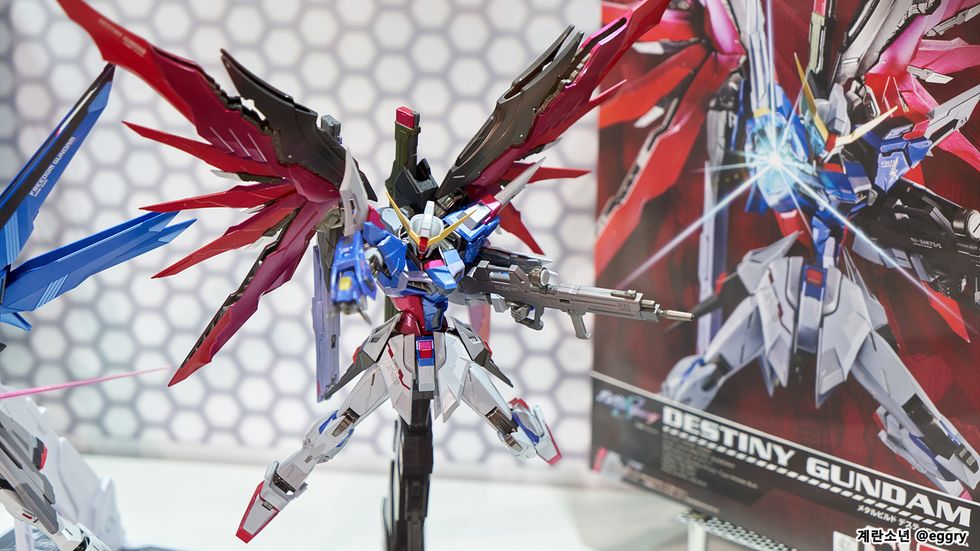
The Gundam franchise is one of the most iconic franchises in the entire history of anime. This Japanese pop culture behemoth started in 1979 with the release of the first episode of Mobile Suit Gundam by Studio Sunrise. And thus a legend was born, with nearly 40 anime series and counting, various spinoffs, games, manga, light novels, and an endless amount of Gundam plastic model kits.
It's really no surprise why Gundam is such a long-standing series. Just look at the Gundams themselves—they're just so freaking cool! The constant supply of model kits are extremely popular with mecha anime fans and model kit enthusiasts all over the world because of their head-turning designs. So while you can't bring a towering 20 meter tall Gundam home with you, you can at least have a poseable replica of one.
Building the model kits (also more commonly known as “Gunpla” among enthusiasts) is a popular hobby for beginners and veterans alike. It's also a relatively cheap hobby, with many of the smaller 1/144 scale kits costing less than $20. People with more experience or those who are looking for more of a challenge have the option to customize their finished kits or try their hands at the larger, more expensive scales. No matter you're looking for, Gunpla is a hobby that anyone can pick up in a day.
It was not too long ago that I finished building my first kit—the 1/100 Full Mechanics Barbatos Lupus.
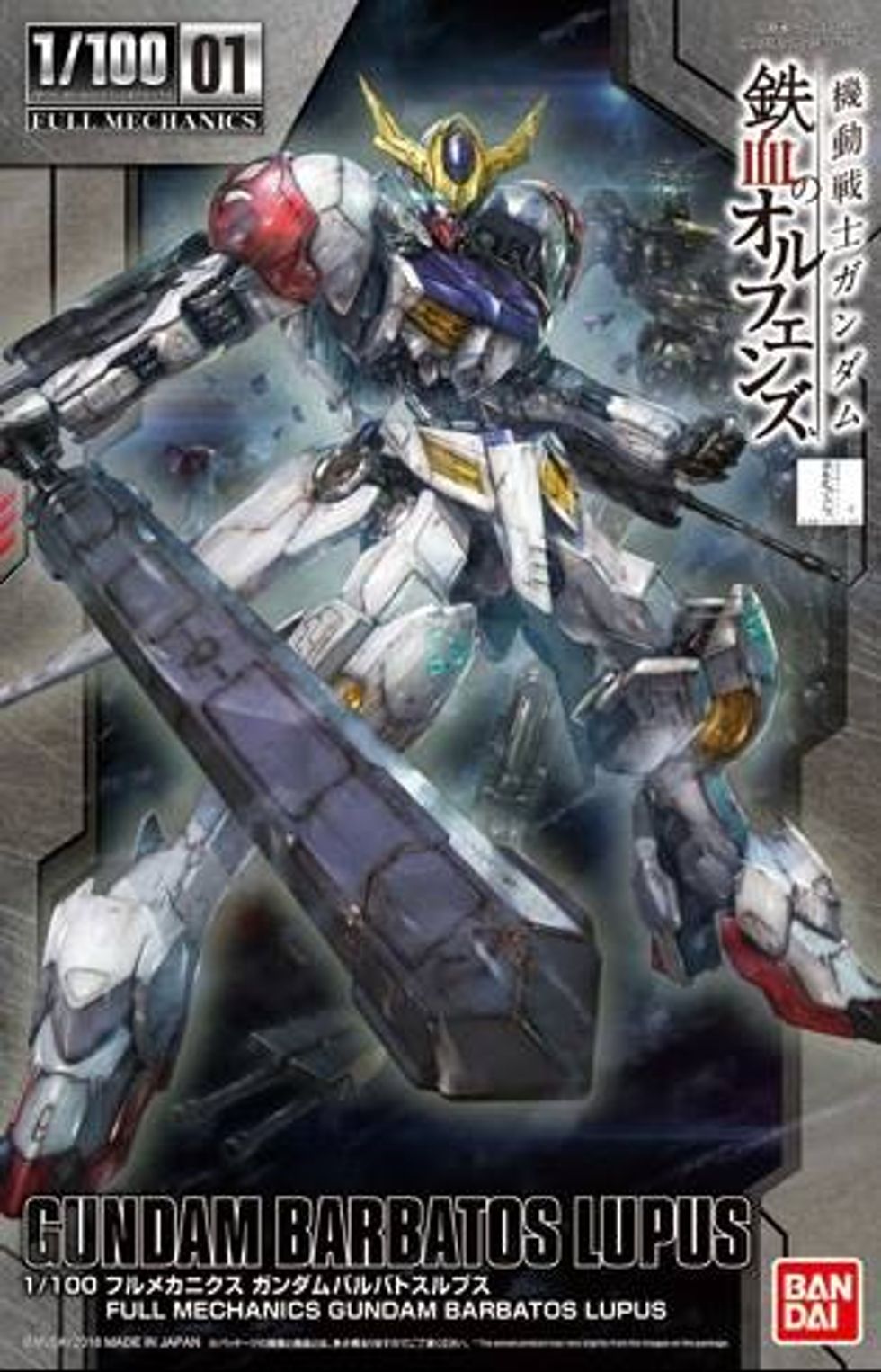
The first thing that I thought upon opening the box was "Wow, that's a LOT of parts.”
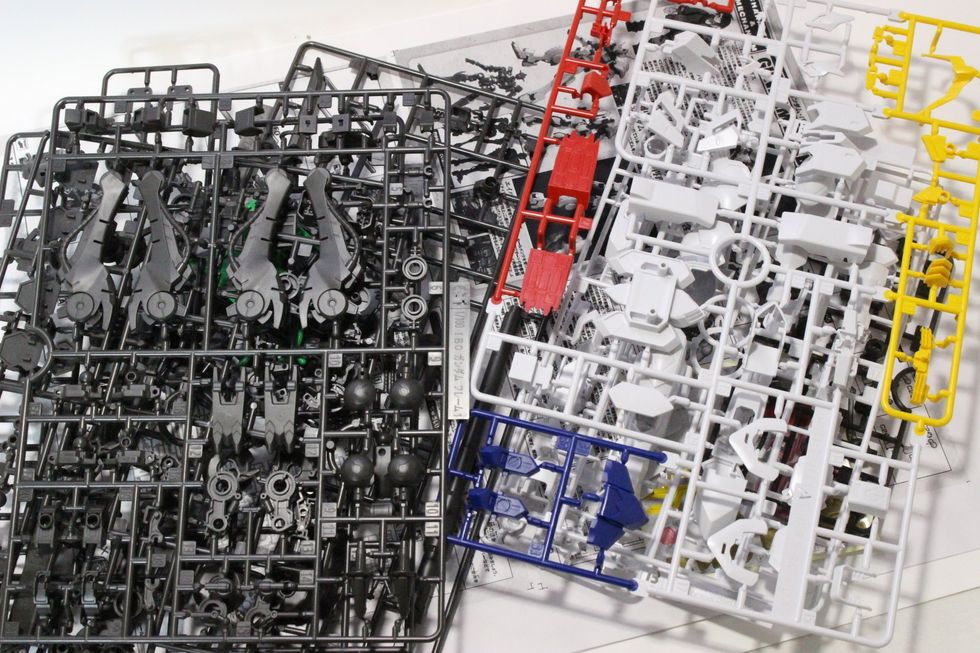
(Quick note: this is the plastic runners for the standard 1/100 Barbatos Lupus, not the Full Mechanics version. But it's close enough.)
Having a dozen or so sheets of parts to put together is a sight to be anticipated when building Gunpla. Don't expect to simply slap colorful stickers on a semi-finished model and call it a day. When you go into Gunpla, you really do build it from scratch.
However, fear not! There is an included instruction booklet that comes with each box so you can decipher the mess of plastic. Every part is labeled on both the instructions and on the plastic sheet that it is attached to. The pictures are also detailed enough so you can figure out the orientation of the parts and its sequence, no text required.
Gunpla are designed with the idea that a beginner can pick up a kit and get started without any tools necessary to get the job done. I don't have tools to snip the parts off the sheets, so twisting and popping the part out worked fine for me. If there was too much kibble on the bits, I used a pair of scissors to clean it up as neatly as possible.
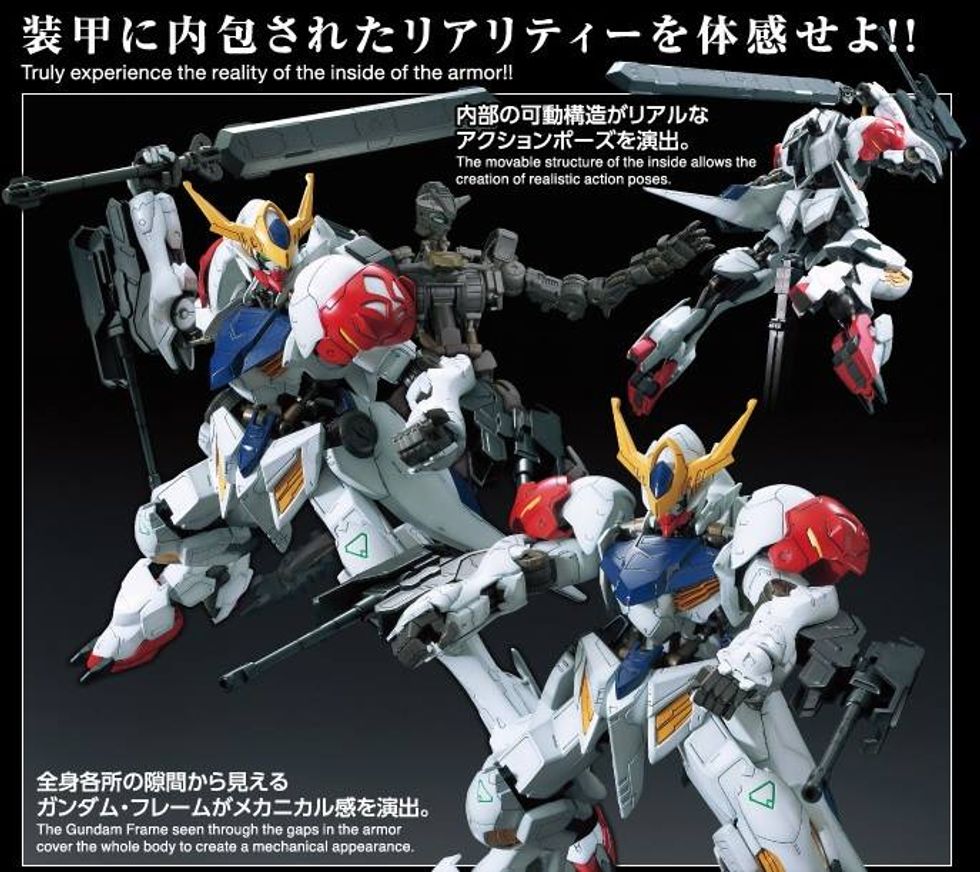
The build took about eight to nine hours to complete, which I did over the span of two days. To summarize the experience I had with it, it would that it was as satisfying as it was irritating. There were times that I couldn't quite understand how the parts fit together and why do the side skirts keep popping off?
Halfway through the kit, I started to lose patience with cleaning up the edges. I would also fumble around with the small bits of plastic while I tried to piece them together. I think my particular kit had a manufacturing error, where one of the arms just wouldn't fit into the shoulder joint no matter what I tried. Eventually, I just settled with sticking cotton into the socket so that the arm would feel somewhat more stable.
It's too bad that it's not very sturdy. My Barbatos Lupus can't really hold a lot of poses due to the oversized sword-mace and a weak waist joint. Gunpla are pretty delicate, so you have to handle them gently. I'll have to spend some time strengthening the joints and invest in a base.
I think I may have awakened to a new hobby. Now that I have a cool-looking Barbatos standing on my desk, I can't help but stare in awe of it because of how impressive it is.
Surprisingly, it is really rewarding to complete a full Gunpla kit. Even with the flaws and the loose parts, the process is what makes the whole thing worthwhile in the end. That's the true magic that I think makes the Gundam franchise so enduring and addicting.
















