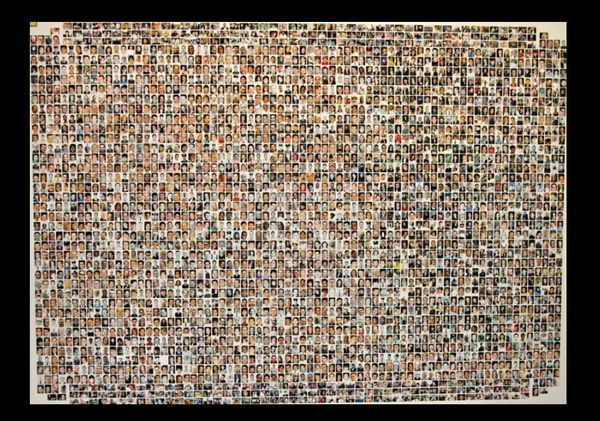
From Part One: "Joseph Stalin once said, 'One death is a tragedy; one million is a statistic.' As important as it is to be educated about history in order to understand how the world works, I believe it is even more important to preserve the stories behind the statistics. Normally, when we learn about events like World War II, we learn the timeline of events, battles that occurred or casualties and general information about the event as a whole. Very rarely in school do we learn the personal stories of survivors and people who experienced everything as it happened. But when we do get to hear the personal stories, it reminds us that World War II was not just a historical event, but a time in which people suffered, fought and died, but were encouraged by courageous acts of heroism. We are reminded of the actual people involved and the tragedy of each death; one million may be too large of a number to comprehend, but we should at least dedicate time to learning the stories behind as many of those as we can."
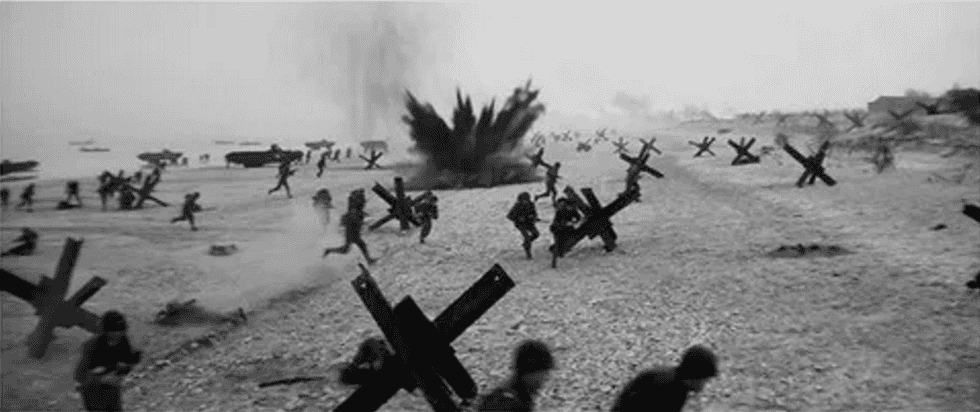
Another veteran I had the pleasure of meeting was Mr. Vaughn Stone. Enlisted at 19 years old, he was stationed in North Africa. But because of some administrative mistake in paperwork, he was placed on the wrong ship heading for Normandy, France. Because of that unbelievable mistake, Mr. Stone later realized he was on the ship heading to fight in the first wave on Omaha Beach on D-Day. Twelve miles offshore, the soldiers loaded into the Higgins boats and made their way towards what would come to be known as one of the bloodiest battles of the war. German defensive soldiers lined the tops of the cliffs beyond the beach, making it difficult to not get shot even as they approached in the Higgins boats. Around him, soldiers cried, vomited and peed their pants, but he continued to pray.
Terrified of the oncoming fire, the Higgins boat driver opened the door too early, and the German sharpshooters instantly picked off the soldiers in the front. Many of the ones who were able to crawl over their fallen comrades drowned as soon as they left the boat since it opened too early over deep water and they carried too much heavy equipment. Mr. Stone began to sink down as well, but managed to drop his backpack in the water to swim to the shore, which cost him all of his equipment, including his radio.
By the time he made it to land, the waves lapped up on the shore stained red along the whole beach. Mr. Stone continued to crawl his way along the beach, hiding behind “Czech hedgehogs,” giant concrete cross beams designed to keep ships away from the shore. He crawled for hours across the beach, trying to avoid the horizontal grenade blasts and the heavy fire from the shooters above. Taking a radio from a dead soldier, he continued on and made it to the base of the cliff, finally safe from the shooters above whose guns couldn’t point that far down. Looking back, he saw hundreds of dead soldiers lying on the beach and in the bloodstained ocean. Joined by the survivors of the rest of the Higgins boats and the second wave of soldiers, they scaled the cliffs and took over the German fortifications at the top.
Hearing the incredible stories of veterans and survivors who showed courage and bravery in the face of death was a pivotal event in my life. Not only did it teach me how blessed I am, but it also taught me the importance of recording these stories to preserve for the next generation and beyond who will never get to hear them from the veterans and survivors themselves. I hope to continue to pass these stories on so that these heroes will never be forgotten, and the millions of deaths will be more than just a statistic.