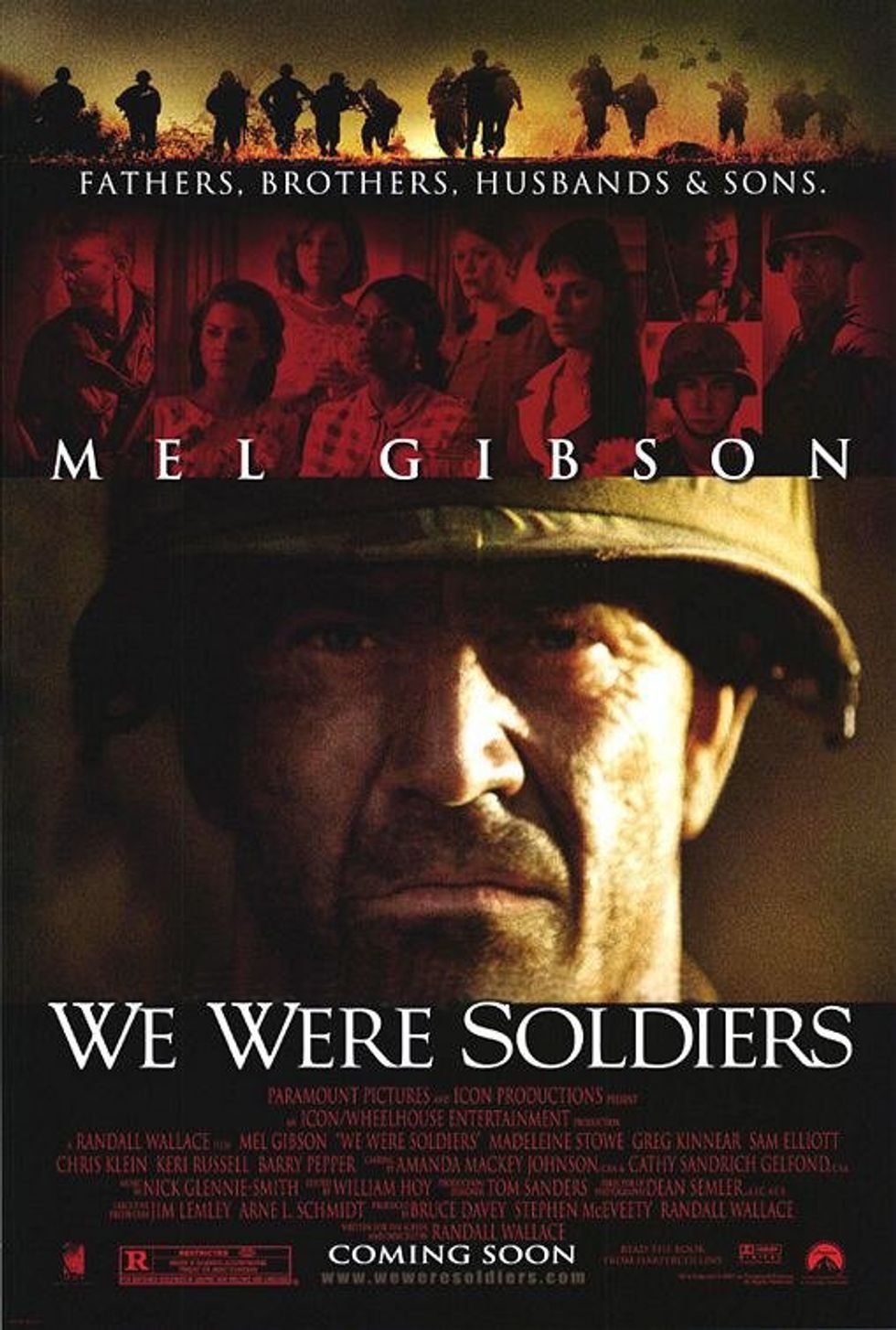
I always wanted to join the military, with a perhaps naïve notion of duty or patriotism, and seeing many war flicks only enflamed my passion for the military. However, only recently have I truly understood the importance of “We Were Soldiers.” The film, even with its artistic liberties, has multiple lessons any kid (yes, I am calling myself a kid, I’m only 24 years old after all) should take with them when thinking about joining the military.
1. There is such thing as good leaders and bad leaders.
2. Never underestimate the power of intelligence.
3. Mistakes will be made in the field.
4. Veterans will carry the battle with them—even when it's over.
1. In the film (such as in actual events), there are great leaders who look out for their men and there are leaders who seem to be in it for the glory. Lieutenant Colonel Hal Moore (portrayed by Mel Gibson), is a veteran of the Korean Conflict and is given command of the 1st Battalion, 7th Cavalry Regiment. His experience in the military affects his command of his men. He introduces himself to his lead helicopter pilot, Captain Bruce Crandall, which puts a personal relationship between the two men, which translates onto the battlefield. He meets one of his officers, 2nd Lieutenant Jack Geogehan, after his daughter is born and gives him advice on being both a soldier and a father.
Jack Geogehan is another good leader. In training, when his platoon are marching up the side of a steep hill, he sees his men are struggling, orders them to sit down, take off their boots and socks, and inspect each other’s feet for blisters or other sores that they may have from the long march. In the Ia Drang Valley, one of his men is hit in between friendly and enemy lines and Geogehan runs to grab his man, risking his own life in the process.
Lt. Herrick, another platoon leader, was looking for glory. Pushing his men hard, he probably thought tough training would help the men be tough in battle, but he never got the chance to. On November 14, 1965, he led his platoon after a North Vietnamese Army scout into a NVA ambush, where he was mortally wounded along with seven* other men. The remaining men were led by Sergeant Savage, fourth in command. He kept a calm head when his connection to the rest of First Battalion was cut off, and kept his men alive for the next fourty-eight hours with close quarters combat and close artillery support.
2. In the film, while Col. Moore and his men are still in their Vietnamese base, they receive reports that another American base was attacked, and the 7th Calvary’s orders are to search for and destroy the enemy that attacked the base. When Colonel Moore asks about the strength of the enemies forces, he is told that they are “manageable.” Moore smirks, maybe even laughing a little, and then says “You have no idea, do you?” We have no idea,” is what the intelligence officer says. When Moore’s men are deployed to the Valley, they capture a “deserter,” who tells Moore that the valley is the base for an entire North Vietnamese division (about 4,000 men; Moore has 395 men under his command).
Later in the film, when a “broken arrow” is declared, one of the intelligence agents in Saigon says “My God, there’s no hiding it now,” while the camera pans to the sandtable showing one American flag (symbolizing 1st Battalion, 7th Cavalry) surrounded by six or seven North Vietnamese flags (symbolizing the NVA forces).
3. “Broken arrow” is a phrase that means that the American lines have been broken and that the enemy has completely overwhelmed U.S. forces, calling in all American air support from all over South Vietnam and U.S. carrier groups. In the Ia Drang Valley, the call was absolutely necessary. Napalm was dropped on NVA positions and had devastating effects on their forces. However, one flight came in too close and dropped napalm on an American position before the radio operator, Charlie Hastings, could call them off. Colonel Moore tells Hastings to “just forget about that one” (certainly no easy task) and to keep calling in the strikes. War is Hell, and you have to keep on working or else even more people will get hurt.
4. Joe Galloway’s (portrayed by Barry Pepper) voice over at the end of the film tugs at the heartstrings of any civilian watching the film. “Some had families waiting; for others the only family would be the men they bled beside. There were no bands, no flags, no honor guards to welcome them home. They went to war because their country ordered them to, but in the end they fought not for their country nor their flag: they fought for each other. We who have seen war never stop seeing it. In the silence of the night we will always hear the screams. So this is our story, for we were soldiers once… and young.” Joining the military or no small decision, and it is something that will stay with the soldier for the rest of their life.
“But this I swear before you and before Almighty God: that when we go into battle, I will be the first to set foot onto the battle field, and I will be the last to step off. And I will leave no one behind. Dead or alive, we all come home together. So help me God.”- Colonel Hal Moore.
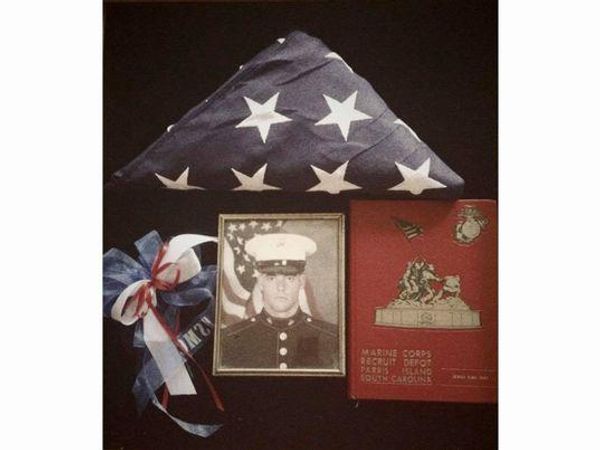
Remember our men and women in uniform, throughout history and today this Memorial Day. God bless.