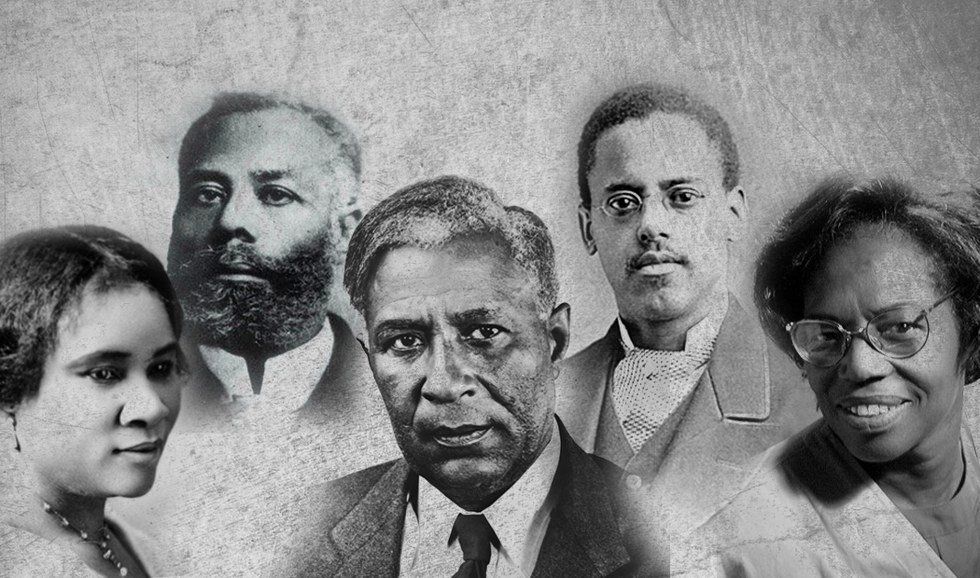
Welcome to week two of this celebration! Part two consists of celebrating black inventors. During my research, I was surprised to see how many of our everyday items were originally created and/or improved by black people. Unfortunately, I can't list all of the immensely talented innovators (even though I'd absolutely love to) but below are a handful of people I chose to focus on.
1. Sarah Breedlove aka Madam C.J. Walker
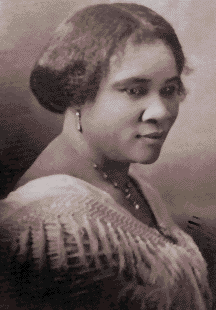
Born: December 23, 1867, on a cotton plantation near Delta, Louisiana.
Backstory: Born to slaves, Madam Walker was an orphan by the age of seven. At the young age of 14, she married Moses McWilliams to flee from her abusive in-law's house. They then had a daughter, named A'Lelia Walker, before Moses is said to have mysteriously died. She then moved to St. Louis where her brothers were to find work. Earning $1.50 a day, Walker worked as a cook and laundress, struggling to send her daughter to school. In 1894, she married John Davis but the marriage wasn't successful due to Davis' infidelity. She later on married Charles J. Walker. On May 25, 1919, Walker died due to kidney failure amongst other complications at the age of 51.
Invention: Around the 1890s, Walker is said to have experienced hair loss. Her issue is said to be a result of the lack of indoor plumbing at the time. People couldn't wash their hair frequently which led to their hair being maltreated. After some experiments, Walker created a hair formula that was called "Madam C.J. Walker's Wonderful Hair Grower." She then promoted her product to black women around the world. Her self-promotion and determination made her the woman she is known as today - the first self-made (black) female millionaire.
2. Charles Richard Drew
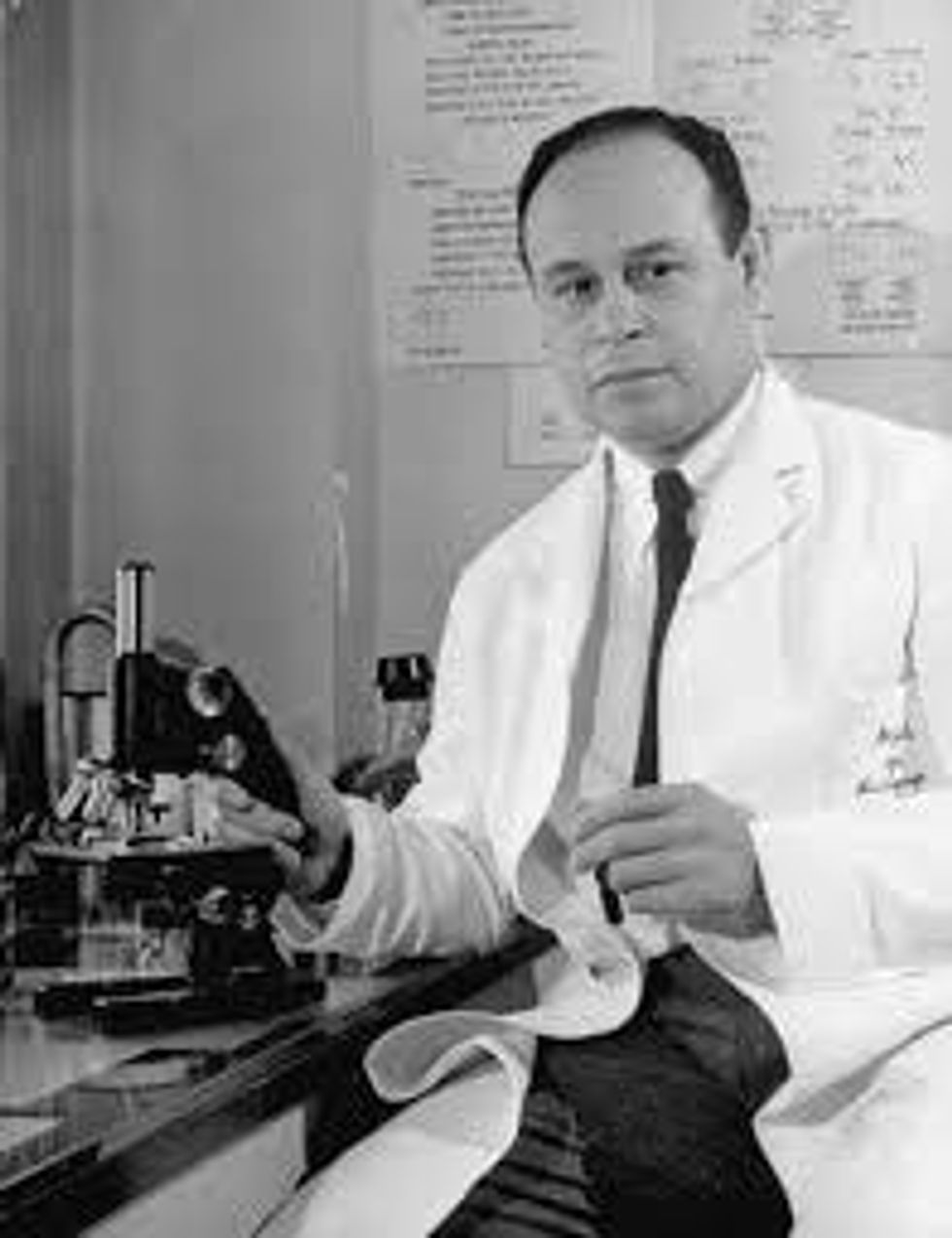
Born: June 3, 1904 in Washington, D.C.
Backstory: Said to be an "average student" but a "gifted athlete," Drew received football and track and field scholarships from Amherst College. Until a biology professor made him interested in the field of medicine, Drew wasn't exactly sure what he wanted to do with his life. After an internship and surgical residency at Montreal Hospital, he took quite the interest in transfusion medicine. He received his medical degree in 1933 and went on to teach pathology at Howard University two years later. Not too long after, he received his Doctor of Science and Surgery at Columbia University. Drew died on April 1, 1950 as a result of a car accident.
Invention: While at Columbia-Presbyterian Hospital, Drew began to research and study blood preservation. He invented a way to preserve blood plasma so it wouldn't perish after a few days. During the time of Drew's research, World War II was active; troops were in urgent need for blood. He was chosen as the director of the first American Red Cross Blood Bank which made him in charge of blood for the U.S. army & navy. However at the time, the blood of black and white troops were segregated. Drew was highly against this and spoke out against it but the segregation of blood still continued; he eventually resigned. He went back to Howard University and worked as a professor in surgery. Drew received many awards for his invention.
3. Alexander Miles

Born: Exact date/place are unknown. He is, however, said to have been born in 1838.
Backstory: Miles worked as a barber in Wisconsin. When he met Candace Dunlap, a white woman who was widowed and left with two kids, they married and moved to Minnesota in 1875; in 1876 they had a daughter named Grace. While living in Minnesota with his family, Miles had knowledge about politics and joined "fraternal organizations." Years later, he founded "The United Brotherhood" - a life insurance company for black people. Miles was once believed to be "the wealthiest black person in the Pacific Northwest" but not for long - later on his life, he went back to working as a barber. He died in 1918.
Invention: At the time, elevator doors and the shaft had to be closed manually (can you imagine doing that now?). Sometimes people would forget to close shaft door which resulted in them falling. It's said that Miles grew concerned about the issue one day when he was riding on an elevator with his daughter and noticed that one of the shaft doors were left open. He went on to create an early version of automatic closing doors. He was granted a patent for his invention. Till this day, his design is still influenced in modern elevators.
4. Lewis Howard Latimer
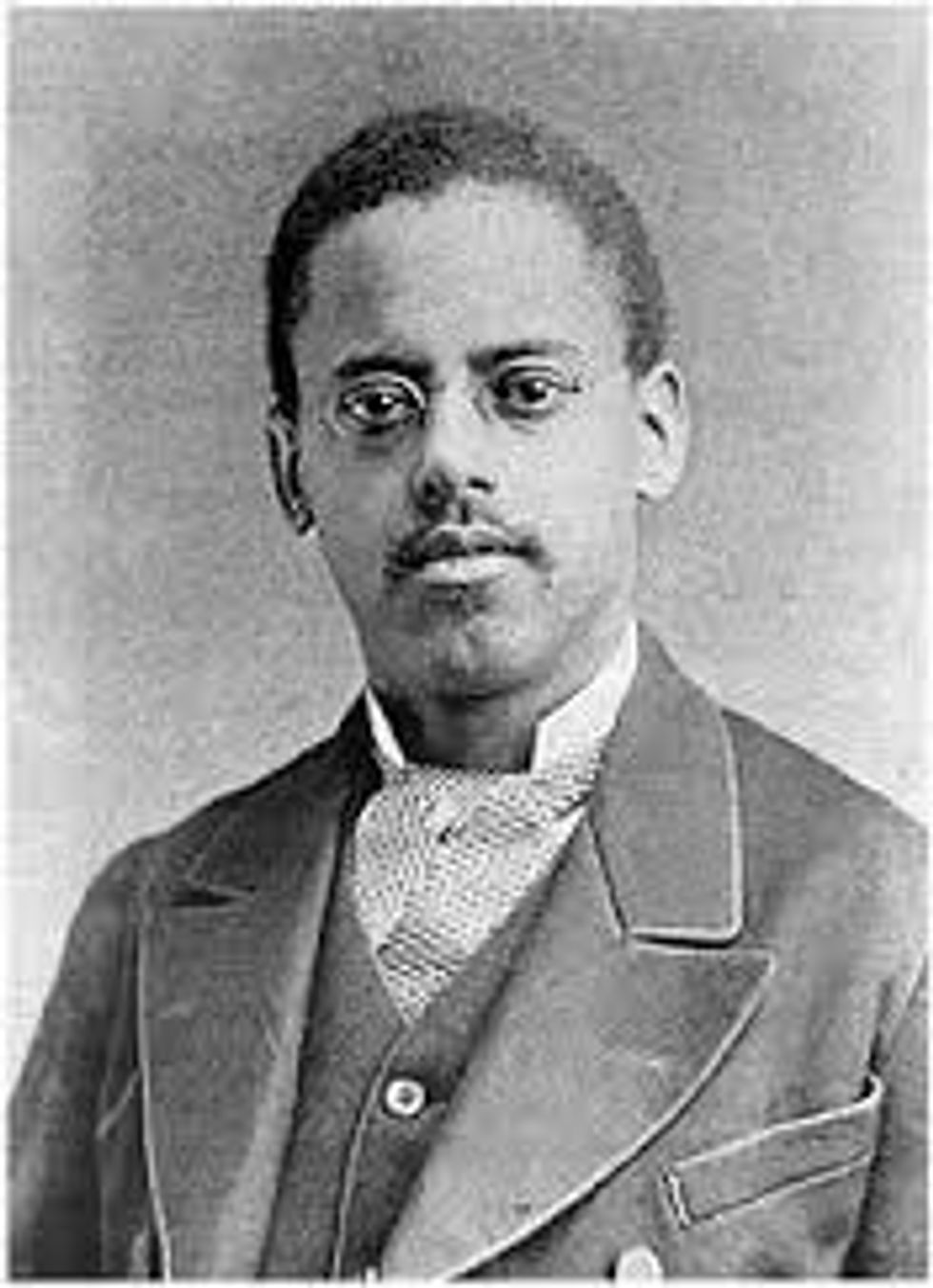
Born: September 4, 1848 in Chelsea, Massachusetts.
Backstory: Latimer worked at his father's barbershop in their hometown before joining the navy at 15 years old. After an honorable discharge, he worked at a patent law firm in 1865. Lewis developed drafting skills and was even "qualified for blueprint work." His drafts greatly impressed Alexander Graham Bell, whose telephone blueprints were created by Latimer. In 1880, Latimer went on to work for the man who ran the United States Electric Lighting Company - Hiram Maxim. Working for Maxim allowed him to develop ideas to create his own inventions. However, he is mostly known for one of his creations. He died in 1928.
Invention: While working with Maxim, who was said to be Thomas Edison's rival and was working on a way to improve Edison's creation, Latimer "patented a carbon filament for the incandescent lightbulb." This allowed the bulb a prolonged life, made them cost less and made them more affective. When major cities were beginning to illuminate the street with lights, Latimer was put as head of the "planning team."
5. Garrett Augustus Morgan
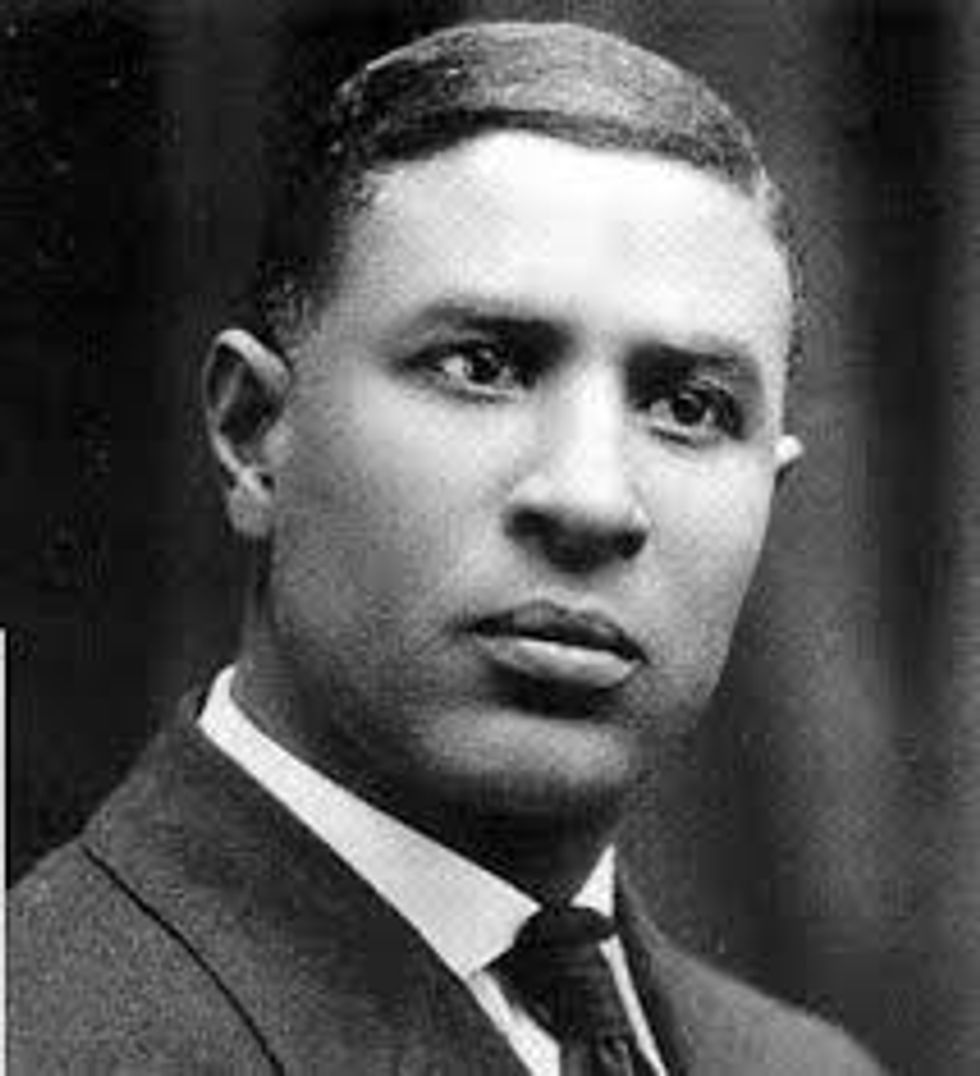
Born: The exact date isn't known, but Morgan is believed to have been born in 1877 in Kentucky.
Backstory: At just 14 years old, Morgan moved to Ohio in search of a job. He worked as a handyman and sewing machine repairman before opening up his own repair shop in 1907; his business was a huge success. He died on July 27, 1963.
Invention: Being that he had enough money from due to the success of his business, Morgan was able to afford a car. At the time, traffic signals were manually operated which sometimes caused a lot of havoc such as collisions. It's said that after witnessing a bad accident, Morgan suddenly got the idea of creating a signal "with an 'interim' warning position-" thus creating the traffic light. He later on sold rights to his invention to General Electric for $40,000.
6. Sarah Boone
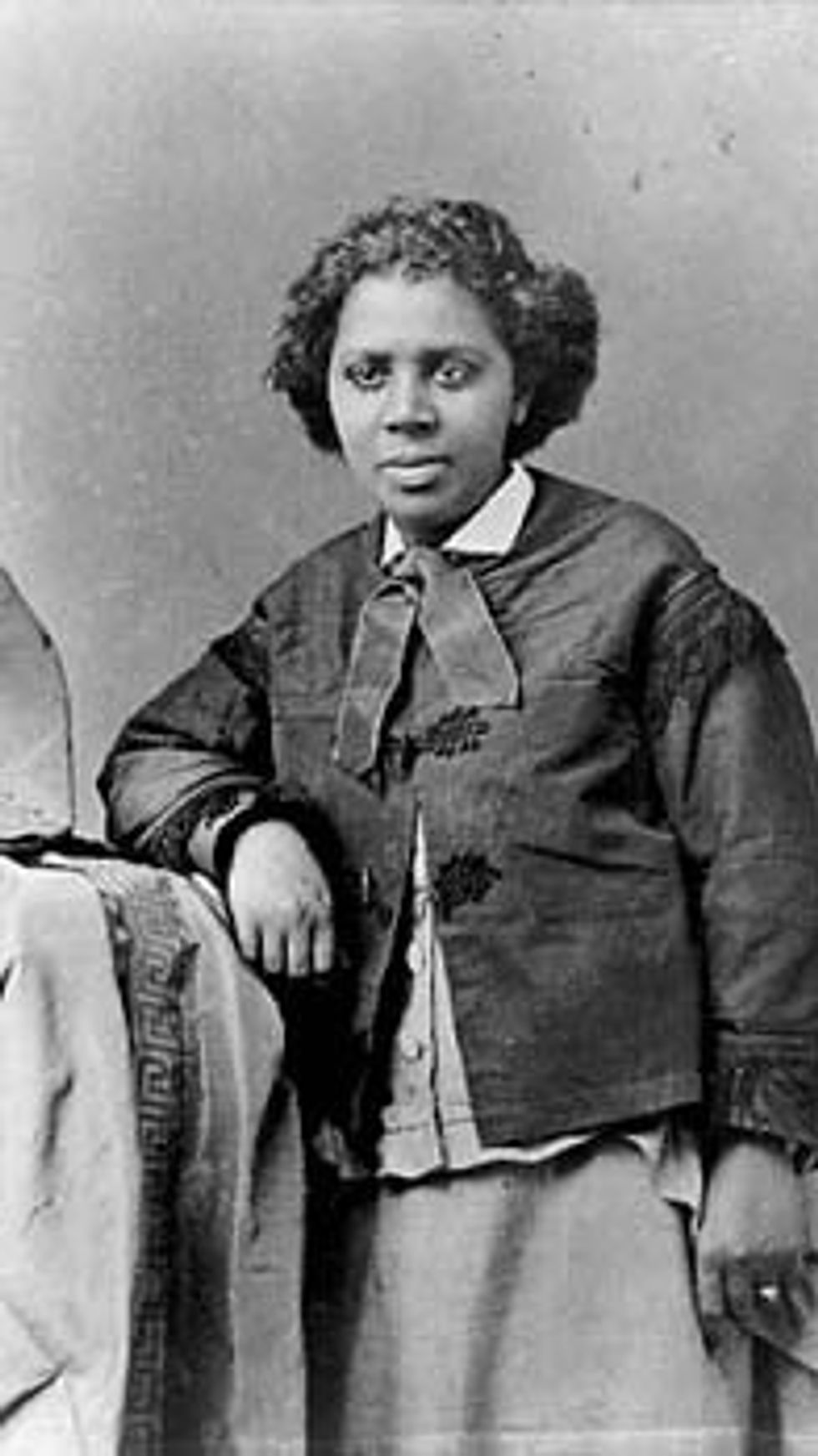
Born: Exact date is unknown but she was born in 1832 in Mississippi.
Backstory: Born Sarah Marshall, at the young age of 15, she married James Boone. The two had eight children together before moving to Connecticut. There, Boone worked as a dressmaker. About eight years later (1900), she died in her home.
Invention: Since Boone was a dressmaker, she wanted to find an easier way to iron women's dresses. Ironing was previously done by placing some wood on a chair but Boone wanted to find a way to easily iron the body and sleeves of dresses. She invented an ironing board that had "collapsible legs and a padded cover." She designed it in a way for the board to be able to be stored or put away. On April 26, 1982, she received a patent for her invention.
7. Marie Van Brittan Brown
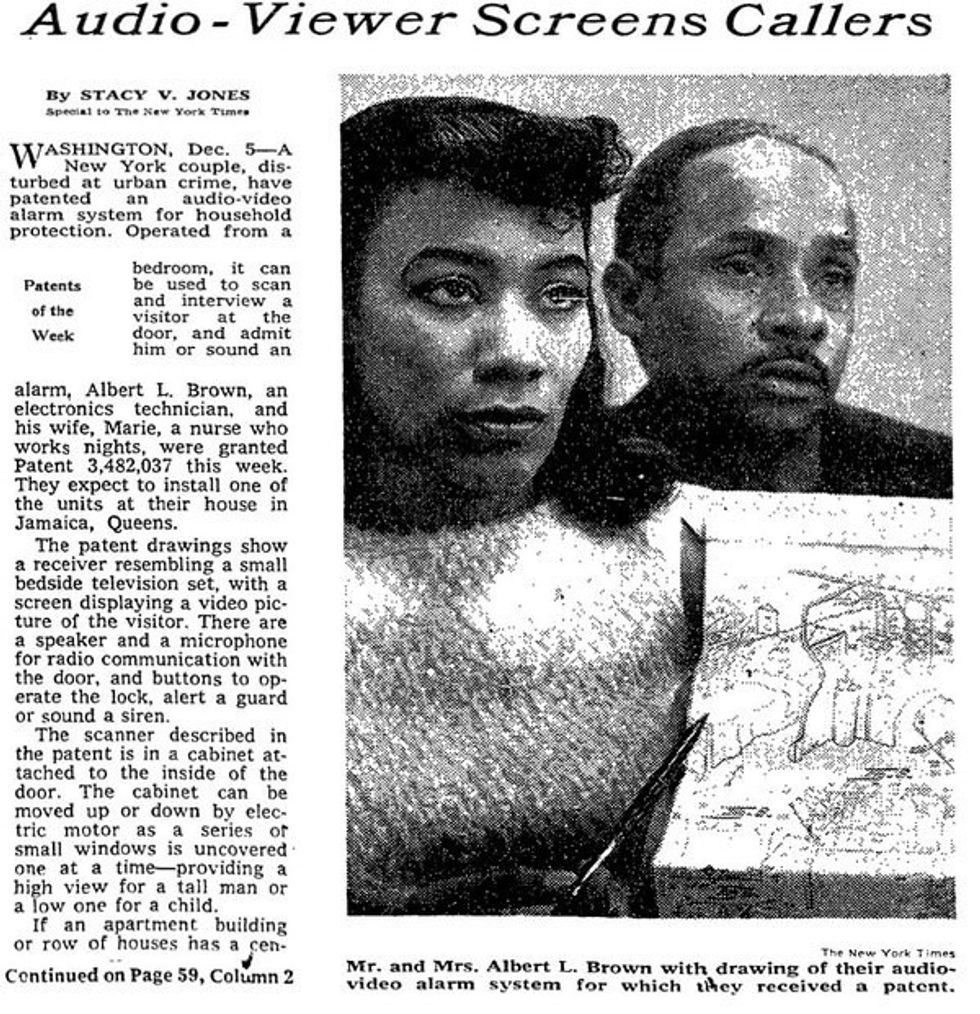
Born: October 30, 1922 in Jamaica, Queens, New York City.
Backstory: Brown was a nurse while her husband, Albert Brown, was an electronics technician. She died on February 2, 1999 at the age of 76.
Invention: Being that she didn't work a regular nine to five shift, Brown was at home alone at "odd" hours of the day and night. She was concerned when the crime rate in her neighborhood increased, knowing that she could probably cook Thanksgiving dinner before the police arrived. Teaming up with her husband, the couple began to create a home security system. Brown and her husband, afraid to open the door without knowing who it was beforehand, had the idea of attaching a motorized camera to a cabinet that was on their door. They placed a television monitor in their bedroom so Albert could use a "radio-controlled wireless system to feed the images seen at the door back to the monitor." They even had a "two-way" microphone that allowed them to speak to whoever was at the door. If the person seemed suspicious, a button that would trigger an alarm could be pressed. Their invention was patented on August 1, 1966.
8. Alice Parker
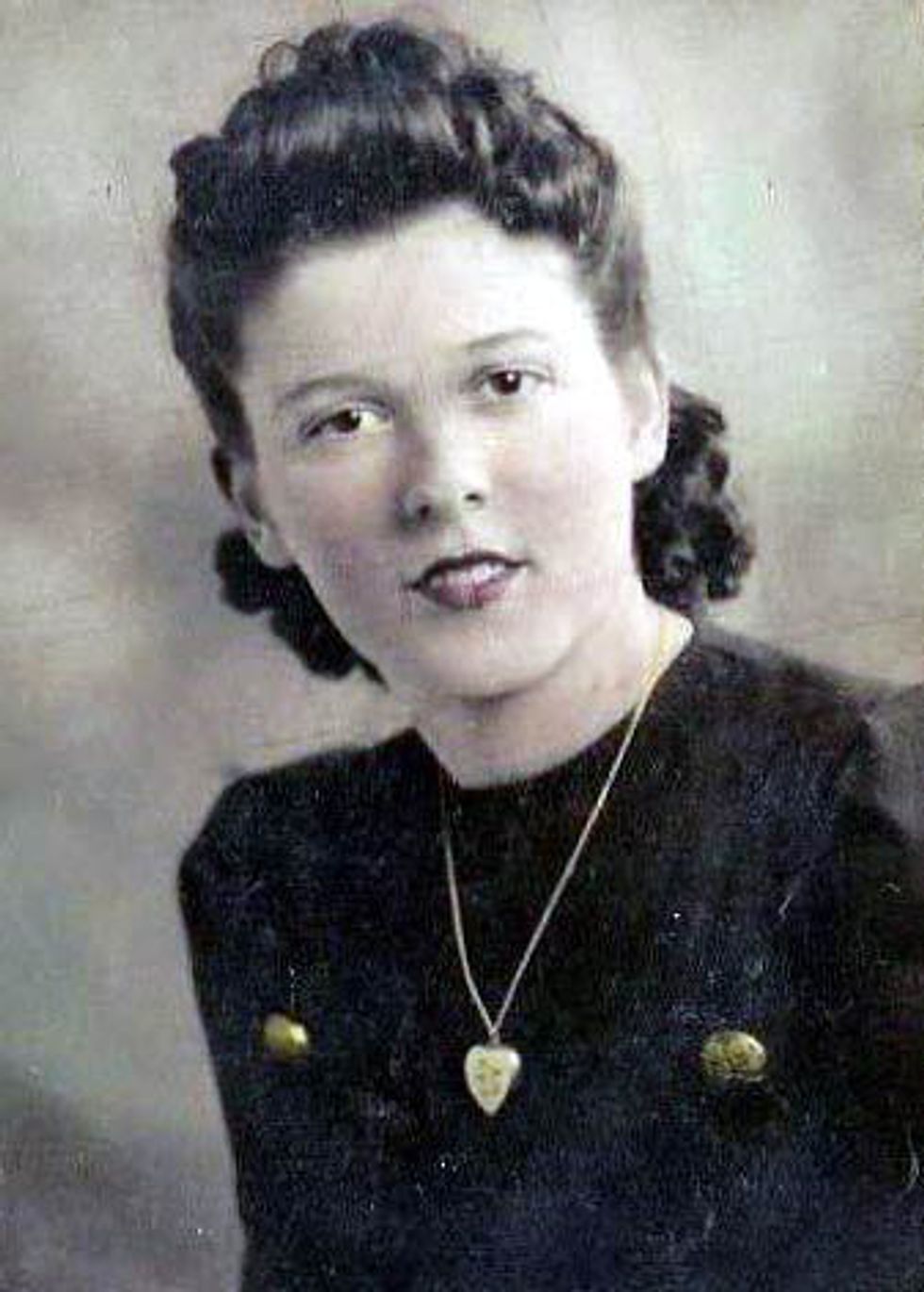
Born: Exact date and place is unknown.
Backstory: Not much is known about Parker but it is documented that she spent her early years in Morristown, New Jersey. She went to Howard University and returned to Jersey after graduation.
Invention: On December 23, 1919, Parker received a patent for her invention - a gas heating furnace. This introduced a new way (that is still used) to heat up homes.
9. Frederick McKinley Jones

Born: May 17, 1893 in Cincinnati, Ohio.
Backstory: Jones was raised by a priest until he turned 16 as a result of his mother's death when he was nine. He was interested in cars and watched on as mechanics worked, trying to retain as much as he could. By 19, he was able to build and drive several cars in races and became a well known racer. He died on February 21, 1961. He is the first black inventor to posthumously be awarded the National Medal of Technology.
Invention: When Jones received he position as Vice President at the U.S. Thermo Control Company, he was told to create a "device" that would let large trucks carry food from points A to B without it rotting. Jones worked on this project and created "Thermo King." He later modified his invention, making boats, trains and ships also able to carry food.
10. T. J. Marshall
Backstory: Not much of Marshall's life is known.
Invention: Marshall is however known for inventing the fire extinguisher sprinkler system.
**Many of these inventors created more than one thing**
Inspirational quote from a black American:
"Success is to be measured not so much by the position that one has reached in life as by the obstacles which he has overcome while trying to succeed."
- Booker T. Washington