
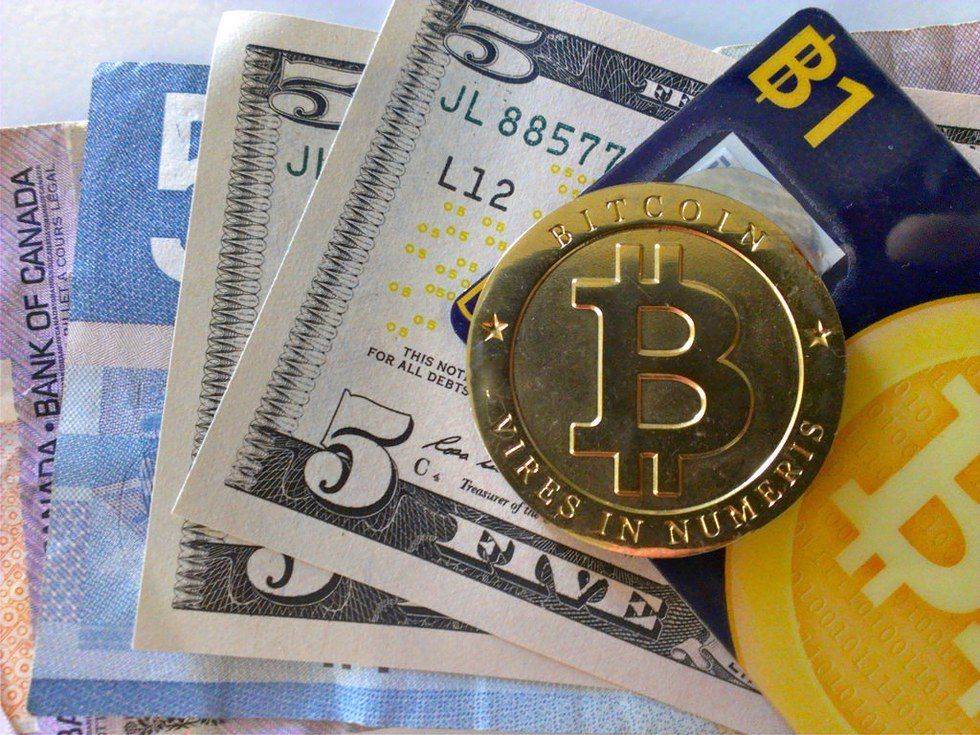
Recently, the price of Bitcoin has surged beyond the price of gold, taking charge as one of the strongest currencies in today's age. This has set the stage for Bitcoin's importance in the modern day economy and exemplifies profound evidence of its increased use among savvy investors. However, Bitcoin retains advantages and disadvantages as the first digital currency to be used in the global economy on a wide scale. Investors are flocking to the digital currency for several reasons. But what does this mean for the future of currency trade?
Bitcoin has become more popular in recent years due to the increased displeasure of using other mainstream global currencies and its availability to be traded. There are certain restrictions on worldwide currencies such as the euro, the US dollar and especially the Indian rupee/core. Investors are growing weary of policies that change the way currencies are distributed. The most prime example being Narendra Modi's recent policy in banning high currency notes in India, preventing them from circulating. His move came in order to fight corruption, making it tougher to distribute large sums of money for any and all transactions in order to restrict illegal trades and money laundering. However, his actions have profound economic consequences across the board and also takes away from the Rupee's already low credibility. In addition, the euro has remained depressed in the wake of European central banks producing more euros in something like a mock quantitative easing in an effort to augment European economies. The British pound has also started to sputter in the wake of Brexit.
These global currency issues have driven investors further towards the Bitcoin for its benefit as a digital currency, which include its limitations on supply and its ability to be exchanged on a digital medium. Bitcoin is expected to keep its supply limited to 21 million globally, thereby restricting price volatility even further and making it a stable currency to trade in, whereas the price of gold has a slightly higher volatility due to the supply in circulation. The availability of Bitcoin to be traded digitally is also critical, due to the fact that most other currencies must be transferred in some way, shape or form physically. Bitcoin transcends the physical boundaries most currencies have yet to fully breach.
However, bitcoin should not be overestimated. Bitcoin suffers from a lack of understanding and a significant lack in public attention. Once a Bitcoin is purchased, there are few markets that offer the option to trade the currency. This may simply be a trend of the times, however it is profound for the current market. It reflects the overall notion that a currency is only as strong as the public will recognize one. Although bitcoin exemplifies the nature of a currency that does well in all areas, it highlights the notion that there must be a population willing to trade.