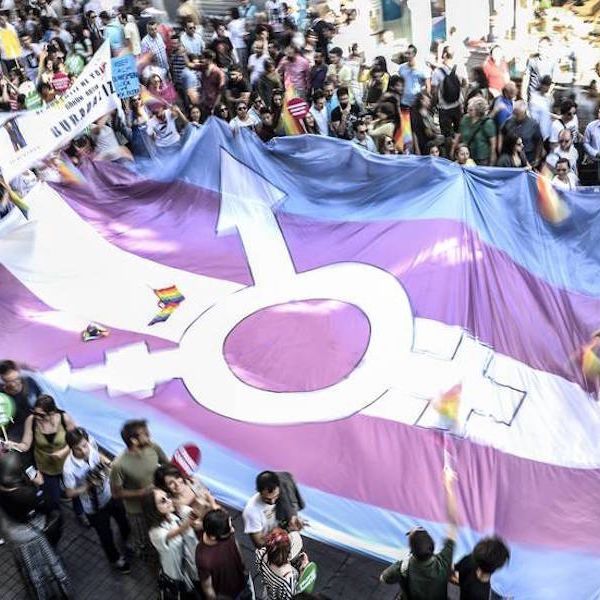


Between the recent transitions of Caitlin Jenner, to the new controversy of transgender bathroom laws, there has been a lot of discussion on transgender rights, and what it means to be transgender. With all the confusion in the differences between biological sex, gender identity and sexuality here's a go to guide for the three.
In today's society we tend to see things as dichotomies. Two sets of opposing ideals like the moon and sun, oil and water, and the most prominent: boys and girls. Humans have always found comfort in classification; putting labels on certain groups of people to help predict how they will act and carry out their lives. This is where the idea of gender came to be. Society created two opposing boxes in which people of certain biological sexes fit into in order to determine how that person will live their life. It seems like a harmless means of classification until someone doesn't fit in either box. Considering the estimate of transgender boys and girls in America is around 700,000, maybe it's time we move from the system of dichotomies into something more realistic and inclusive. Yet the main issue is that even with its new and upcoming presence in our society there is still a general lack of knowledge about who doesn't fit in the dichotomy gender boxes and why. To be fair, the differences between sex, gender and sexuality can be extremely complex, so let’s break it down piece by piece.
Biological Sex
This one is the easiest to explain, because well everyone has a biological sex. Your biological sex is what you check off at your doctor's office and is based on factors like genitalia, chromosomes, and a few other things sometimes but not always including general appearance and hormones. This is where the gender dichotomy comes from. When it comes to biological sex, males usually have penises, XY sex chromosomes and higher level of testosterone. Females usually have vaginas and clitorises, XX chromosomes, and higher levels of estrogen. Seems simple right? You're either one or the other? Well not exactly, because in every one and 1000 births, there is not a clear underlying sex of a baby, they could have a combination of any of the factors that makes a female a female and a male a male. These people are considered intersex and they can vary quite a bit. Some people who are intersex have both vagina and penis like genitalia that can vary on how much it appears to be one or the other. Some have "mosaic" chromosomes where some of their cells carry XX sex chromosomes and some carry XY. Sometimes both estrogen and testosterone are produced. Sometimes people don't know they're intersex until they try to have children, or get certain medical treatments or testing, sometimes it is not discovered that someone is intersex until an autopsy is done after they die. It's important to remember that not even biological sex is a dichotomy, it’s a spectrum with an infinite amount of possibilities in between male and female. It's also a solid reminder that you can't tell someone’s sex from their face, body or even genitals.
Gender Identity
The idea of gender identity comes from the idea of biological sex: it's a way to help predict the actions and behaviors of other humans based on biological sex. Mostly the idea of gender is based of off male and female and the qualities that go along with either of them, but with a lot of genders being masculine or feminine has nothing to do with. Gender is socially constructed and sometimes the way we feel is correlated with the set of standards that society has made for it and sometimes it doesn't. It's completely based on how one "feels" and what they may or may not personally identify with. A non-binary gender is a gender that doesn't go along with the dichotomy of male and female. There's an infinite amount of possibilities for different feelings and identifications. You can find a master list of genders here: http://genderfluidsupport.tumblr.com/gender/
Here's a summary of a few of the more prominent non binary genders:
Agender - the feeling of no gender/absence of gender or neutral gender
Bigender - the feeling of having two genders either at the same time or separately; usually used to describe feeling “traditionally male” and “traditionally female”, but does not have to
Demigender - a gender that is partially one gender and partially another
Genderfluid - the feeling of fluidity within your gender identity; feeling a different gender as time passes or as situations change-- not restricted to any number of genders
Transgender - denoting or relating to a person whose self-identity does not conform unambiguously to conventional notions of male or female gender.
Sexuality
The idea of sexuality is based on who one may or may not be romantically or sexually attracted to. Traditionally sexuality is based on gender, but that's not always the case. Some people don't experience sexual or romantic attraction. Many people find it easier to not put labels on their sexuality due to how confusing and unclear it can be. You can find a full list of sexualities and what they mean here.
When it comes to biological sex, gender expression and sexuality it’s important to remember that they're independent factors in what makes up a person and generally doesn't change who a person is. All three of these are on a spectrum and once we realize that it can help us better understand. It's important to keep in mind that these are all tools to help us feel comfortable with ourselves. Remember to respect who people are, respect their pronouns, and respect who they love.