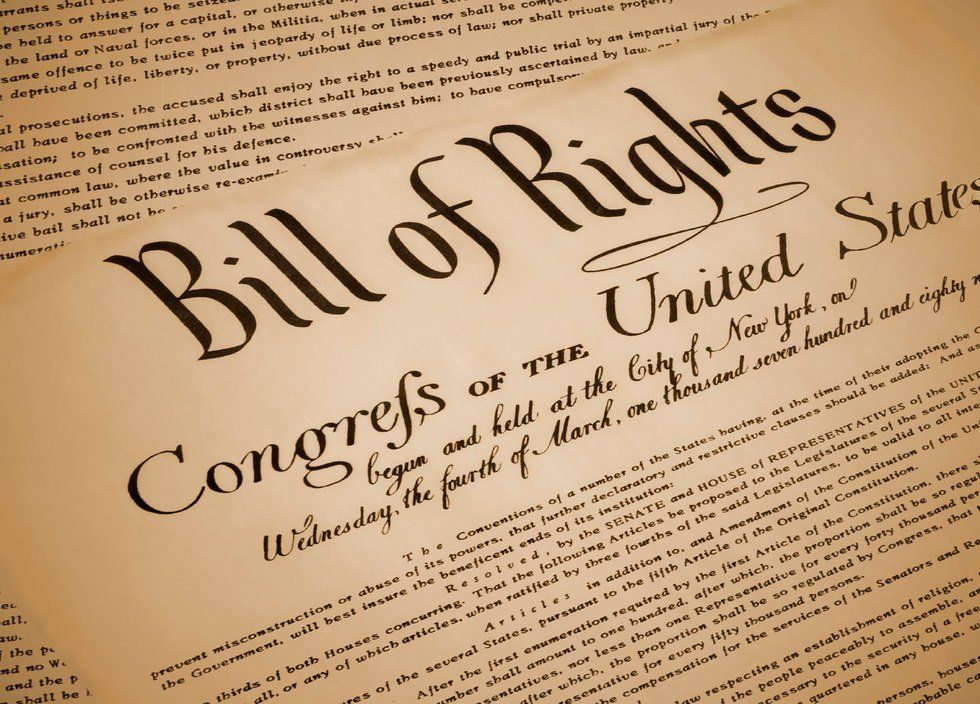
Amidst one of the hottest summers any of the gentlemen had ever experienced, debates were held frequently and continuously. Sweltering from the beating sun’s rays and their own anger, they struggled to come up with an acceptable compromise. When our founding fathers sat together at the Constitutional Convention in Philadelphia they were fully aware of the consequences of their decisions. They knew that by granting all white male citizens “unalienable Rights… among these are Life, Liberty and the pursuit of Happiness,” they would be revolutionizing the world. Since then, many things have changed. As Ben Franklin once wrote, “Our new Constitution is now established, and has an appearance that promises permanency; but in this world nothing can be said to be certain, except death and taxes.” Over the course of this Republic’s 240 years, beginning around Independence Day, July 4, 1776, our leaders have bent, destroyed, bypassed, interpreted and misinterpreted the original words of our forefathers in thousands of different ways.
It is an age-old story: immigrants from all over the world are pulled, hypnotically, towards the bright lights of the Statue of Liberty and the beautiful opportunities in America, but are violently blocked from attaining these benefits by xenophobes. In 1798, the beginning of America’s quasi-war with France, President John Adams and Federalist-run Congress passed the Alien and Sedition Acts which made deporting immigrants easier, while making voting for immigrants harder. It also fined or jailed people who expressed disapproval of the government.
The First Amendment specifically states, “Congress shall make no law respecting an establishment of religion… or abridging the freedom of speech, or of the press; or the right of the people peaceably to assemble…” However, the suspicions and worries of the nation regarding foreign affairs compelled President Adams to pass the acts. This happened again during World War II when anti-Japanese sentiment grew, resulting in an Executive Order calling for the mass relocation of immigrants and American citizens of Japanese ancestry to internment camps.
The 14th Amendment states, “All persons born or naturalized in the United States and subject to the jurisdiction thereof, are citizens of the United States... No State shall make or enforce any law which shall abridge the privileges or immunities of citizens of the United States…” The overriding fear of the Americans caused them to trample the Constitutional rights granted to the Japanese in an effort to assuage their qualms about the safety of the United States.
Even our intelligence agencies, which are charged with protecting us, have violated some of our rights. J. Edgar Hoover, influential, protracted leader of the FBI, spent years peddling the idea of Bolshevik subversion and Communist sabotage, even going so far as to claim that Civil Rights activist, Dr. Martin Luther King Jr., was colluding with them. His suspicions caused him to authorize wiretaps in King’s residence. Hoover’s own racial prejudice and rejection of the Civil Rights Movement were driving factors behind the subsequent red scares. To prevent the over-use of surveillance by the government, the National Security Act of 1947 and several others like it had been put in place. Amendment IV states, “The right of the people to be secure in their persons, houses, papers, and effects, against unreasonable searches and seizures, shall not be violated...” Although his methods were illegal, Hoover was representing many in trying to obliterate any possible threats to America.
The government is held responsible for preventing the worst from happening and bolsters the nation as it recuperates from a national tragedy. When the Twin Towers fell, Americans everywhere panicked and called for safety regulations that could prevent it from happening again. Thus, the Patriot Act of 2001, post-9/11, was created, allowing the FBI an easier way to identify possible threats and to prevent any future security breaches. The Patriot Act bypasses some of the restrictions on information gathering in order to streamline the process of locating possible terrorists. Though the government has infringed upon our rights in times of distress, many of the past violations have been corrected, even the Patriot Act needs to be renewed every couple of years.
Where were you when Pearl Harbor was bombed? Where were you when Dr. Martin Luther King Jr. was shot? Where were you when 9/11 shook the world? These have all been questions asked, unanswered, and contemplated many times. Our government has been charged with the task of keeping 300 million plus Americans from threats ranging from the Japanese and Germans in World War II to the Soviets in the Cold War and now radical jihadists in the War on Terror. When the public deems it necessary to investigate every possible threat, they will demand the government do something. It is not an easy task, but they have generally succeeded in the struggle to maintain the Constitution.