I'll start off by saying that I'm not opposed to trucks, in fact, that's far from the truth. Oil and construction jobs call for reliable vehicles that can take beatings and still look like $50,000 when they roll out of the car wash — practical and professional. We've all probably seen them — they're no stranger to North Dakota, anyway. Gooseneck flatbeds with welding equipment on the back, pipes, shovels and crew cab full of hardworking men wearing the dirt, sweat and pride of a long day’s work.
I respect these trucks, direct descendants of the workhorses that built America up from its soil. But for every one of these well-intending vehicles, there’s a big, stupid truck.
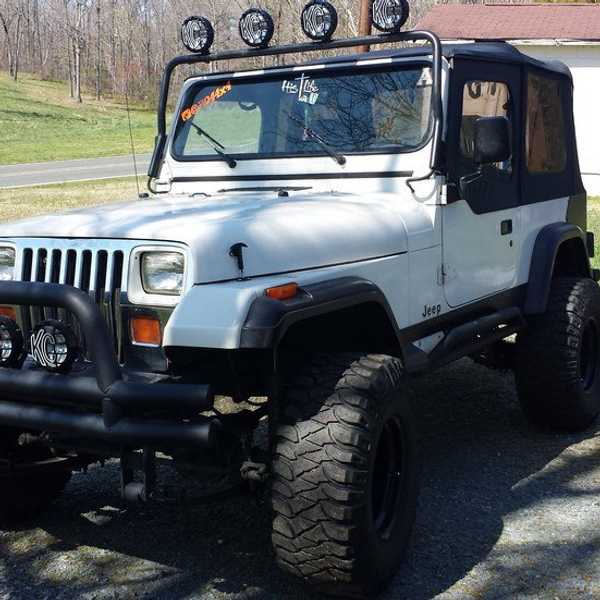
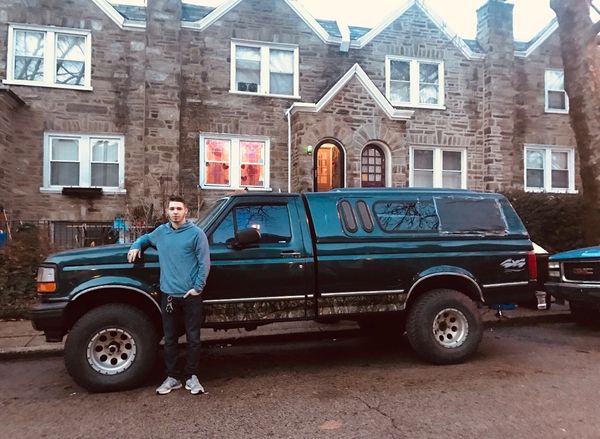
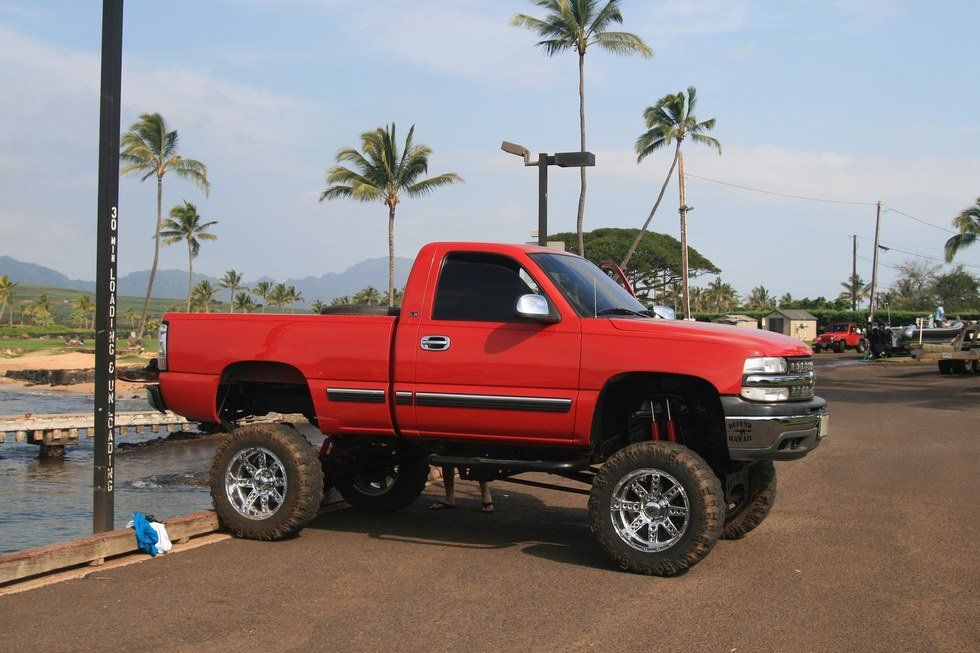
They’re everywhere in this town — giant aftermarket bumpers, 10-inch lift kits, off-road lights and worst of all, deafening exhaust. All of which are completely, ridiculously unnecessary.
In my original neck of the woods, Northern Minnesota, these over-sized toys are referred to as “Yuppie Trucks,” vehicles that really have no practical purpose other than looking big and intimidating, an aura that perhaps the driver doesn’t experience after making the three-foot hop down from the seat.
That said, we’ve all heard the stereotype: guys driving big trucks are compensating for something that, well, isn’t so big.
But that’s a simple, snide argument against owning a yuppie truck, regardless of any truth it holds. More compelling and reasonable arguments prove that owning one of these is like owning a solid gold pair of underwear, and those arguments can be made by people who actually use trucks as tools, not expensive showpieces.
First off, yuppie trucks have way too much power for what they do, which based on what I’ve seen, is absolutely nothing. Besides that, the usually tiny truck bed proves too small to carry anything heavy enough to justify a full-blown Cummins diesel engine.
I know a very engine-savvy man who hauled a full-size — and I mean full size — sailboat behind a stock V8 Dodge Durango, not exactly a Duramax. The same guy uses an even smaller 2.3 liter Ford Ranger to pull a car trailer. Likewise, my father, a very experienced timber framer, never needed a vehicle larger than a stock 1500 pickup to pull multi-ton loads of logs and lumber long distances. In fact, for most loads, he chooses to bottom out an old minivan, which can carry a staggering amount of tools and equipment.
Is it worth paying a dollar in gas to get out of the driveway when most day-to-day hauling could be done by a Corolla? I don’t think so. And though vehicles can be measured in miles per gallon, what fun can be had pitching a vehicle the size of a garden shed into a corner? If I wanted a fun vehicle, I’d get a Miata, or something else that can go twice as fast as a truck using half the fuel. If I wanted a single vehicle capable of a little bit of everything, I’d want exactly what I own — an old Jeep, which obeys commands and never says no. It’s going on 211,000 miles.
And the noise. Why put expensive exhaust systems on a vehicle for no practical reason? Custom headers and air-flow systems are designed to increase torque, but putting a bugle bell on the end of a tailpipe does nothing but interrupt conversations. Sure, you might turn a few heads, but most of the people those heads belong to will also brandish a single, silent finger.
The supposed rugged, off-road capabilities of these yuppie trucks are also unused, given most of them haven’t placed their knobby tires in mud or felt the brush of pine needles against their glossy paint jobs. Off-roading tires are useless and noisy on asphalt, where they also start to feather and lose roundness, which means unaligned wheels and a rough ride going down the highway.
Those massive lift kits only halve the life of the vehicle by forcing the drivetrain and suspension to operate at awkward angles — there’s a reason for the lack of older-model, jacked up trucks. Why spend thousands of dollars “upgrading” a truck specifically designed by highly paid professionals?
I grew up in a rural setting, doing rural work, using rural vehicles — which don’t look anything like these giant, Concrete Cowboy trucks. For all the chrome trim, brush bumpers, aftermarket wheels and super-bright lights, these beasts are usually only found in urban habitats, doing urban things. But I get it — there aren’t any country songs about a Geo Prism.
Many folks probably purchase trucks to combat winter, which I understand — it’s hard to get stuck with four wheel drive and a lift kit. But as a Northern Minnesota native, I’ve seen some harsh winters and unlike a North Dakota winter, the snow doesn’t blow away, making it deeper and deeper. Also, Minnesota has this thing called topography, requiring good traction.
People probably like the idea of being able to get out of a snowy ditch. But four wheel drive, when used by someone who isn’t very experienced, might actually cause the vehicle to slide off the road in the first place.
I’ve gotten through some awful country winters in a four-cylinder Dodge caravan with manual transmission, which started up in negative 60-degree weather — I’m not joking, those “Iron Duke” motors made by Dodge could heat a mansion. If people drive carefully and responsibly, they may never need four wheel drive. Most vehicles with four wheel or all wheel drive are more than enough to get through a bad winter. My XJ — fondly named “Tugg” — blasts through very deep snow with ease, not because of its 190 horsepower, but because it has good traction and a little ground clearance.
Perhaps the trucks wouldn’t bother me so much if they were driven respectfully. These torque-based machines aren’t meant for drag racing, so why try to reenact the new "Mad Max" movie? That giant plume of diesel smoke (a proven carcinogen) that spews out of the tailpipe every downshift actually harms the people who breathe it, not to mention the environmental effects and fuel consumption used only to go from 10 to 30 miles per hour. But hey, maybe the driver didn’t get enough attention as a kid and craves it all the more now.
Trucks, tried and true workhorses used for utilitarian purposes, don’t bother me. But Yuppie trucks, which hold no practical purpose and cost oodles and gobs of money, do. Drivers should consider the reasoning behind their vehicle and whether or not it’s actually fulfilling its purpose. Trucks only belong to the minority of people who actually need them to complete a day’s work, not people who rely on it for attention and compensation.