
UNG is one of the six senior military colleges in the United States. Like anything with a significant military presence, this place has some large equipment on display. If you doubt me, you can go to the other SMCs or even the US Service Academies or even places like Georgia Military College and you will find some kind of equipment on display. Well as it so happens to be, us here at UNG have four different field artillery weapons on display throughout the campus. Now what’s a field artillery weapon you may ask? Well to simply put it, a field artillery is any category of gun that is used to support armies in the field and this ranges into several categories which delving into would require me to write a whole different article. I’m not going to do that just simply understand that this campus some big guns on display. So most of you are probably smart or cadets with knowledge on this information and know that there are, in fact, five guns on this campus. All my other fellow cadets should know two of those guns are the same kind. Without further adieu, I’m going to dive right in and start talking about these guns and a brief history behind them.
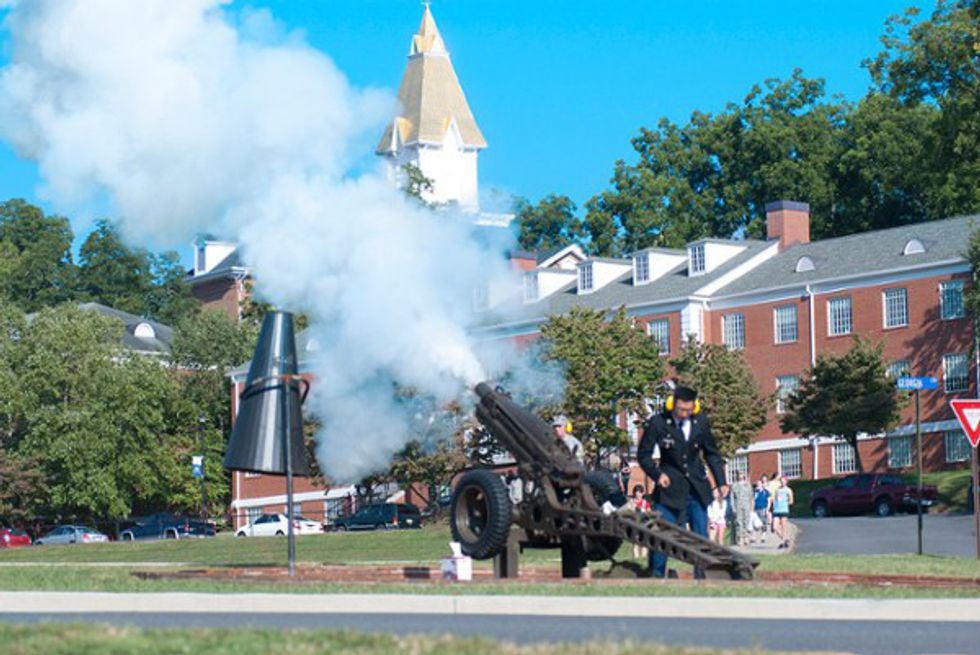
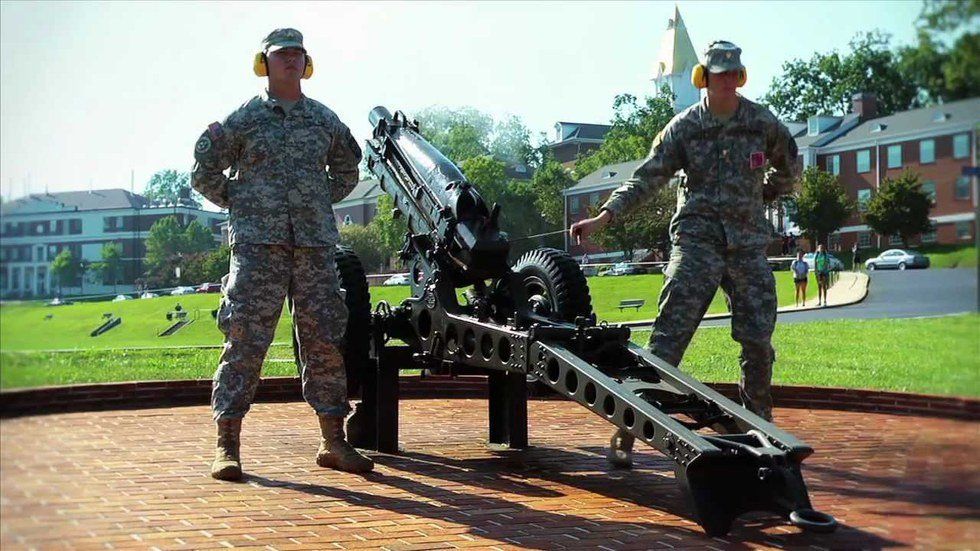
The first gun on our list is the most obvious one on this campus that anyone that attends this place knows about. I am of course talking about the retreat cannon that sits in that little grassy area next to Dunlap. For anyone that does not know, that gun is a 75mm Pack Howitzer M1. So this type of gun was developed in the 20s when the army needed a howitzer that could be moved across difficult terrain (like hills and such) without the need of motor transport. The Pack Howitzer was designed to be broken down into several pieces and then carried across the terrain by pack animals like mules. While this may sound as either archaic or maybe even animal cruelty for some, you have to remember that this gun was developed in the 20s when helicopters were still just coming into fruition. Anyway, the Pack Howitzer by many accounts is one of the most successful light artillery pieces that the US military has used as it saw combat in WWII in both theaters and was especially useful in the Italian campaign.
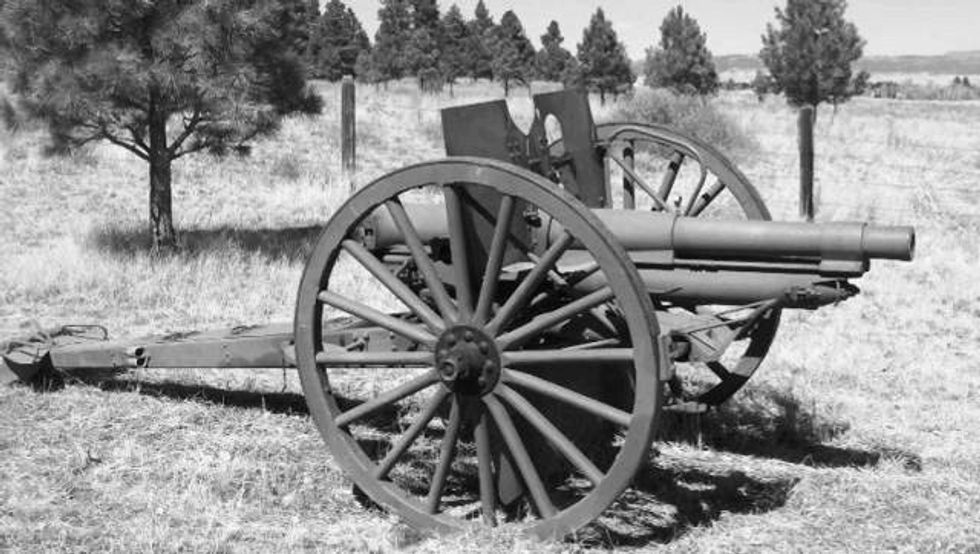
Before we got the 75mm as our retreat cannon, the University of North Georgia used a 3-inch M1902 field gun M1905 variant (I checked the gun-- it’s written on the breech). This piece resides in our Killed in the Line of Duty Memorial which by the MLC on campus. So I did some research about these guns and other than being the Army’s first steel, rifled, breech-loading, quick-firing field gun, these pieces were used by General Pershing during the Mexican Punitive Expedition from 1916-1917 but didn’t fire a shot in combat. Alongside that, these guns saw limited use during WWI as most were kept state side and very few were used in combat. Apparently the Army opted for the French 75mm gun.
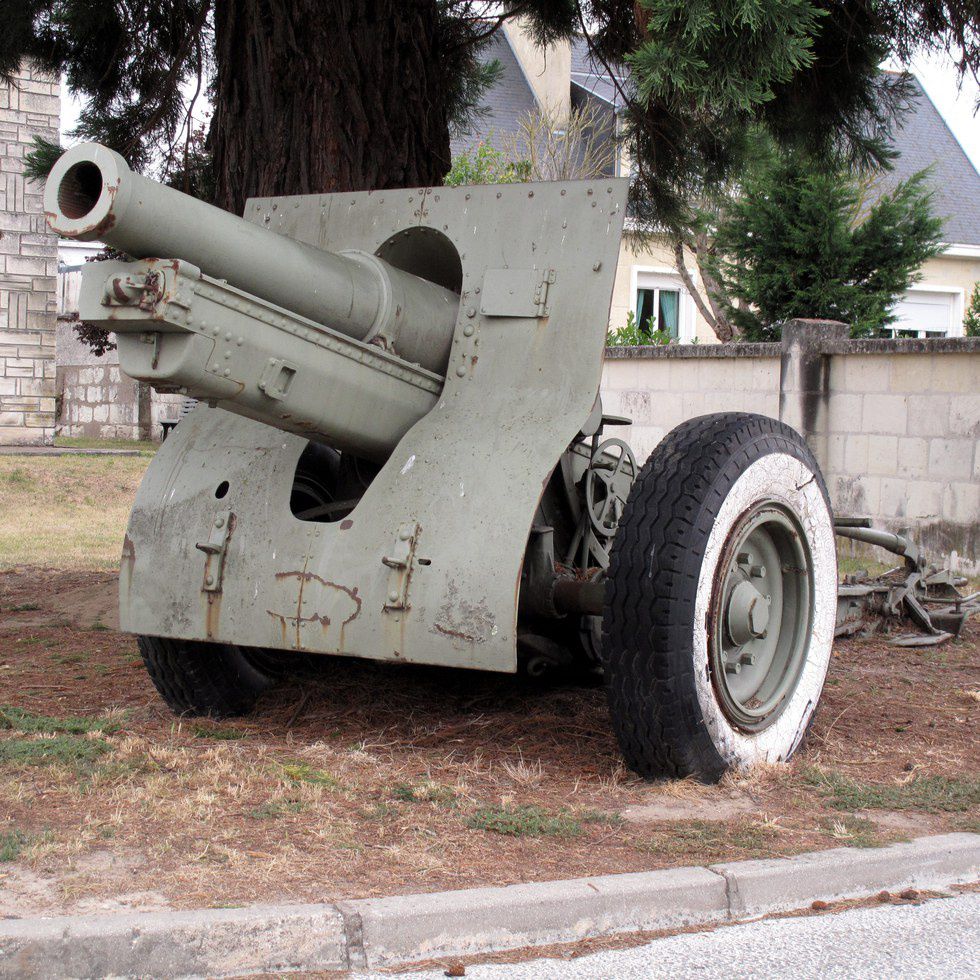
So the next piece on this list has a bit of an interesting story that I did not find out until recently when I actually went up to the gun, looked at its design and then did my research on it. This one is the Canon de 155 C modèle 1917 Schneider or as the school likes to call it (at least according to page 7 of the cadet handbook) the 155mm howitzer. Now don’t get me wrong, it is a Howitzer and it is 155mm but this one actually has a bit of a story behind it. So this gun is not an American designed gun but a French designed gun. So how did it get here? Well, during WWI when America got into the fight, we were also in the market to replace our six inch field guns which were apparently crappy compared to this one. That we also went to war way under-supplied in regards to weaponry. So we saw this thing and it’s apparently stellar one-year track record and proceeded to buy 1503 units from the French and the non-exclusive rights to build them here in the US. After the war, we brought all of them back to the US and began to upgrade theme between the wars.
It has the original Schneider placard placed behind the breech in French but even if that had been removed, there is still one more design feature of the gun that makes it an original French gun. Look at the gun shield on it and you’ll see that it is in fact curved; the American made guns had a straight shield on them. So it’s an interesting fact that I’m daring you go see for yourself.
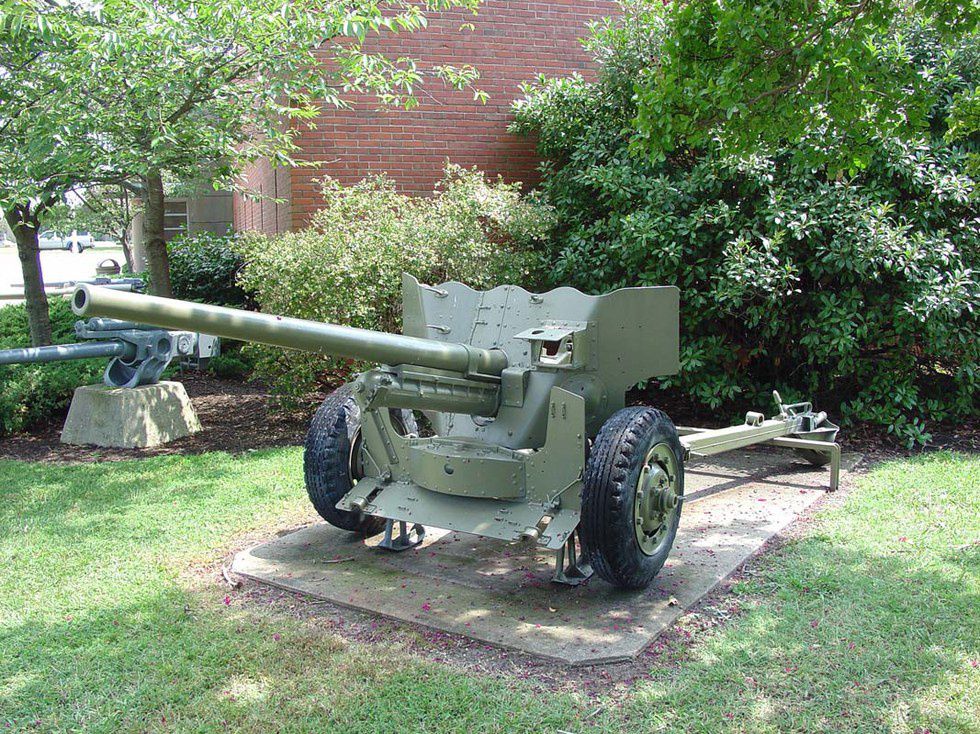
Our last guns we have on display are the two on the Colonel Ben Purcell Plaza. Most cadets commonly refer to them as 57mm anti-tank guns, which is the correct American identification but the origins of these guns are also not American. So if you actually are really bored and really need a life, like me, you can go browse the long and glorious history of the development of the tank in the US and armored warfare according to US thinking but I’m sure you won’t, so I’ll just abridge it for you. After WWI, the US’s idea of killing tanks involved towing the biggest gun on the smallest and fastest vehicle that can carry it. Thus the 37mm anti-tank gun was developed and mated with the Jeep in 1940 alongside the 75mm gun and the M3 halftrack. However in its first deployment against the German panzer III and IVs as Kasserine Pass all the 37 did was just scratch the paint on the German tanks. So the Ordinance board in need of finding a better anti-tank gun looked at the British Quick-firing 6 pounder and said that will work.
They started developing it in 1942 and gave it to the infantry which claimed it was too heavy to move, the cavalry which claimed it was too heavy to move quickly around, and the airborne who claimed it was too heavy to land with a glider so a lighter version of it was made in 44. Yet after 1944 and the introduction of more heavily armored German tanks, people began realizing this gun could only penetrate the sides of German Panther tanks and the hedgerows of Normandy made them less mobile. In short these guns fell out of favor really fast because tracked vehicles carrying bigger guns (tanks and tank destroyers) were also being made at the same time and infantry anti-tank rockets of the same caliber and bigger were being produced as well. So it should come to no surprise that this gun went out of service shortly after WWII.
So there you have it-- a (somewhat) brief look at the history behind the big guns displayed on the UNG Dahlonega Campus. All of them have some kind of story as to how they came to be and even how they came to the United States.