
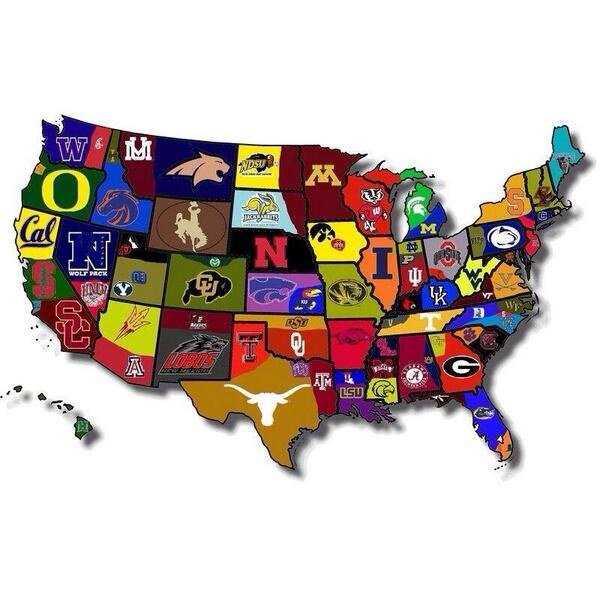


There’s been a lot of talk recently concerning whether or not the Big 12 should expand to include another two teams so it includes, you know, actually 12 schools.
While the conclusion seems obvious to me – uh, hello, you only have 10 teams in the Big TWELVE and you expect me not to confuse that with the Big Ten? (Which, by the way, has 14 teams, not 10.) – It’s not a simple answer. Trust me, if it’s a complex discussion for the sports-savvy; imagine what this research was like for me, given my utter lack of understanding. That being said, since I have no emotional connection to the conference, football or the schools within it, and SMU certainly isn’t a contender (sorry, Chad Morris), I think I can offer some third-party perspective. (Note: I had football in mind when writing this, because as The Dallas Morning News so aptly said, “football drives the conversation.”)
What makes the conversation difficult to the point that many are giving up until they hear more established propositions is the fact that Oklahoma’s President, David Boren, and West Virginia’s President, Gordon Gee, are the only two officials within the conference to speak out in favor of it, and conference commissioner Bob Bowlsby has consistently shut down any rumors concerning expansion.
Enlarging the Big 12 would allow for a championship game, which obviously brings a number of benefits: media coverage, fan hype and increased rivalries, weekend tourist booms for the host city of the game, etc. When put that way, it clearly sounds like a win.
But then there’s the question of how the two divisions would split off, which depends on where the potential new teams are located in relation to the existing colleges; though, a North-South break seems to be the most logical considering six of the schools are in either Oklahoma or Texas, and that’s how the division was after the conference’s inception. This is also assuming the conference would only move to expand to an additional two teams, not four more (but let’s be real: baby steps, people).
Since we are getting real, here’s the crux of it: the decision comes down to what every major change always comes down to. Money. Adding two more teams means more money in the conference, and while that doesn’t necessarily mean it’ll ever beat SEC or Big Ten, that doesn’t mean they shouldn’t try, right? Well, maybe not, because according to CBS, BYU and Cincinnati (who are among the top contenders) would need to rake in $46 million annually just to break even.
In that case, why are Cincinnati and BYU so widely recognized as top contenders? Other than the fact that Cincinnati has already expressed interest because leaving the American Athletic Conference for the Big 12 would give them more publicity, would either of them undoubtedly garner enough media attention to benefit the Big 12?
A final decision is expected to come out during the summer, so until then, we have to embrace the uncertainty. Personally, given the information provided and considering whose hands the decision lies in, I think the conference is going to play it safe. But hey, it's college football: crazier things have happened.

















