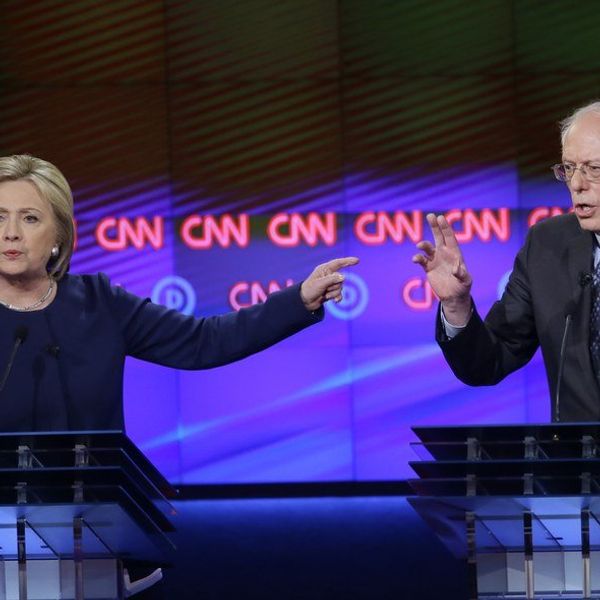

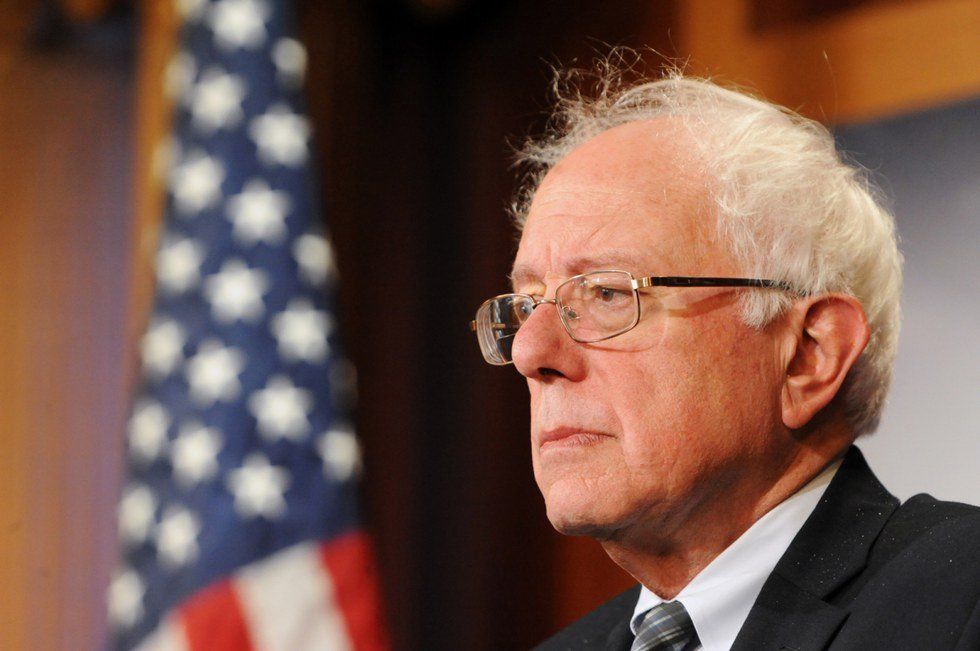
When Bernie Sanders announced his candidacy in May 2015, it appeared as if he might in fact be a contender for the Democratic nomination. People praised Sanders for his honest and direct rhetoric and his aggressive approach to issues like Climate Change, wealth inequality, and campaign finance reform. In fact, so far in this election cycle the Center for Responsive Politics reported that less than 23 percent of Sanders’ campaign financing has come from PACs and large individual donations. In comparison, people have been nonplussed by Clinton's current campaign. Her campaign lacks an overarching message and her presence doesn't carry the same weight as Sanders. In addition, voters seem put off by Clinton’s recent email scandal, her connections to large corporations and Political Action Committees, and her general rhetoric and demeanor.
But, even though it may seem like Sanders has the upper hand, statistics show that Clinton still remains the solid frontrunner for the Democratic Party. According to a Gallup poll from July, Clinton still leads Sanders by approximately +35 points in favorability among democrats and democratic leaners across the nation. In addition, the same poll places Sanders’ name recognition lower than Clinton’s. Only about half of democrats polled recognized Bernie Sanders, in contrast to the almost 95 percent who recognized Clinton. And, although Sanders is currently leading in New Hampshire, he is behind in Iowa and Clinton is working incredibly hard to lock up the South. If Sanders wins in Iowa and New Hampshire, it could give hime a fighting chance to win the South (and the nomination), however if he looses, it is likely Hillary Clinton will swiftly overtake him in the primaries.
Additionally, as a self-declared socialist, Sanders’ politics are notoriously left of center. Many are concerned that he would be unable to come center enough as president to appease the Republican lawmakers and constituents. And, in a separate Gallup poll from June 2015, only 47 percent of Americans said they would be willing to vote for a president who identifies as a socialist. But, even though Sanders has often shown resistance to compromising his strong values in favor of a bipartisan compromise, that doesn’t mean he can’t.
Finally, there is the question of experience. The Presidency is primarily a foreign policy position and Clinton far outstrips Sanders in terms of experience. She served as Secretary of State for 4 years under President Obama. And, while Sanders boasts a combined 25 years of service in the House and the Senate, he served primarily on committees that addressed environmental and infrastructure issues. He has almost no foreign affairs experience.
To me, it seems like Bernie Sanders would be an irresponsible choice. Although it is refreshing to have a democratic candidate who shows little interest in compromising with the far right, Clinton has the experience and skill that is required of a Head of State. And, I believe that Sanders can have more of an impact as a strong voice and political leader in the Senate, rather than as a moderate in the White House.
The likelihood that Sanders can win the nomination seems low, and the likelihood that he can win the presidency seems lower. Ultimately, however, the root of democracy is choice. Being a member of a Democratic Republic means you have the responsibility to vote your conscious regardless of what pundits, newspapers, and general opinion tell you.