
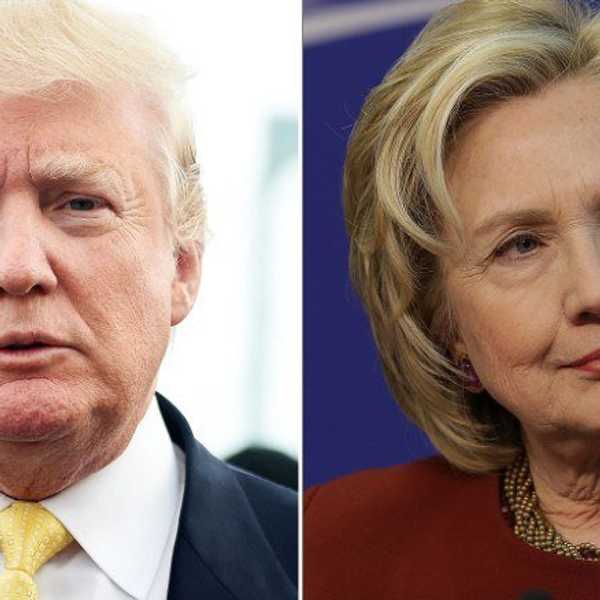


Even though the presidential candidates seem to be the main focus in the political spotlight right now, we still have until 2016 to vote for our next president of the United States. However, the primaries are just around the corner. If you are a registered Democrat or Republican, voting in the primaries is extremely important.
But it’s not the final vote, you may think, Why does it matter? It matters because this fall's primaries determine the players in the general election in 2016. For the Democratic party, Hillary Clinton and Bernie Sanders are going head-to-head. The Republicans, on the other hand, have 14 candidates fighting for the Republican spot for the 2016 election.
Sanders, currently the Independent socialist governor of Vermont, seems to align with the majority of the liberal community’s values. He’s pro-choice on abortion policies; supportive of same-sex marriage, and equal pay for men and women; an advocate for affordable college education and Medicare for all; and passionate about reversing climate change.
A lot of the chatter around Clinton is her potential to become the first woman president, but don’t confuse that with feeling the feminist (and Democratic) obligation to vote for her because she’s a woman. Feminism is about gender equality, not women over men or vice versa, so don’t vote for the sake of gender. (I still think it’s important to note that Clinton would be the first female president if elected, and Sanders would be the first Jewish president of the US.) Look into the issues she addresses in her platform. If you agree with what she stands for, go ahead and vote for her. Of course, before you decide for whom to vote (regardless of party affiliation), do your research. The uneducated voter is worse than someone who doesn’t exercise their right to vote at all, in my opinion.
I took this quiz and I highly recommend it. Not only does it show which presidential candidate has the highest percentage match to your stances, it shows how your responses match with each candidate. I know I definitely learned a lot about the issues since it provides background on most of the survey questions so you can make educated answer choices. I personally scored a 93 percent match with Bernie Sanders. Despite having my future vote at this time, there really is no such thing as the ideal candidate, and I still take issue with some of his stances. For example, I’m not quite sure how I feel about him not supporting Israel, but I hesitate to comment since I feel as though I’m not educated enough on the subject. Of course, there is such a thing as a lesser of two evils, especially when it comes to politics.
Even though Sanders is running as a Democratic candidate, his being an Independent politician is clearly evident in his viewpoints. The two-party system our country runs on is real, and it shows in that only Democratic and Republican voters can participate in the primary elections. I agree with George Washington (AKA the father of our country) that the party system in politics is a bad thing. The fact that I registered as a Democrat just so I am able to vote in the primaries, even though I identify as a liberal Independent, just shows how biased our system is. This is maybe another reason why Sanders seems to be winning over more liberals’ votes than the general public had expected; he is not tied down to party agendas or platforms, but he is definitely consistent.
Ithaca College is known as being a predominantly liberal campus, and the point of this commentary is not to bully the liberal population to vote for Bernie Sanders. Just note that Hillary Clinton isn’t the only Democrat running for president and Sanders is still a worthy contender (or at least lesser of two evils in my book). The young/student vote is an important vote, so register, do your research, and make your educated vote.

















