If you have ever watched a Cal athletics event broadcasted on TV, you might have seen the ridiculously cheesy UC Berkeley commercial that plays on repeat. The laughable depiction of UC Berkeley is only made better by the punny play on the "UC" "You See" mash up that the public relations department at Cal thought was obviously an ingenious idea. But this advertisement (as well as the minor I'm pursuing in City Planning) got me thinking of how students actually view our campus.
Mental maps are personal point-of-views of a built environment. They represent an individual's interaction with an area, and often don't reflect reality. Participants of studies on mental mapping are usually asked to replicate a map of a place completely from memory. The result of mental maps experiments therefore reflect their unique relationship with the city in question.
I thought it would be fun to annoy my Berkeley friends and asked them to participate in a mental mapping experiment. I handed each individual a blank sheet of paper, a writing utensil and repeated the following instructions:
"I am going to ask you to make a map of the UC Berkeley campus today 'make it just as if you were making a rapid description of the city to a stranger, covering all the main features. We don’t expect an accurate drawing- just a rough sketch'" (Lynch, 1960).
Though this experiment wouldn't hold under any criticism--especially because I asked the first seven friends I saw on a Wednesday night-- it's an interesting way to analyze how one's perception of an environment can change based on their major, involvement on campus or class standing.
Lets see the results!
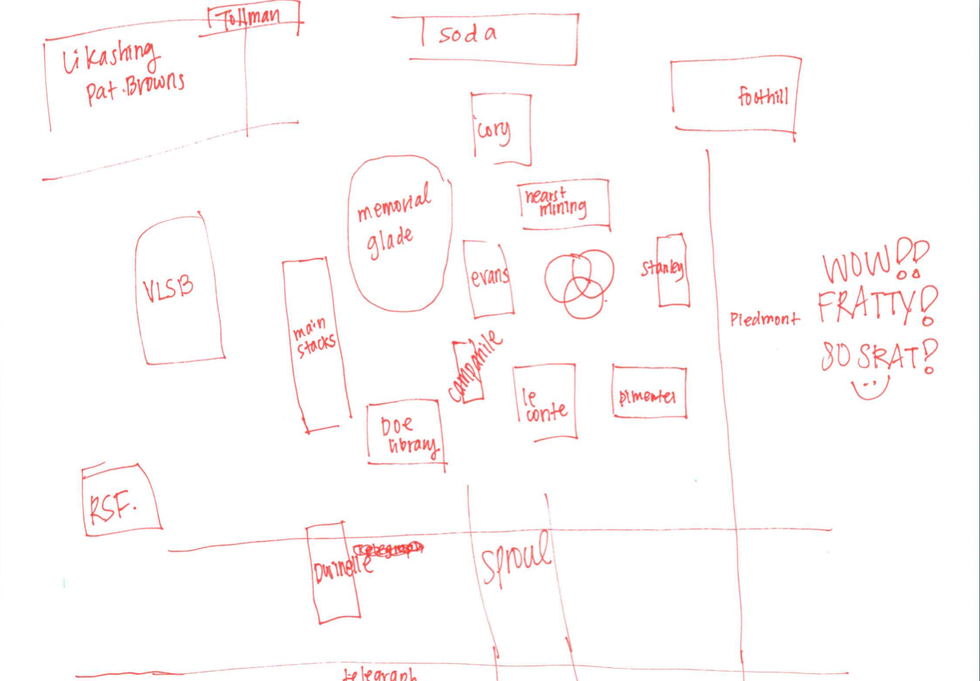
Lauren, 2nd year, Biology
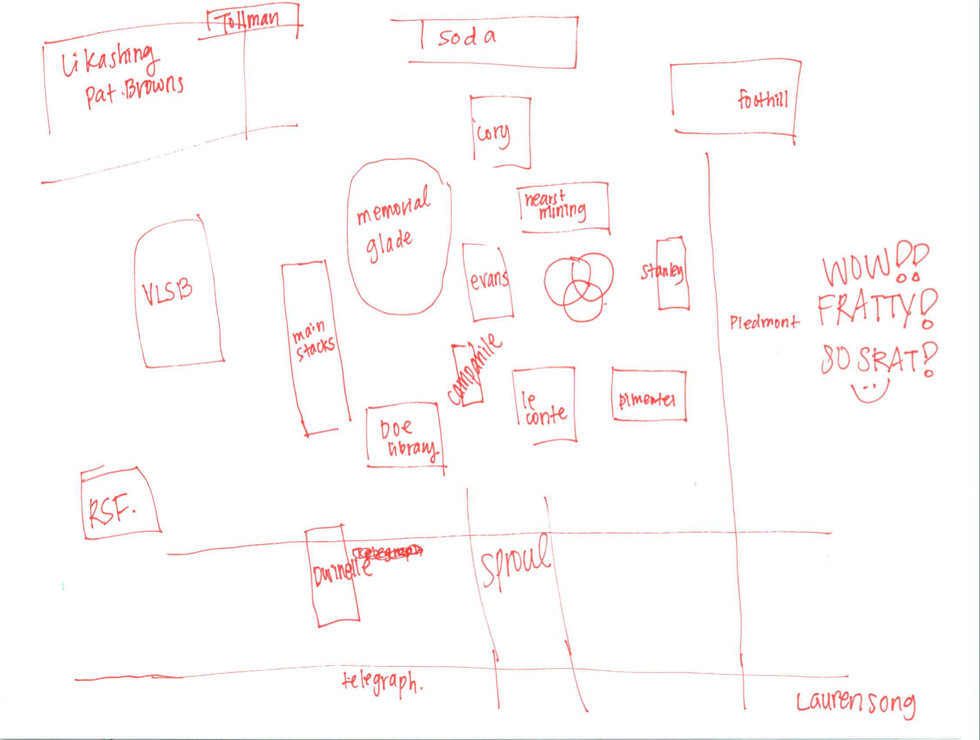
Comments: This is a pretty comprehensive view of the campus. I personally like the addition of Piedmont Greek life reference and the mental ring sculpture that is in front of Hearst Mining.
Danny, 2nd year, Econ
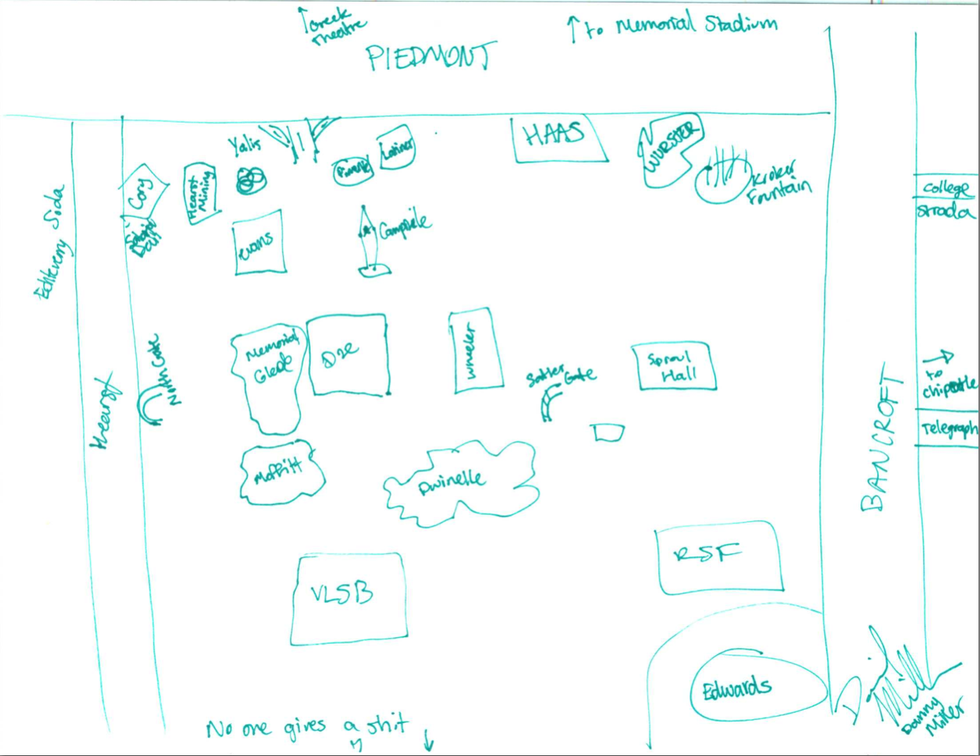
Comments: One of the more artistic representations of campus, Danny seems to think that who ever constructed Moffitt and Dwinelle did not believe in using straight lines. His priorities can be seen with the addition of the arrow pointing to Chipotle.
Tanay, 2nd year, CS
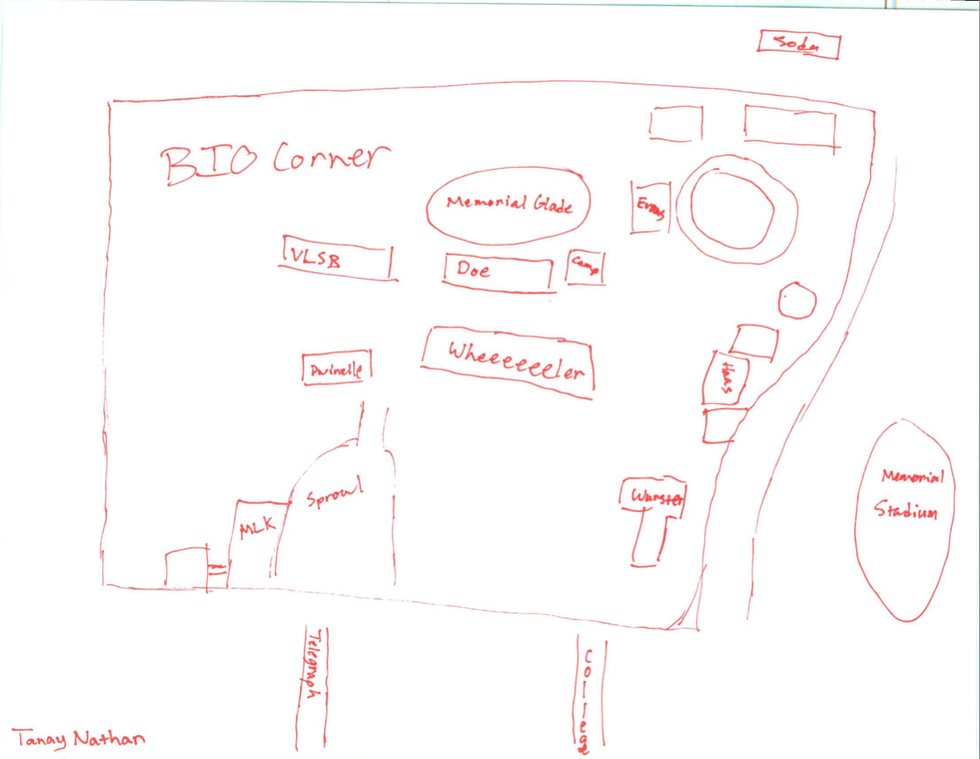
Comments: Tanay's UC Berkeley has a general "BIO Corner" and a Wheeler hall that is almost completely comprised of e's. His CS comes out in his addition of Soda Hall in an isolated part of the map.
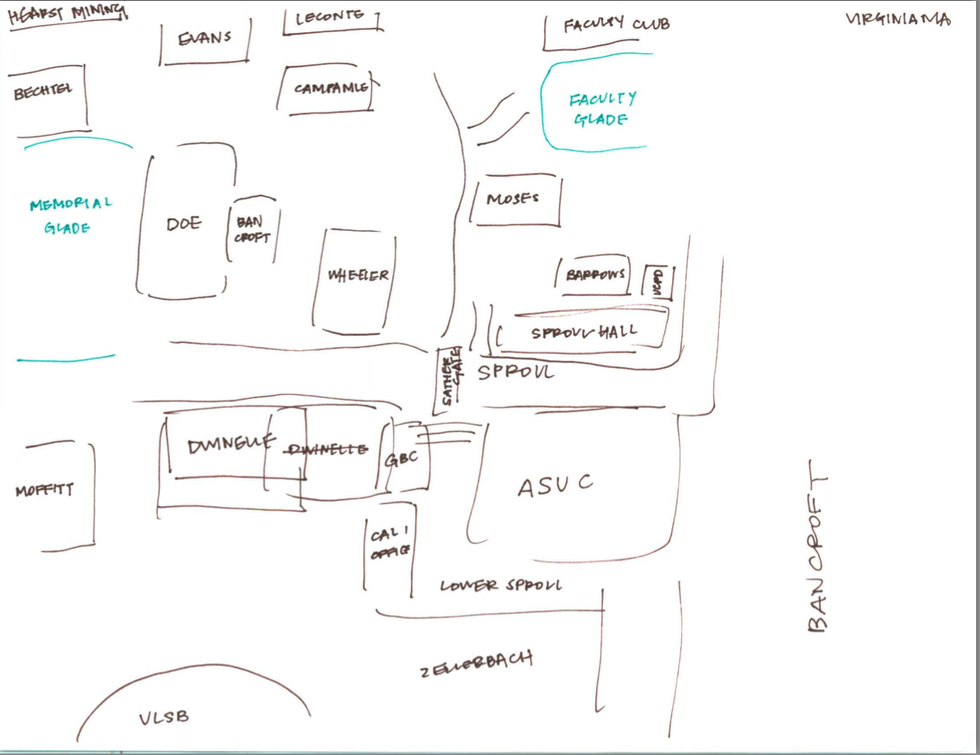
Virginia, 1st Year, Cognitive Science
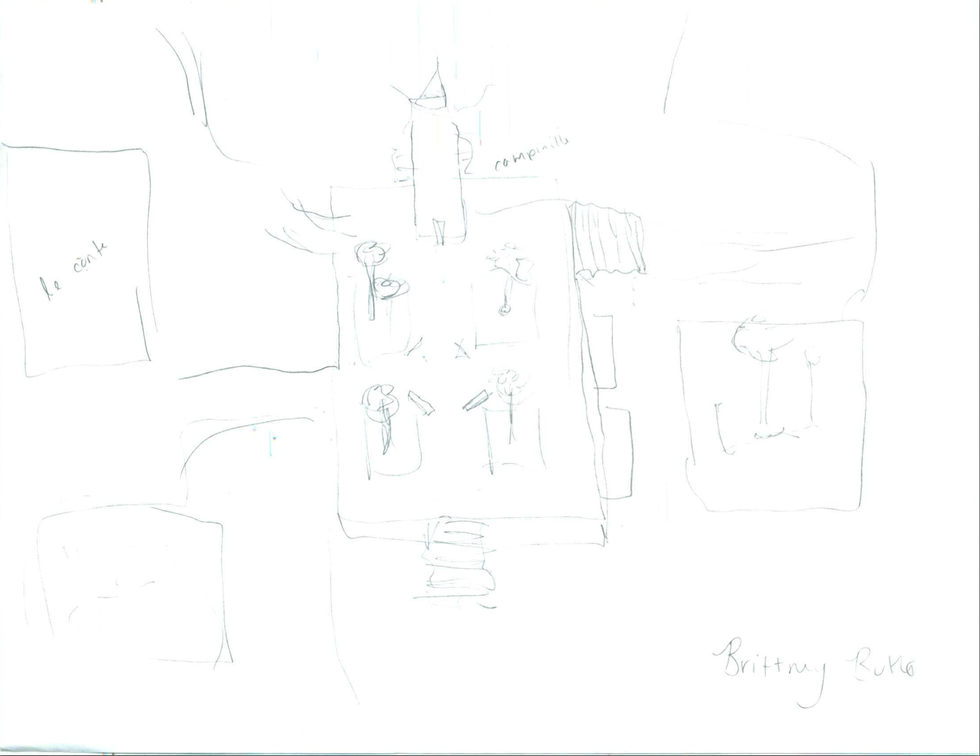
Brittney, 2nd year, Pre-Med
Matt, 2nd year, Pre-Med
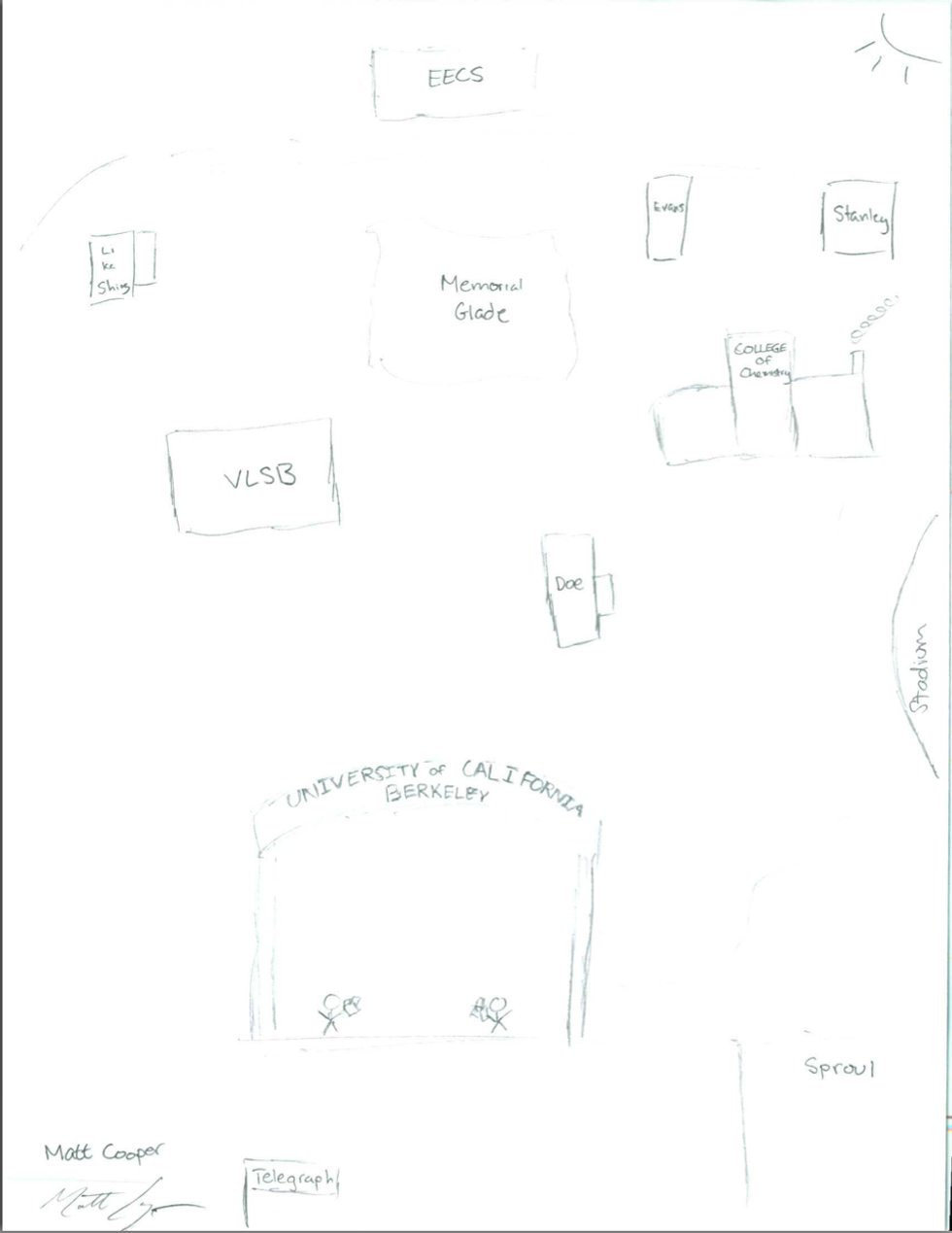
Comments: Matt doesn't seem to know what is on Sather Gate, but I like the idea of the name of our university being included. He also focused on buildings where mostly science classes are held.
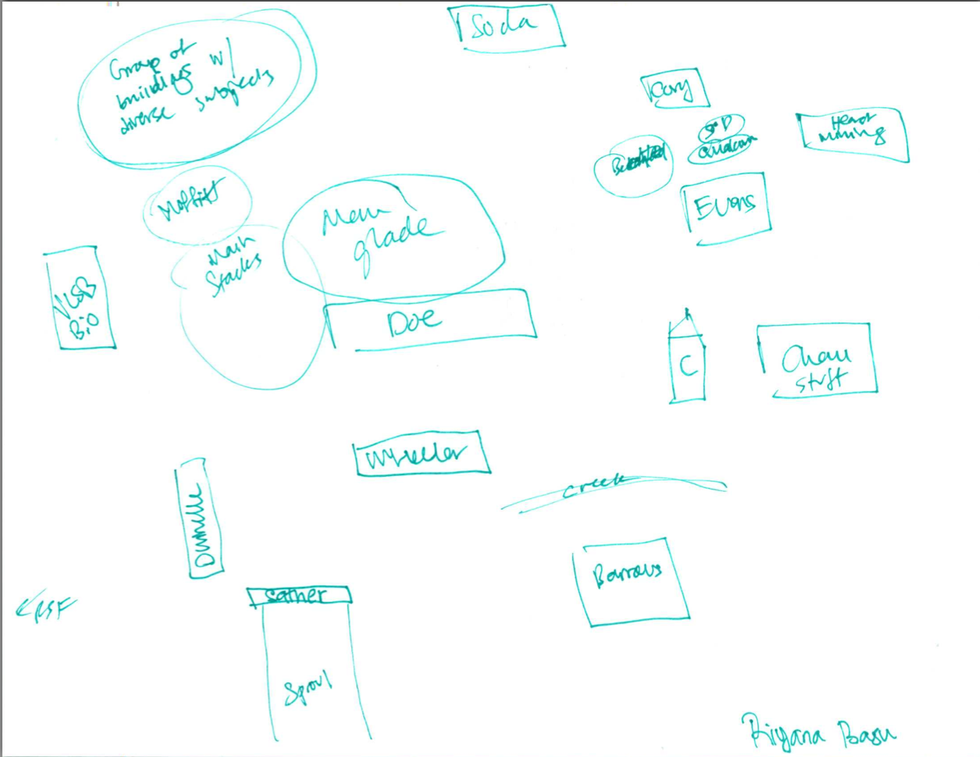
Riyana, 2nd year, CS
The University of California, Berkeley has 36,000 students walking around at any given time. Berkeley is often in the news for sports, progress within our many fields of study, protests, or (recently) because of failures within our administration. But UC Berkeley is far more than Sather Gate, the steps of Wheeler, Memorial stadium and the Campanile rising above the campus. Our perception of Berkeley cannot be captured from a simple Google images search.
These mental maps showed just a few different POV's for the campus we all currently call "home". Each map is as unique and diverse as the individual drawing it. The exercise of drawing a mental map helps us claim the campus as out own. UC Berkeley isn't the images shown in our advertisements, or even the campus map every freshman receives at CalSO. Berkeley is the one building you end up spending 90 percent of your undergraduate career, it's the ledge of Doe where you had a life changing conversation at 3 a.m. on Saturday, it's that one bench behind that one building that nobody knows about, and never will if you can keep it that way.
Berkeley is how you see it. So how do "UC" Berkeley?