

Many people make comments on how I dress. It’s not that I dress in revealing clothing or in scandalous ways; in fact, I never show my belly button. I never wear socks and sandals (the horror) or cargo shorts (dear god). I commit no fashion faux pas or give people reason to say anything. But, more often than not, people describe my clothes as “preppy.”
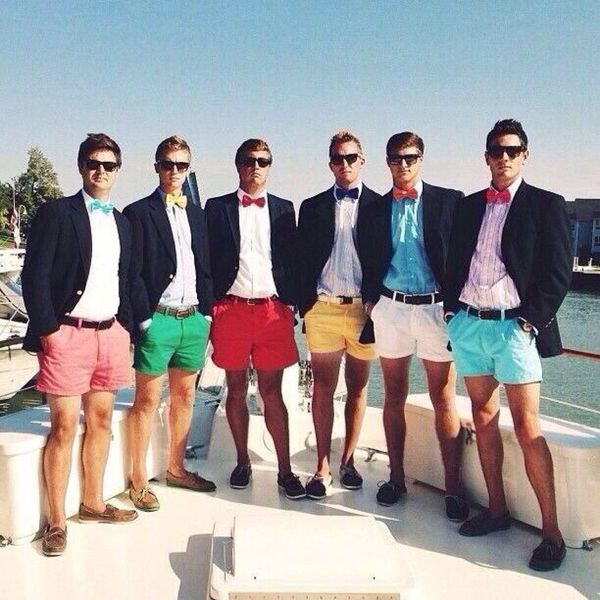
Preppy style is characterized by Northeastern preparatory school style, and is sold in stores like Ralph Lauren, L.L. Bean, Brooks Brothers, Lilly Pulitzer, Lacoste, Smathers & Branson, and Vineyard Vines (to name a few). It’s most often associated with Ivy Leagues, boarding schools, high-end private schools, wealth, and white people. Admittedly, I did go to a high-end private school and received a ton of personalized attention that I would not have received anywhere else. St. Mark’s School of Texas is a non-denominational, all-boys prep school: It’s the most amazing place I’ve been in my life, and taught me so much more than how to write an essay, analyze a book, solve an integral, or collect data. St. Mark’s is in the character education business, turning boys into men of courage and honor.
When people see how I dress and call it out as preppy (which it is), it minimizes my incredibly formative years at St. Mark’s, reducing the best teachers and friends I’ve had to a mere status symbol. Why do I usually wear collared shirts and creased khaki pants? Because I had to wear a uniform: collared shirts and creased grey pants nearly every day of my life since fourth grade. Preppy clothes, to me, are comfortable clothes. It’s what I’m used to putting on in the morning, and the cotton doesn’t inflame my eczema (OK, get off my case, jeez).
My clothes must be a loud invitation for comment, because I’m informed how preppy I am at least four times a week (usually it’s way more). While I often take the unsolicited comment as a compliment, it starts to grate on my ears after hearing it for the 100th time, because, after all my rationalizing and positive spin, the comment is still that: unsolicited. People remark on my status as if they knew me quite well. “Burke, you look so preppy” or “Bougie [bourgeois] Burke” are some oft-uttered phrases, usually in a mocking tone. Sometimes I get genuine compliments, which are the exception to the trend. I doubt I’d get positive responses if I said, “Thomas you look so cheap” or called someone “Frumpy Frankie.” I know I’m privileged and don’t get to say those things, but both examples latch onto the same idea as “preppy” does: wealth (or lack thereof). No one should be labeled, categorized, or derided for how much they have, but I experience what amounts to wealth-shaming on an almost daily basis. Privilege often doesn’t recognize itself, but for the love of God, I get it already.
People see a nice, starched, cotton shirt and associate it with wealth. It’s an instant signal that I’m preppy and privileged, two things that I haven’t always been. One of the biggest problems with wealth, at least in my life, is how fleeting it can be. People who see preppy don’t see the years of house-flipping necessary to keep a family’s financial ship afloat, or the penny-pinching measures taken by parents to send their child to the best school available (and, in my case, the only school where I could thrive). Nobody sees the father who gave up all his job security to start his own business during the worst economic recession in nearly a century and still come out a winner. Fortunes are made on this kind of extreme commitment, the kind of commitment it takes to starch, press, and iron your own clothes in the morning.
Preppy clothing, for me, represents the culmination of struggle, the reward for hard work, and the pride in that hard work. Preppy clothes are not just the wealth behind them: They are the blood, sweat, and tears poured into a lifetime. They are the highest manifestation of parental love, swaddling a spoiled millennial in soft, cotton bliss. The style is austere yet light-hearted, forgoing large, gaudy labels for high-quality fabric with tiny horse or whale logos. Lacking bragging and showiness, preppy clothes exude the success necessary to own those clothes and the subsequent pride in that success.
I don’t dress the way I do to elicit your comments: I already know I’m lucky, privileged, and preppy, but thanks anyway. The same argument applies to women who are called sluts or who get cat-called. I dress the way I do because I’m proud of my family, of where I’m from (Big D, baby), of how I’ve been raised, of knowing how to dress well, and of myself. Maybe I’m being vain and overly-prideful, but isn’t that what millennials are best at?