“You’re not Mexican because you don’t speak Spanish.”
“I just thought you were white.”
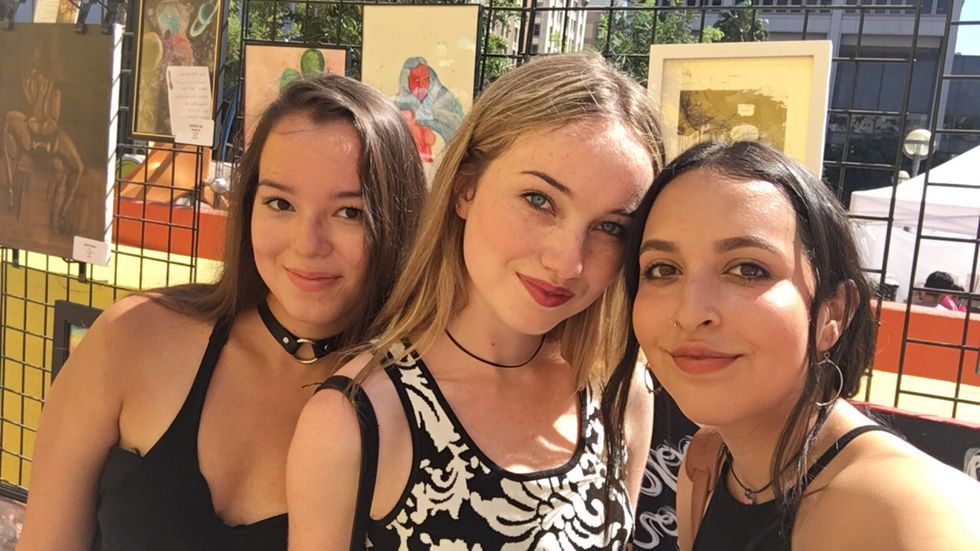
These are remarks that I -- and many other mixed-race individuals -- have come to expect while first becoming acquainted with someone. As an “ethnically ambiguous” individual, with lighter skin, freckles, and dark hair, I often benefit from being “white passing,” and I am part white, which I cannot deny. But, being a lighter skinned person in a Eurocentric world, my other identities are often erased.
Yes, I am part Jewish and French, but I am also only a second generation American of two immigrant grandmothers from Mexico. My great grandmother was a part of the Apache Nation in New Mexico, where my grandfather was born and raised, and my family is still hashing out a court case with the Federal government over land that they owed my grandfather before he passed away.
Being from California’s Central Valley, I was born out of the two clichés often associated with the state’s most productive agricultural region. My Jewish grandfather’s family left Oklahoma for the Central Valley in the 1930s, during the Great Depression, when news of the jobs in the west first arose and gave hope to farmers in the east. Both of my grandmothers came to the Central Valley from Mexico as children and learned to speak and write English over here, while helping their families pick produce in the fields of small towns, including the birthplace of Caesar Chavez’s civil rights movement, Delano.
My mother grew up celebrating her Hispanic, French, and Jewish backgrounds, and although she was part Mexican, she was often confronted by disbelief, due to her red hair and freckles.
Mixed-race people, especially millennials, often have their identities erased. We are often told that we’re “just white,” and that we cannot share in the same cultural identities and traditions as those who look the part or are fully one ethnicity. We are often told to choose a side as if we can only identify with one part of our multi-cultural history.
While surrounded by other Latinos or Native Americans, I am always seen as white. And conversely, while with other white people, I am often seen as the token colored friend. I was even once told that I was “the cool brown girl.” I have gotten used to being “othered,” by default.
But, those of mixed ethnicities should not have to choose what to identify as. We should not have to delineate our existence, and consequently, deny some of our ancestors’ histories to make others feel comfortable. Human beings do not have to fit into one category.
Being able to celebrate many cultures with different parts of our families should be celebrated! We should not be designated as being “nothing,” for being “too many things,” when our families and ourselves have gone through so much.
So, to my mixed brothers and sisters, be proud! Share your history and do not be afraid to identify as what you are. You can eat tamales and pan dulce, while still holding on to your mother’s Star of David pendant.