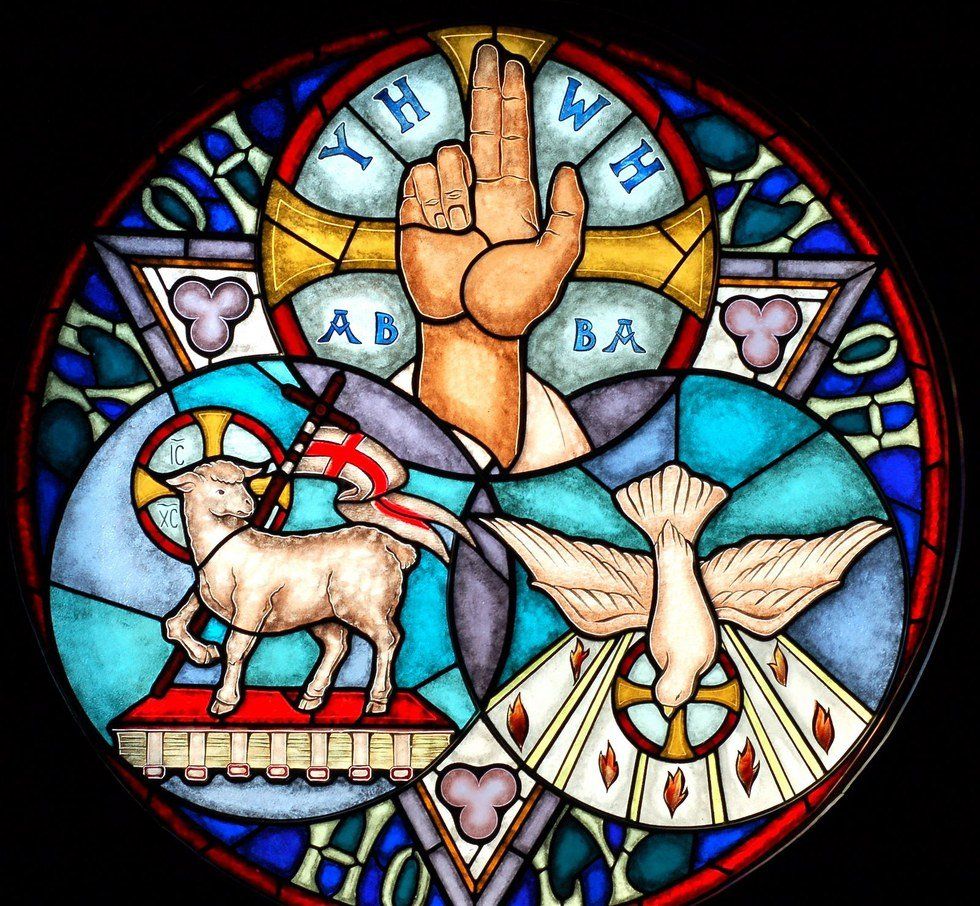
The doctrine of the Holy Trinity is not only the most difficult teaching the Church has maintained and expounded for over two thousand years: it is also the most important. From this doctrine flows the liturgical life of the community, the communal love and service of its members, and the very relational knowledge of God that saves them from their sins. It is an articulation of the very revelation of God to us, in the saving rhythm of His oikonomia- the Father, who begets, the Son who is begotten, the Spirit, who proceeds from both of them- all so that the promise may be fulfilled, and that we may be saved from our sin and healed from our unrighteousness.
In order to understand these benefits briefly mentioned above, it would be more than helpful to adequately define what the Holy Trinity is. By Holy Trinity, we mean to say how God relates to Himself in Himself and how He relates to His creation. The latter, first and foremost, is where the investigation should start. In God’s tri-personal economy, The Father gives The Son up for the forgiveness of our sins; then, both the Father and the Son send us the Holy Spirit, so that we might, responding in faith, receive the benefits of that forgiveness. God, in His economy, in his ordering, gives himself up for us; and then, as the rhythm of God’s salvation comes to us through the liturgical life of the Church, we experience these gifts and receive them in faith.
To understand (or, rather, at the very least, to articulate and believe) this doctrine, it is worthwhile to recognize that the entire doctrine is based on a very real ministry of Jesus as a revelation of who God is. As Richard Illingsworth pointed out, “Belief in the incarnation, while it intensified and emphasized the notion of divine personality, necessitated a further intellectual analysis of what that notion meant, and issued in the doctrine of Trinity in Unity.” Because of the revelation of God in the flesh of Jesus, the church was able to glimpse into how God worked- that is, how he brought about the salvation of his people (His Economy). As Alister E. McGrath plainly concludes: “the doctrine of the Trinity is best seen as organically related to the evolution of Christology.”
However, the doctrine of the trinity does not end with Christ: the ebb and flow includes all three of the persons of the Godhead. And so, it is in the community that we learn God’s self-giving nature, as expressed in His economy, because God is eternally in community with Himself. McGrath puts it another way: “the proper subject matter of the doctrine of the Trinity is the encounter between divine and human persons in the economy of salvation. The basic Christian assertion that God is personal, which is deeply grounded both in the biblical witness to God and the Christian experience of God in prayer and worship, is thus implicitly Trinitarian.”