
Let’s start off by debunking some myths, generalizations and things we’ve all said about classical music: For many of us when we think Classical music, we think ‘boring’, ‘puts us to sleep’, maybe even ‘stuffy’, ‘stodgy’ or ‘pretentious'…
But have you actually given classical music a fair shot? (Beyond the pieces you listened to in music class growing up or the pieces that are in public domain and every household’s attention like Eine Kleine Nachtmusic, Für Elise, Moonlight Sonata and those few measures of The Blue Danube Waltz used in the jellyfishing sequence of Spongebob...)
Fun fact: The term "Classical" is actually a generalization for hundreds of years' worth of different styles of music!
Famed composers like Mozart (the Twinkle, Twinkle guy) and Beethoven (the deaf guy) wrote in the Classical Era, 1750-1820 when the form in music was everything. Mozart’s pieces are formulaic and therefore sometimes predictable. He was an absolute genius and he is highly regarded as one of the best and most gifted composers of all time. There is a reason you probably first think “Mozart” when you think “Classical Music”. But I wonder if Mozart’s music is the best way to introduce a new listener to classical music. In fact, the term ‘classical’ only technically covers that era between the years aforementioned. There is also music from the Baroque period, the Romantic period, the years when Impressionism was all the rage, and the 20th century period which is creatively called: “20th century music”. All of these musical eras were sort of grouped together under the umbrella of “classical” once new genres like jazz, swing, and rock-and-roll became the center of pop culture. There are hundreds of exciting, thrilling, and deeply moving pieces from these other eras by composers whose names aren’t as widely recognized as Mozart’s.
Something to keep in mind when listening to 'Classical' music: The Story is the thing!
It is important to remember that like every medium in art, pieces of music are written to tell a story. Much of today's music has lyrics; very little instrumental music is 'mainstream'. When we listen to 'Classical', we have to alter our minds a little bit to be more interpretive. We have to tune our ears to listen to the melody and countermelody. We must listen to which instruments have which lines and pay attention to when the dynamics are piano (soft) and forte (loud) and fortissimo (insanely loud). The cool thing about these pieces is that they say plenty without the aid of words. The composer presents a narrative journey, but we as the listener interpret the work and determine for ourselves what exactly that story is. We get to participate in creating it!
Thought: Mozart is great, but maybe he shouldn't be the first guy we listen to...
It would be interesting to see if the composers from the Romantic and 20th Century eras would spark more of an interest in someone new to the 'Classical' genre. Yes, Mozart is amazing, but he’s not the only one! For me, the love of Mozart's work came only after I had gained a real appreciation for other great composers and their styles. I wondered if knowing the “flashier” works first would have any impact on peoples' opinions of this genre. So I’ve made a small list of 5 pieces that are sure to convert someone to loving 'Classical' music. Each of these pieces has a clear story and contain thrilling and beautiful moments.
Starter pieces for new listeners which cannot possibly be considered 'boring':
1. "Liebestraum"- Franz Liszt (1850)
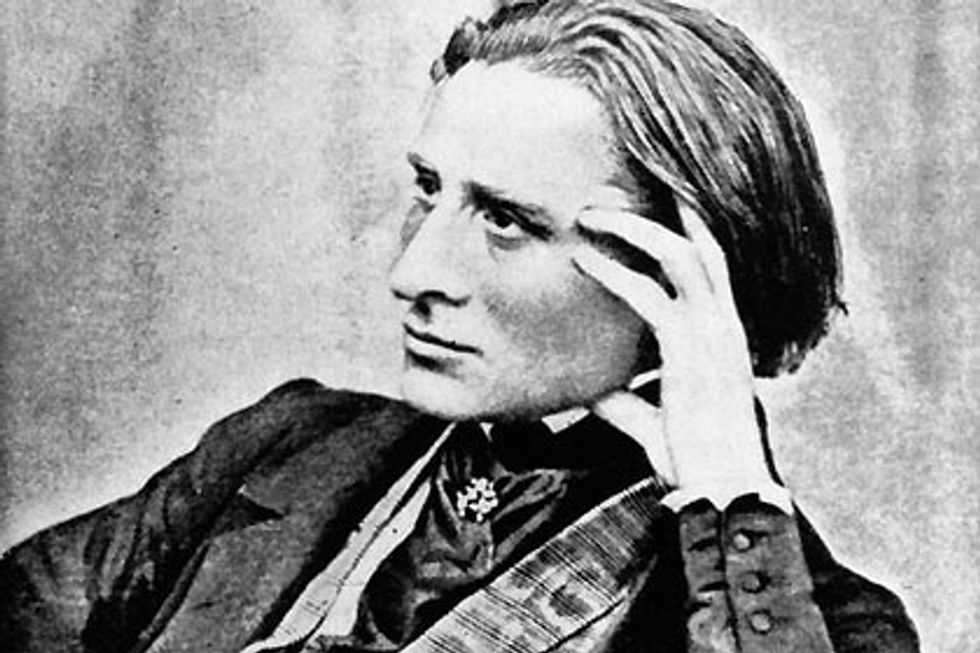
"Liebestraum" means "love dream" or "dream of love" in German. This is a tour-de-force piece for piano. The main theme is repeated over and over in different ways to illustrate the many different kinds of love or perhaps the stages of love that the composer was trying to evoke.
2. Finale from "The Firebird"- Igor Stravinsky (1910)
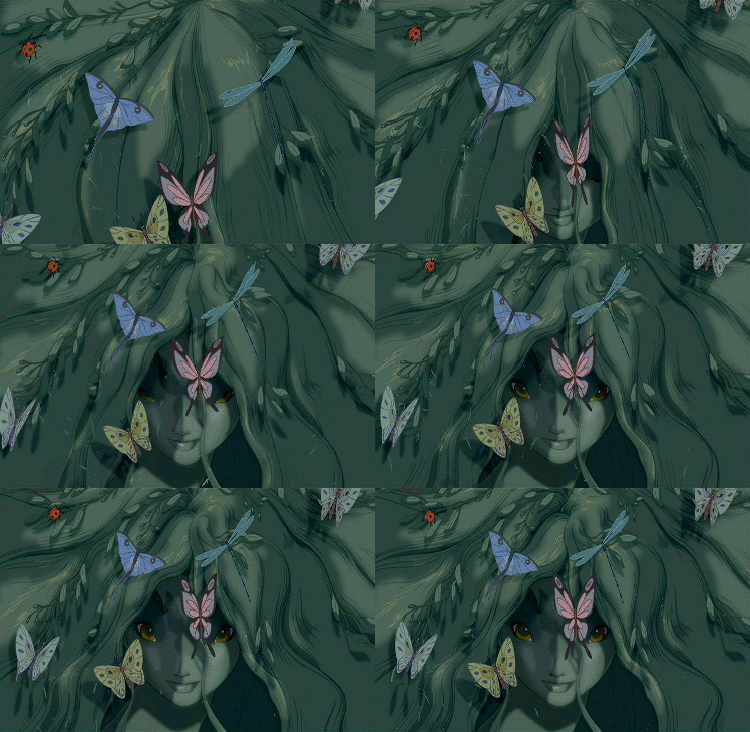
This one you might recognize from Disney’s "Fantasia 2000". In this version, the piece is accompanied by a beautifully animated story of Mother Nature bringing the earth back to life and prosperity after a volcanic eruption. But this incredible piece is actually from the ballet "The Firebird", where the story is completely different. This just goes to show you how a powerful piece with an inherent story in its melodies and dynamics can be successfully interpreted in many ways. This finale is one of the most epic pieces of music ever written and its victorious fanfare is awe-inspiring. Good luck trying to fall asleep to this one!
3."Clair de Lune"- Claude Debussy (1905)
You’ve heard the beginning of this piece on commercials, probably. But have you listened to the whole thing? Clair de Lune will take you on a journey that is both calming and stirring all at once. "Clair de Lune", which is French for “light of the moon” or “moonlight”, was originally entitled “Promenade Sentimentale” and that’s exactly what it feels like to me: a sentimental walk.
4. "Nocturne Op. 48 No. 1 in C minor" - Frédéric Chopin (1841)
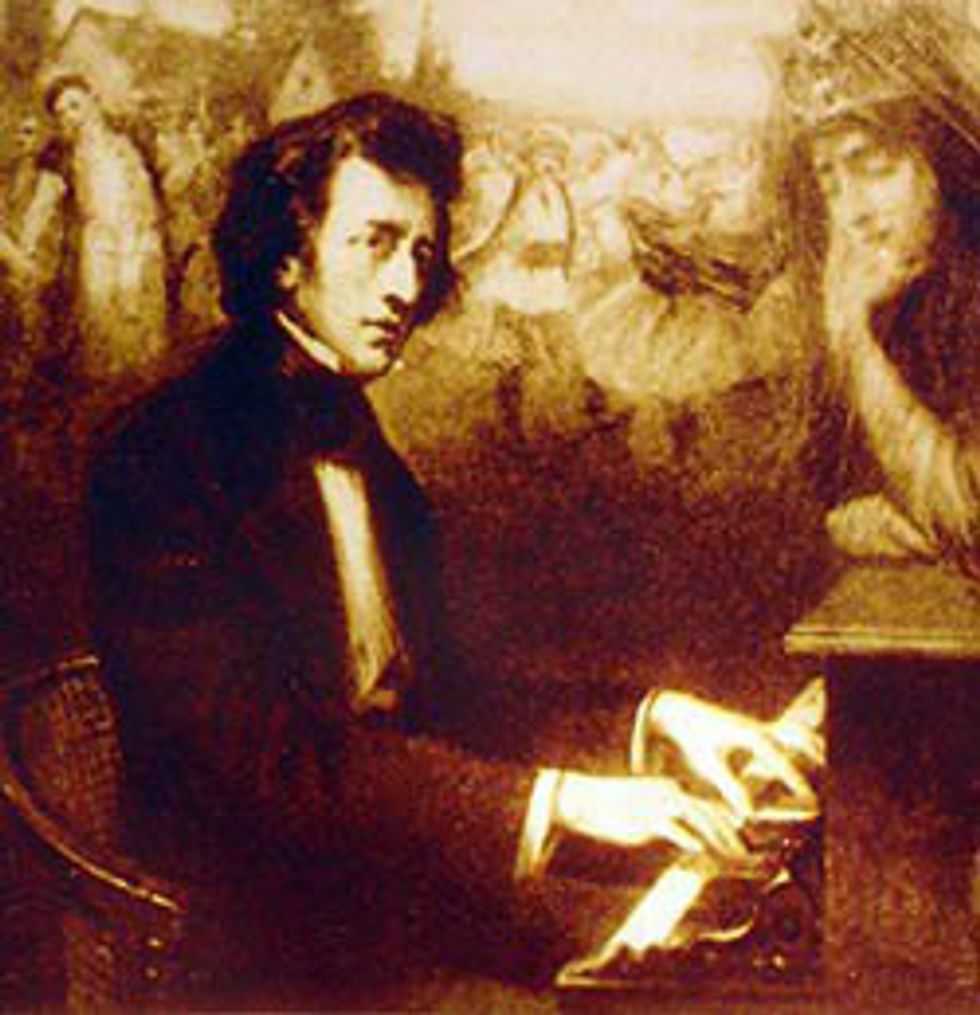
Chopin was one of the most passionate composers to ever live and his profundity is felt with every note. Also, his angst. His angst is felt with every note. Young people today should have no problem identifying with his music. This piece has been called one of his "most emotional achievements". For more passionate, sorrowful, exhilarating, joyful, and angsty Chopin, also listen to "Prelude No. 4", "Nocturne in Eb", and "Waltz Op. 64 No. 2" to start.
5."Rhapsody in Blue"- George Gershwin (1924)
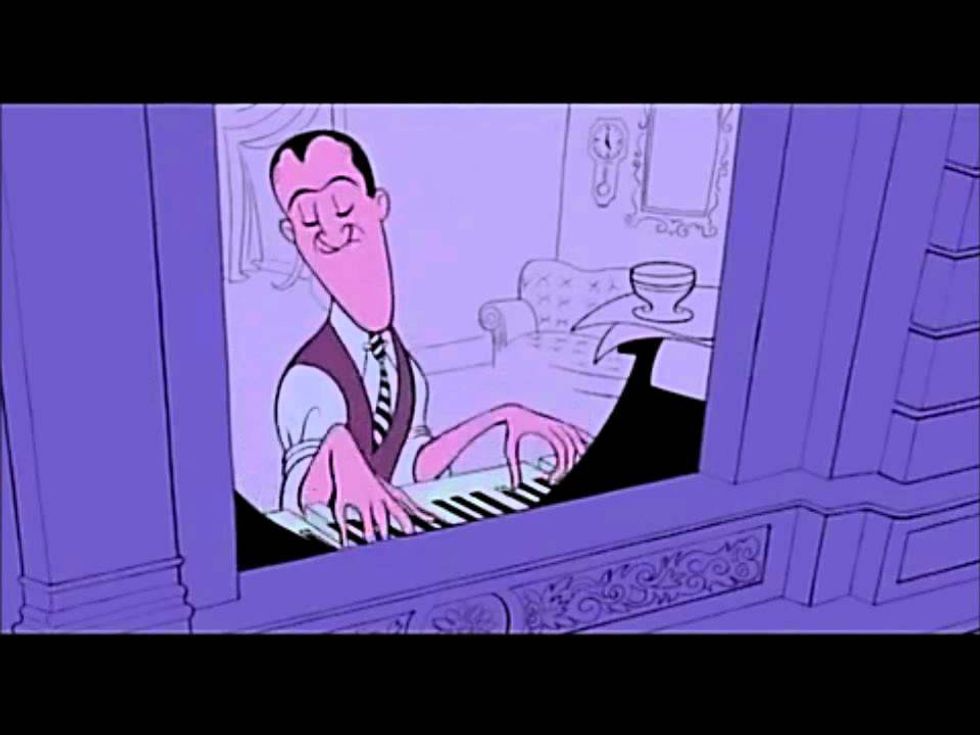
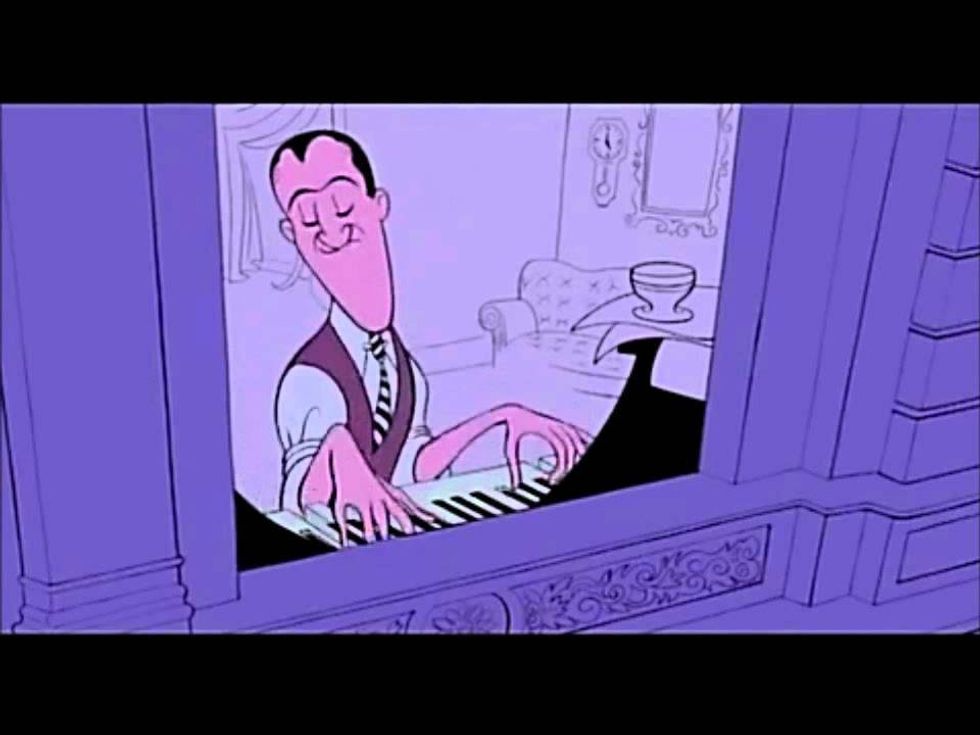
This is another one you probably know from "Fantasia 2000" (and every elevator you've ever been in). George Gershwin was a revolutionary composer of the 20th century. This a 15-minute piece—the longest on the list—but it is totally worth listening to all the way through. Hearing the theme get tossed around almost frantically by many different instruments throughout the piece makes the grand and brassy ending so satisfying. What is so unique about Gershwin is that his music fuses classical with jazz. How can anything that is fused with jazz be stodgy?