
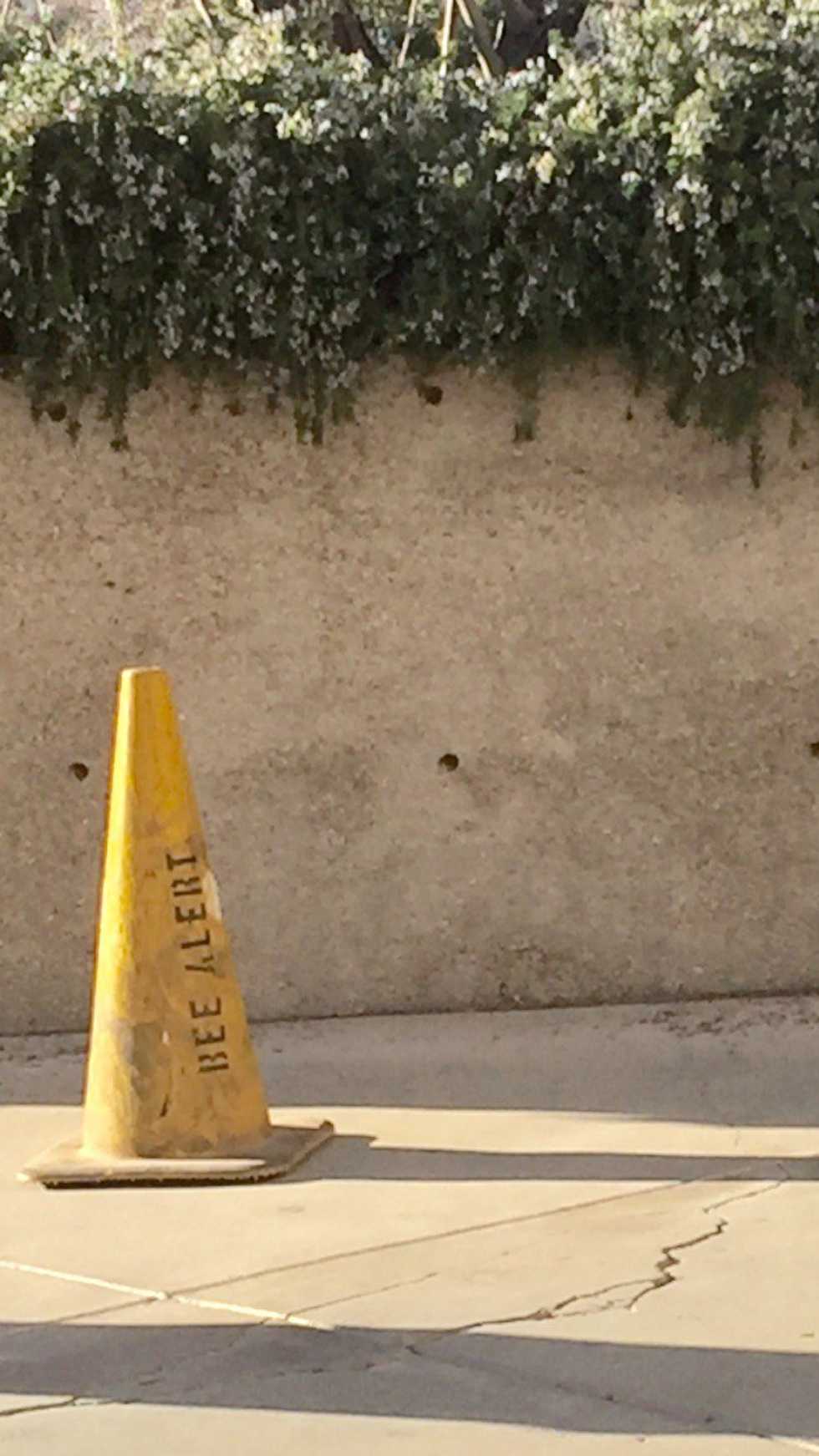
You may have noticed the bright yellow cones outside of UNLV's CBC building this past week which read Bee Alert. This was due to the extreme amount of bees pollinating a lavender plant on campus. Though some might think of the bee alert negatively as it could be dangerous, the large amount of our yellow friends is actually a good thing.
In the last decade there has been a noticeable decline in the honey bee population. This is particularly bad because according to the Natural Resource Defense Council (NRDC) around 1/3 of all of our food has been pollinated by bees. Without the bees to pollinate crops, our food supply could suffer.
The main reason for this decline is the pesticides in the crops the bees are pollinating, but this is not the only contributing factor. Many scientists believe that climate change shares the blame as well. Bees, as well as other species, are migrating in attempt to reach a safe temperature. The issue with this is that bees are not meant to bee a migrating species and the trip is often too dangerous for them to survive.
So, what can we do to help?
1. Get you voice heard. Send emails and sign petitions to help end the use of bee killing pesticides in our crops.
2. Buy organic produce. By purchasing organic produce not only will you be safe from pesticides, but so will the bees. This includes buying organic, locally made honey.
3. Plant flowers. When the bees have more plants to pollinate (like the lavender at UNLV) they are healthier and have a better chance of survival.
4. Help slow climate change. The three R's we've all heard so many times: reduce, reuse, recycle. It's good for the not only the bees, but every other species on our planted.