
The gentle succession of hoof to ground is the only rhythm I can seem to focus on. Beyond the pain in my back and legs, I can only sit, immobile, moving towards my goal. But it is not me who is moving. No, it is the horse. The living being beneath, carrying me onward. Without him, the walk would be too daunting for anyone. But, with every step, I feel this inevitably sudden shock of gravity through all four legs, subtly yet rhythmically in turn moving through my spine as I try with an uneasy effort to sit up straight. "This isn't even the hard part" my Uncle Dave chuckles. "Just wait till you're the horse carrying your pack!" I smile, but I know the journey will only get more difficult as I become the muscle. Yet, in the midst of this cool and calming morning, I am wholly content. It has been over a decade since I was on a horse. It is hour one. I woke up at four for this. I chose to do this.
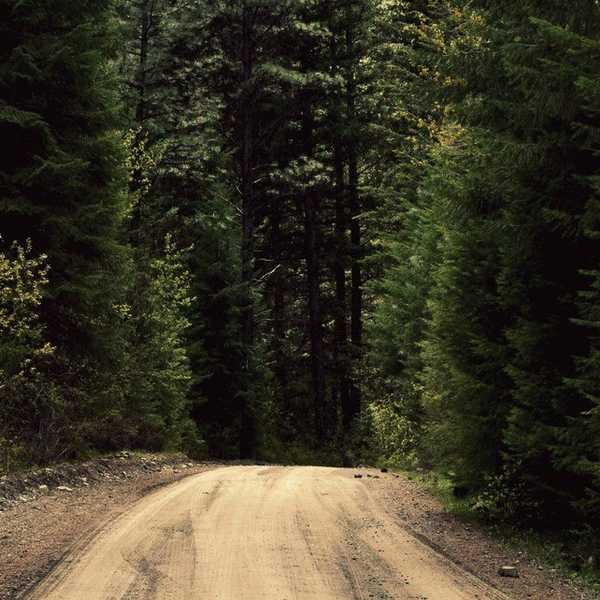
Finally, a marvelous five hours and three thousand vertical feet later, the vast expanse of tree has given way to silver granite. The forest that once surrounded our troupe has faded. Slate, granite, and sedimentary rock has choked out the life of this forest. This is high desert. I am no biologist, but less air means less life, and less life means more quiet. And of course, to my uncles' avail, we have become the horses carrying our means of survival – our last connection to the world of industry – on our backs. Tents, sleeping bags, a stove, and pounds of prepackaged food make up the majority of our packs. It is time, for this week at least, to live wild.
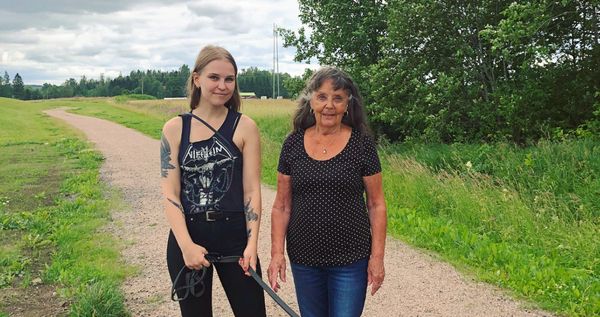
Every year, my uncle takes several family members on a backpacking trip through the Eastern Sierra Nevada Mountain Range. This truly natural Yosemite is wild and only touched by horse tracks and helicopters. This is my Uncle Dave’s way of reaching out to us. He has always felt intrinsically connected to the world around humanity, and wanted to instill some of that feeling in us. And so, years ago with my older brother, Dave created this backpacking trip as a right of passage for us kids before embarking on the journey that is high school. But it was not necessarily Dave himself who facilitated this right of passage; it was the nature around us that did the work. In this new setting, the world as we knew it was gone. This was our escape into an older reality. No internet. No cell service. No humanity. This year, the troupe was comprised of my Uncle Dave, his oldest son and my cousin Joe, myself, and my little brother Reed. This was our vacation. This would become our serenity.
Starting at 9,000 feet, rising to a steady 12,500, the air gets thinner, but our minds only work more efficiently. We are connecting to a different part of our consciousness: a more visceral and observative mode of thought – all so that we can encapsulate these natural paradigms surrounding our now-seemingly insignificant selves. Despite the soreness, the shocks of pain running from my right and left leg as we walk for an additional eight hours onward, this is the only way to experience wilderness – by working as hard as the animals do, by sacrificing our mental triumphs over nature for just one week of keen observation prompting reflection.
This forest of mountains and valleys cannot be touched; it can only be experienced. The terrain is simply too rough, too rigid. It cannot be sculpted or molded. This place, untouched, is made in the image of something divine, not to be made into something else. Whatever grows, does so with a fighting passion to find soil, to find sun, and to find water. The only biological purpose is pure survival. The glaciers may have caused the valley, but what came after was only the blind ambition of Earth’s fauna and flora.
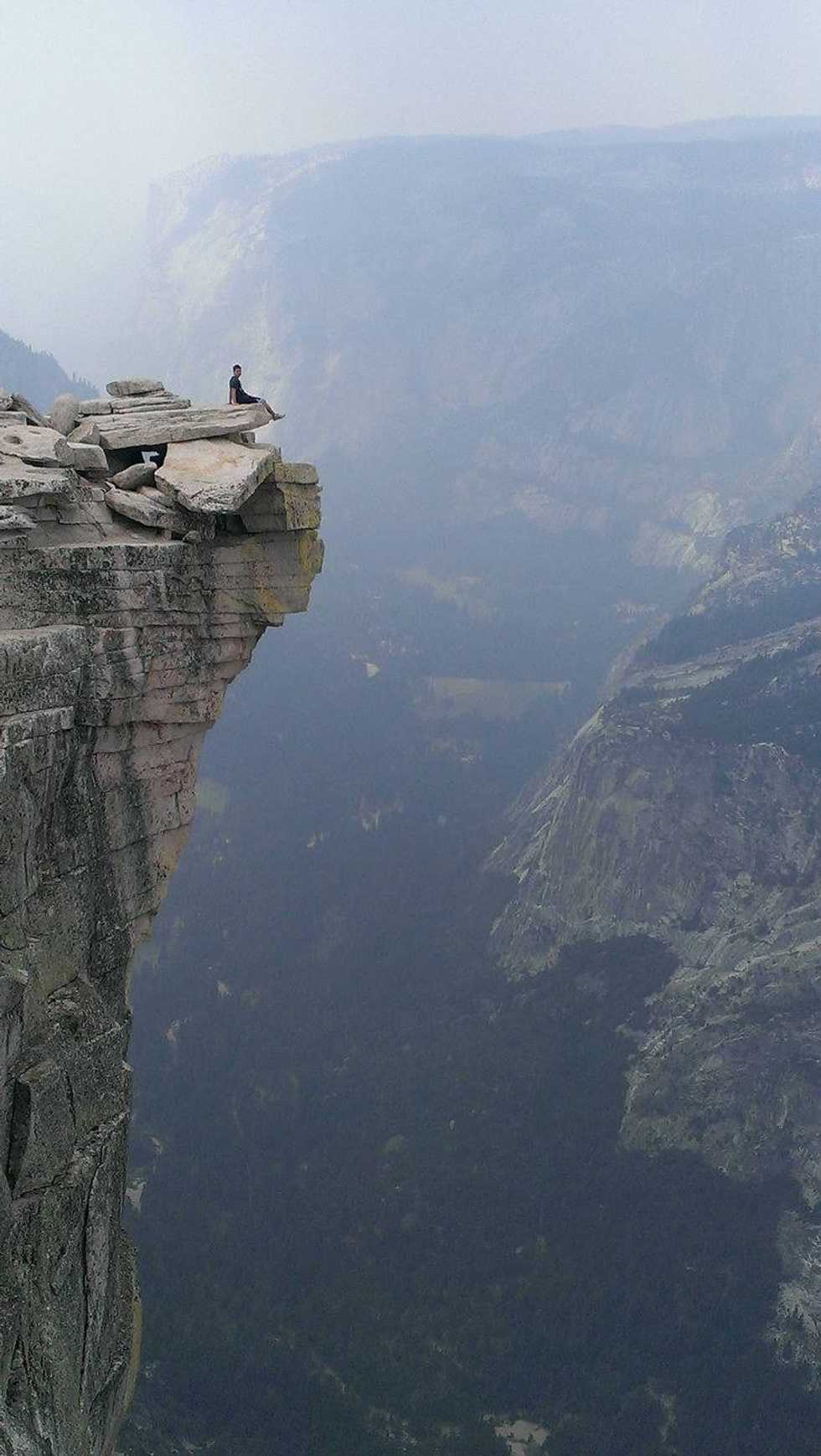
We humans, with our reason, see no practical uses for this land. And so, like most of this region, it became quarantined off as a United States National Forest. Our innate quest for efficiency has forced us to crown this land unusable. But it is in its difficulty to reach, and in its mountainous form that it becomes truly a worthwhile place to venture. Thanks to John Muir, however, it became more than just rock in the eyes of humanity. It became a location of tremendous geological study, and a place where an individual can experience life in a silent form. There is no human noise to drown the wild out. The only concrete is natural volcanic rock, pitch black against the rust-colored sedimentary rock. These mountains were forged from something as simple as ice, and yet they are breathtaking. Upon reaching our destination of the two-mile high chain of lakes, we felt proud of each other after our painfully brutal walk. As we reached our destination, the greys of the granite only complemented the rich dark blue waters of the adjacent lakes. I mean, a mountain bike cannot even cut through these trails. This is mountain country accessed. This is exactly what my uncle had planned for us. And so I stood: in the middle of an ancient cataclysm of rock and ice. Trees became bushes became rock. With only our backpacks, we ventured into a place only mapped by topographical studies, a place truly and wholly untouched by humanity. This was wilderness. This was the earth as I had never seen it before.
The vacation I remember so vividly was not of trials and tribulations, but of leisure. The most amazing part of such a brutal horseback ride and walk was just how calming and leisurely it seemed, and in fact was. Where people would just see sparse vegetation and rock, I saw the flow of the world creating itself from nothing. This cycle only made me think of humanities’ effect on the world. This was not the world I had been born into. Humanity had accomplished something else.
Humanity has this incredibly inherent ability to mold the world to its needs. This world is far from what it once was, far from what I saw back in August. It is a simple idea: the most comparable living organism to humanity is the virus. Humans move to an area of space and multiply and congregate until there are no natural resources left. We are simply a plague to nature. This uncontrollable desire to conquer, to habituate, to reproduce, to achieve the impossible by spreading to the far corners of the solar system even, is inherently within all of us. We do not ask if it should be done, we simple wonder if it can be done. Certainly the latter has brought us fantastic prosperity, but perhaps it will be close to impossible to "undo what has already been done" to things like the natural world (Abram 90). I mean no disrespect to humanities' innate ability to manipulate the world around us, but a balance that has prevailed beyond time on this earth has been disrupted. This is not a cry for change, but an observation only gained by seeing an untouched piece of earth – as I was able to not so long ago. What we have successfully neglected is the fact that the earth has a soul in and of itself.
This soul has facilitated such impossibilities as our creation, and our steady and natural dominion of its peaks and valleys. But we are no longer stewards over this great creation. We watch it, but behind city walls. The problem is, these city walls have connected as we continually develop true country. True country is this natural land that has a personality built by the innumerable complex natural reactions of the beings of such a complex system. This chain of biology acts as the thoughts of this great mind. We can never seek to fully understand these processes, but we can have faith in this balance. Humanity has lost faith in that natural order. We see natural disasters as against the status quo. They are just the opposite. The world flows in a certain way, and in our uncertainty, we have changed the very story of the world around us. This “round river” or flow of life can be easily disrupted. In our incompetence, we think that we have a complete understanding of this world beyond our walls. We simply do not. We have adopted some virtue and have neglected the rest. We have lost the ability to nurture our surroundings. But I say these things in the wake of discovering the most natural setting I have ever been a part of, but not as a critique of humanity. This is by no means a cry for the world, but an observation to help others simply observe.
What must be understood by all is that this great expanse of rock and life can only be called wilderness – a word that few humans can define with any aptitude. What wilderness contains, is the lack of humanity.
What this great place contained was a personality unlike anything I have ever seen. At first, I felt only the silence of the wilderness around me. But then, I heard the language everywhere. It is a consciousness separate from mine, transcendent of my thought. The systematic network of biological process is intelligence. This is a mind that balances itself. Its only purpose is to create a homeostatic atmosphere where all aspects of nature can proliferate and live. This is by no means the efforts of a virus. It is the push and pull of forces striving to work together to achieve a single biological purpose: to thrive. Language can no longer be understood to be reserved to just humanity. In those mountains, I see this connection. And from this connection, and from simply listening to this new environment around me, I formed a positive opinion about a “kind of community instinct in-the-making” (Leopold 219). In this altitude, I feel the forces at work helping to discover the intricate reactions. This “mode of guidance” helped me to realize “that the individual is a member of a community of interdependent parts” (Leopold 218-9). We are citizens of a universe inherently beyond our understanding, and it will always be that way.
What changes our outlook of the world outside our civilization is human culture. We have dominated the world. We are on a different plane than nature. But it is not one in which we are superior. Nature has prevailed before our minds were born, and nature will reign long after the last word has been spoken.
We can truly be at peace in the mountains, so far from human contact with technology. We can become friends with nature. We can begin learning to live with nature, rather than to live over it. Experiences like these help you to open your mind to this life outside of the cement of a city or of a college.