
Setting off Phase 3 of the Marvel Cinematic Universe, Captain America: Civil War attempts to instill fiery conflict between Captain America and Iron Man, but is dampened by the need to haphazardly include as many Avengers as possible, for a film that serves as another Avengers sequel rather than a true sequel to Captain America: The Winter Soldier.
Directed by Joe and Anthony Russo, Captain America: Civil War explores the consequences of the Avengers’ actions after another mission results in numerous human casualties. Feeling responsible for the death of countless Sokovians due to Ultron, Tony Stark pushes for government oversight while Steve Rogers believes the Avengers should have the freedom to act according to their own judgment. When The Winter Soldier reappears, Rogers goes on the hunt to find his lost childhood friend, making him a rogue enemy of the government and Stark.
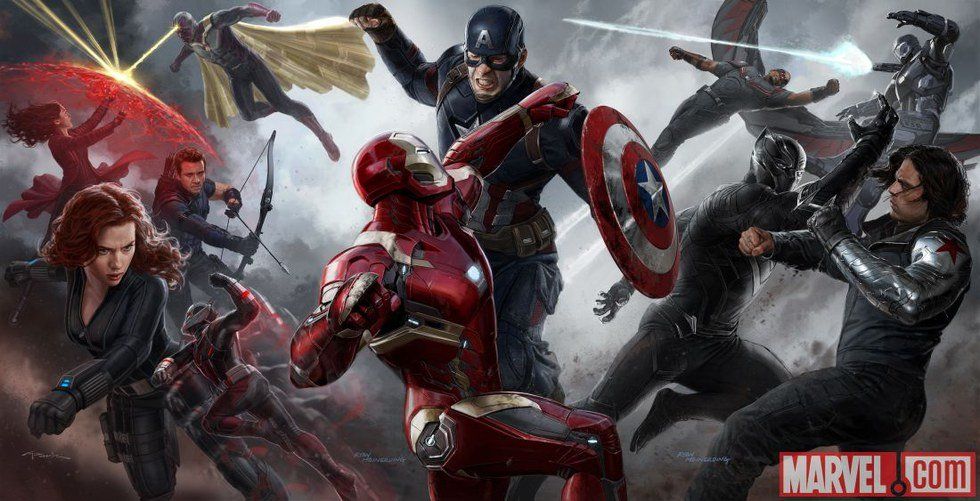
For a film with the title of Civil War, the film is largely a disappointment, the conflict unconvincing and underdeveloped. The fighting in the film rarely ever reaches a level of intensity proportional to the high personal stakes present between Captain America and Iron Man. This is due to the overabundance of characters incorporated into the film. In comparison to the original Avengers film, Civil War has doubled the number of major superheroes involved. As a result, the film must constantly divert attention to other characters instead of focusing on the central characters and developing the conflict between them. It rushes to give every character some semblance of an emotional arc, resulting in less substantial plot points and more questions regarding the development of each character.
The motivations of most characters are non-existent since many are shoehorned in just to increase the number of heroes on screen. Ant-Man, Hawkeye and Spider-Man all randomly appear because each team felt understaffed. As a result, these characters all fight for sport rather than blood. A brief fight sequence between Black Widow and Hawkeye epitomizes the insignificance of the combat in the film. After Black Widow facetiously asks if the two are still friends, Hawkeye retorts with “Depends on how hard you hit me.” Afterwards, Scarlet Witch attacks Black Widow, remarking that Hawkeye was pulling his punches. Neither character is seriously fighting one another because they lack any emotional investment in the battle. These characters’ motivations are grossly underdeveloped and as a result the battle between them loses all validity.
The foolishness of Ant-Man and Spider-Man further lessens the legitimacy of the main battle. Both characters are extremely entertaining with the latest Spider-Man incarnation being the highlight of the film. However, each characters’ antics and banter detract from the seriousness of the fight by making the battle more lighthearted than intense. They supposedly serve as comedic relief but in a battle where none of the other characters are fighting seriously anyways, their presence is less justified. If the characters themselves cannot take the fight seriously then neither can the audience. Ant-Man and Spider-Man make the main fight really fun, but it is at expense of the seriousness with which the film presents itself as. The film is less like a war and more like a game of Super Smash Bros. Fun, but inconsequential.
Perhaps the most affected by the overabundance of characters is the conflict between Captain America and Iron Man, which should have been at the forefront of the film. The two stand opposed ideologically but not enough screen time is given for the conflict to truly develop. A completely random confrontation motivates Iron Man to truly advocate for government oversight and a conveniently-timed death is the impetus for Captain America to stand his ground on the issue. The two have engaged in verbal disputes before in previous films establishing their ideological differences, but they never resorted to violence. Due to the copious number of characters present and the slapdash emotional arcs attempted to be given to every character, the escalation needed for the characters to engage in battle is regrettably rushed.
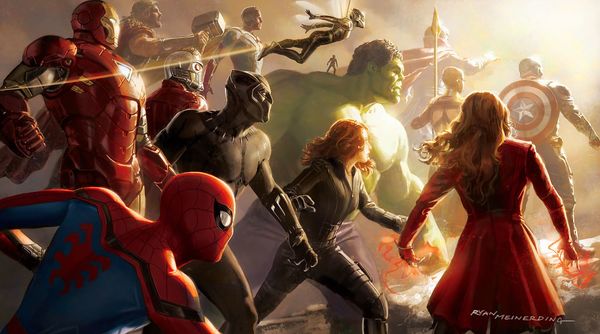
Instead of making a Captain America sequel, the Russo brothers indirectly made another crammed Avengers sequel. The film was incapable of focusing on the two main characters, a direct result of an attempt to include as many characters as possible. These characters were largely inconsequental and as a result the action suffered severely. The failures of this film foreshadow the soon-to-be shortcomings of both Avengers: Infinity War films which seek to incorporate even more superheroes. The Russo brothers, who will direct the films, must learn that story has to be at the forefront, not spectacle. Otherwise, their failures will repeat with much greater severity. Captain America: Civil War not only failed to justify many of its characters’ presence, but also its own.