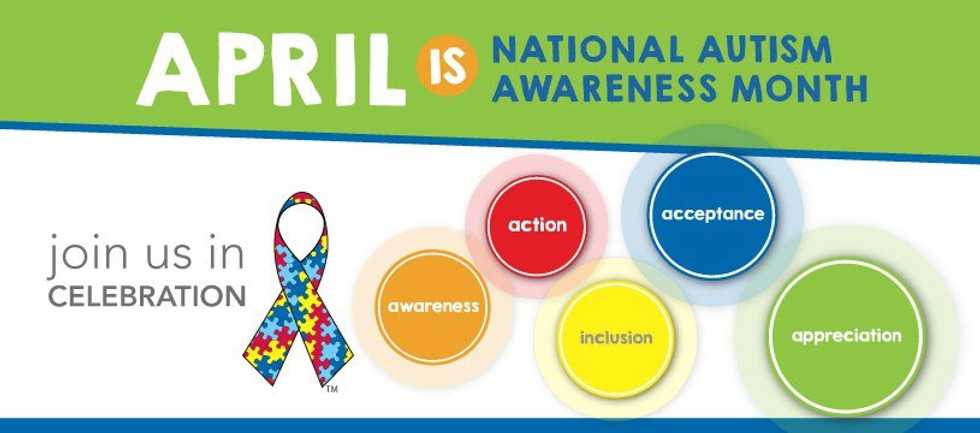
It’s almost April, which means it’s almost the month of autism awareness! National Autism Awareness Month has been celebrated for over 50 years to promote autism awareness, accept those with autism, and bring attention to the many many people who get diagnosed with autism each year.
So, what is it? According to the CDC, “Autism spectrum disorder (ASD) is a group of developmental disabilities that can cause significant social, communication and behavioral challenges.” There is no typical look to someone with ASD, but small behaviors may indicate a person has autism.
Since it is a spectrum of diagnoses, the learning, thinking, and problem-solving abilities of someone on the spectrum can range hugely from extremely gifted to severely challenged. A diagnosis of ASD now encompasses several conditions that used to be diagnosed separately: autistic disorder, pervasive developmental disorder-not otherwise specified (PDD-NOS) and Asperger syndrome. Together, these conditions make up what is now ASD.
Here are some basic facts about ASD according to the CDC, AutisticAdvocacy.Org, the National Autism Association and Autism Society:
- There is no known cause, but most scientists agree that genes are one of the risk factors that can make a person more likely to develop ASD
- Autism now affects 1 in 68 children, ASD is almost 5 times more common among boys (1 in 42) than among girls (1 in 189), and has been present in all racial, ethnic, and socioeconomic groups.
- Autism is the fastest growing developmental disorder, yet most underfunded.
- The lifetime cost of supporting just one person with autism can range from $1.4 million to $2.4 million, with factors as varied as lost wages, residential care and special education driving up expenses, according to a CBS article.
- More than 3.5 million Americans live with an autism spectrum disorder.
- Autism itself does not affect life expectancy, however, research has shown that the mortality risk among individuals with autism is twice as high as the general population, in large part due to drowning and other accidents.
While some of these facts may sound negative in their impact, many people with autism do not see it as a disability, they just acknowledge that it is something different about them in their day to day lives. For example, based on conversations with adults with autism about their lives, the Autism Support Network wrote this article with a list of 10 things that are great about having autism. Similarly, Temple Grandin is a woman with autism that speaks out regularly on her life and how she has been successful.
In fact, according to her website, “In North America, almost half of all cattle processing facilities include a center track restrainer system that she designed for meat plants.” She has won many industry achievement awards, as well as been named one of Time Magazine’s 100 most influential people. One of her main ideas is that having autism has never held her back, it has just made things different.
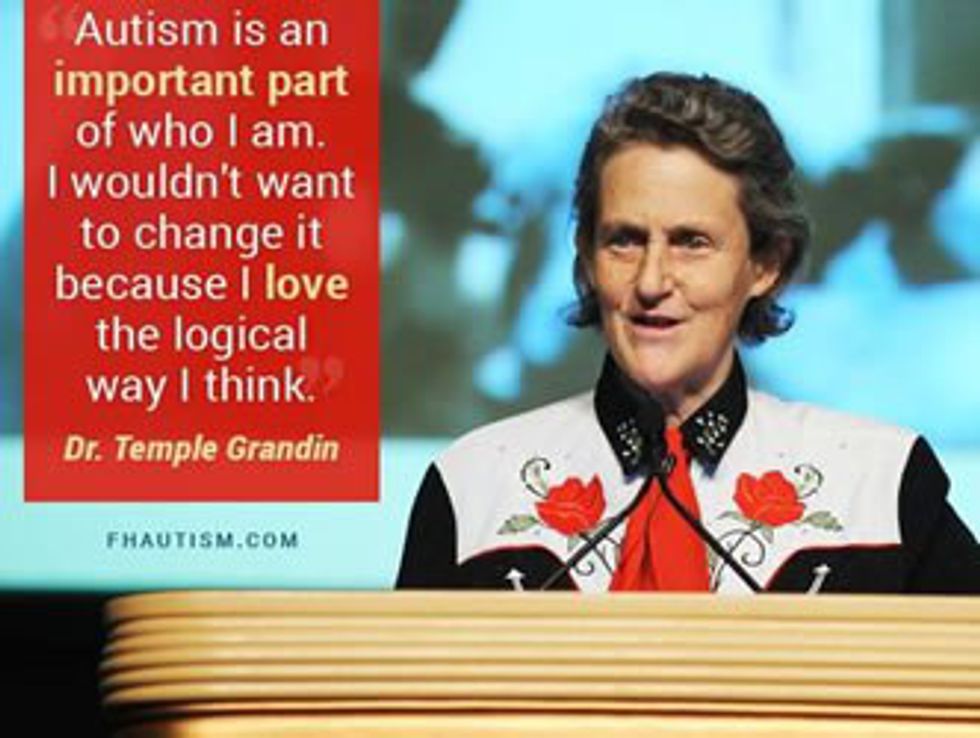
Basically, the purpose of Autism Awareness Month is just to make the condition more widely known for what it is. Some advocacy organizations tend to present autism in a negative way, and say that they are looking for a “cure” for the “disorder” (read more on that here). In fact, in one of her books, Temple Grandin said that she doesn’t want to be cured. Painting autism in a fact-based light that doesn’t scare people is an important act. So, take the right steps to do so.
If you feel so inclined, and your budget allows, you can also donate to the organizations out there that are truly making a difference in the lives of those with autism, the ones I used for facts are good choices. Otherwise, you can make a more local impact and volunteer your time with an autism advocacy organization
With around 40 percent of people with autism being non-verbal, make sure you're using your voice to make the right impact.