


Have you ever dated someone who just drives you crazy with their actions? You try to have a serious conversation with them about something that happened and they avoid the topic at all costs. Do you notice that when you date someone you constantly feel like you’re wondering why they didn’t text back or if they’re losing feelings?
We all have different attachment styles and our attachment style can explain why some of our relationships don’t work out very well. Take this quiz
that shows you your attachment style and delve into the exciting world of realizing why past relationships were a bad idea from the get-go.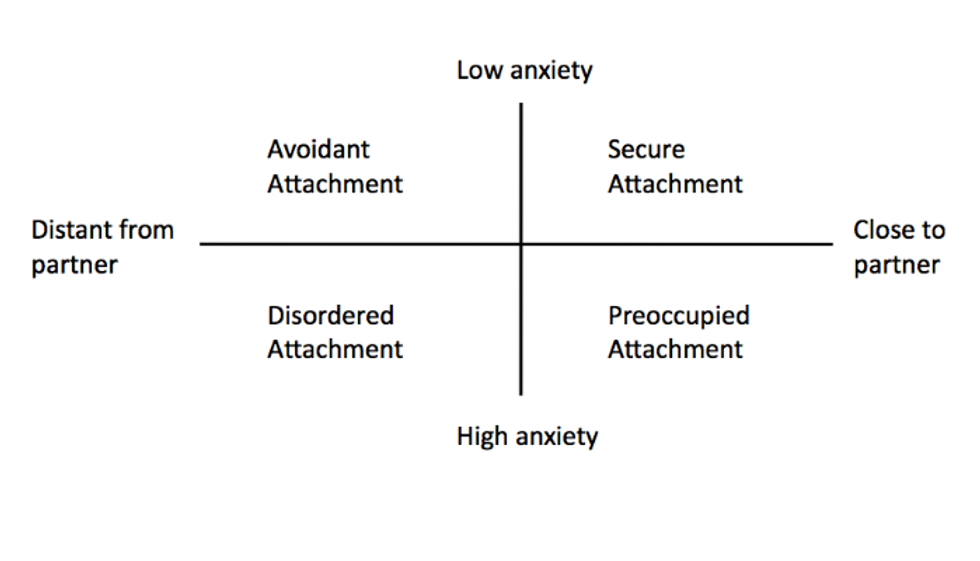
Secure Attachment:
This is pretty much what it sounds like. People who have a secure attachment style. When in a relationship, secure individuals are comfortable and are able to express their emotions in a healthy manner. They are supportive of their partners and when they face hurdles in the relationship, they do so with the confidence that they can work through it with their partner.
Secure individuals tend to do well in any relationship, but two people with secure attachment styles would experience an extremely satisfying relationship. Don’t be fooled, though, two secure people can still have unsuccessful, albeit satisfying, relationship. This may be because they are so open about any issue they are having in a relationship, they are more likely to acknowledge when they aren’t happy and the relationship isn’t working.
Anxious-Preoccupied:
People with an anxious-preoccupied attachment style feel much less secure in their relationship, and they experience much more anxiety within the relationship. They can be known to imagine certain stressors that can create feelings of jealousy, neediness, oversensitivity and possessiveness. This can easily create issues in a relationship because those with an anxious-preoccupied attachment style seek conflict based on the imagined stressors in order to find validation because they require constant love and affection to validate the relationship. They replace actual feelings of love and trust in the relationship with an emotional hunger that they constantly need to have satisfied.
Typically, people with an anxious-preoccupied attachment style validate their fears with their actions. For example, if someone with an anxious-preoccupied attachment style imagines that their partner is losing feelings, they may become clingy and anxious, causing their partner to back away, thus validating their originally made-up fear. Anxious-preoccupied people can date other anxious-preoccupied people and have a lasting relationship, but the relationship would most likely suffer in the area of relationship satisfaction.
Dismissive-Avoidant:
People with this attachment style feel a large sense of conflict when it comes to intimate relationships. They desire affection and intimacy but at the same time fear and resist it. They imagine stressors in their heads, but instead of using them to become clingy and seek attention/validation, they push people away and hide from the relationship. They try to avoid these anxious feelings but most of the time can’t overcome them, and instead experience an emotional storm. For some, rather than pushing for attention and affection, they’ll lash out and distance themselves. For others, they’ll cling to their partners when they feel rejected but push them away when they feel like they’re getting too close. This causes many issues in a relationship with anyone of any attachment style.
Fearful-Avoidant:
People with this attachment style feel a large sense of conflict when it comes to intimate relationships. They desire affection and intimacy but at the same time fear and resist it. They imagine stressors in their heads, but instead of using them to become clingy and seek attention/validation, they push people away and hide from the relationship. They try to avoid these anxious feelings but most of the time can’t overcome them and instead experience an emotional storm. For some, rather than pushing for attention and affection, they’ll lash out and distance themselves. For others, they’ll cling to their partners when they feel rejected but push them away when they feel like they’re getting too close. This causes many issues in a relationship with anyone of any attachment style.
Much of our attachment style is formed when we’re younger based on the experience with our primary caregiver, but can potentially be changed over time based on who we are with. It is common to see people who start off with anxious-preoccupied attachment styles shift to a secure style over time when introduced to a relationship with a secure individual. We also don’t have the same attachment style with everyone we meet. We can experience a secure attachment with our parents and an anxious-preoccupied attachment with our intimate partners.
Attachment styles can explain a lot of why we find certain frustrations more important than others in a relationship, and why we may find a pattern of similar behaviors amongst relationships across time with similar partners.
If you feel like you fit into an attachment style that you don’t necessarily like or seem undateable, fear not. While some styles find it harder to maintain a relationship, there are instances of long-standing, satisfying relationships for individuals of each attachment style. There’s someone for everyone!