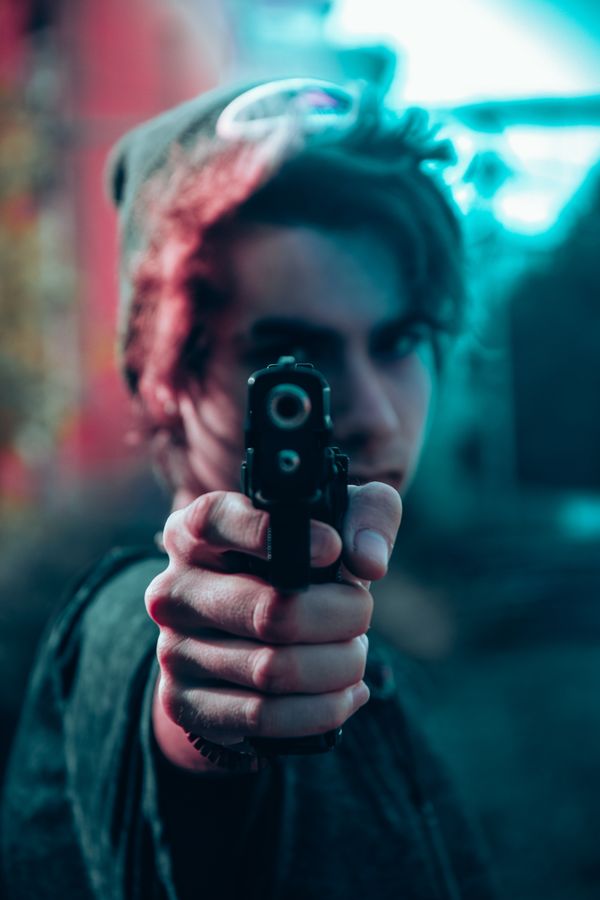
Shoot first, ask questions later.
This saying has been so ingrained in my psyche that, at this point, I cannot even remember from where it came.
Shoot first, ask questions later.
If you ever feel like you’re in trouble, make sure you protect yourself. Make sure you take care of yourself first. If you need to shoot, shoot. If you feel like your life is in danger, do all that you can to protect yourself.
Shoot first, ask questions later.
You’re in danger. You feel threatened. The only thing that is important in that moment is you and your life. And, in your head, the only way to protect yourself is to use a weapon, more specifically a gun.
But what if your head is wrong? What if everything you have been taught is wrong?
In the past three days, two Black men, Alton Sterling, from Baton Rouge, Louisiana and Philandro Castile from St. Paul, Minnesota were killed by police officers. Sterling was shot by an officer after police received a call about an armed man outside of a store. The officers pinned Sterling to the ground and then one of the officers shot him, according to the New York Times. The video, published by The Daily Beast shows that police tackled Sterling to the ground and then shot him. There is no evidence that Sterling was holding a gun during the attack.
Philandro Castile was shot by Jeronimo Yanez during a routine traffic stop about a broken taillight. According to a video posted by Castile’s girlfriend Diamond “Lavish” Reynolds, Castile mentioned to Yanez that he had a firearm and was licensed to carry. He was in the process of retrieving his permit and identification when Yanez shot him four times in the arm.
Yanez shot Castile four times in the arm, without asking questions.
He shot first. He shot first, failing to ask questions. He lived by the saying,shoot first, ask questions later.
But what if he hadn’t. What if, instead of panicking, instead of assuming that Castile was reaching for his firearm, Yanez waited? What if he waited and asked a few questions: asked why he had a firearm, asked to see the permit, asked what he had been doing out with his girlfriend and daughter?
As a White young woman, I have been in the car quite a few times when my parents have been stopped by police for routine traffic violations. Each time this occurred my parents were asked to show their license and registration. They were also asked where they were headed and whether they understood why they were stopped. These questions are asked as part of routine procedures, as routine courtesy.
Why can’t we show black people the same courtesy?
The truth is, we can. We can show this courtesy. We can treat them like human beings. We can listen to them when they talk or ask them about what they need and help them fulfill those needs.
As a white young woman, I can honestly say that I have absolutely no idea what it is like to live as a person of color. I have no idea what it is like to fear for my life. I don’t wake up every morning wondering if today is the day that I will get shot.
And because I don’t have to fear for my life daily, it’s my responsibility as an ally to make sure that I am doing as much as I can to support those who do.
We have to ask questions. The police have to ask questions. They can’t just shoot first. The only way that these events can stop is if we ask questions and find the answers, not from other White people, not from police officers, but from the groups that are actually experiencing this violence.
We white people have to call each other out when we are being racist. We have to be aware of the messages various forms of media are sending us. And then we have to question them. We have to question how, and why, and who—who is sending them, who is deciding what messages to send, and why are they sending them that way?
We have to ask ourselves, why are we so afraid?
I’m not sure. But we have to ask the question now, or else we’ll never be able to stop these killings.