


In the past year, a number of prominent Asian-American actors have presented themselves as fierce advocates for the visibility of Asian-Americans in Hollywood and the film industry. If you’ve ever watched a movie trailer, watched a television show or seen a movie poster, then you’d be hard-pressed to find any visual trace of an Asian-American actor. In fact, it’s more likely that you would find a white actor in “yellowface” in an old film or an Asian character being portrayed by a white actor in more recent films — Emma Stone in Aloha.
The issue has produced a brand new word, "whitewashing," which defines the current state of Hollywood as an industry that takes Asian roles and stories and disfigures them by injecting them with white actors. When vocabulary words are changed or added to the dictionary and become a part of everyday speech, that means two things: people are pissed and the situation has reached a breaking point which necessitates change.
The most striking historical example I can recall, of a somewhat similar situation in which common vocabulary was changed—albeit taken to the extreme—was when Daniel Webster, the creator of Webster’s Dictionary, was tasked with making American English phonetically, culturally and socially distinct from British English during the foundational development of America. Webster developed a new dictionary to develop the cultural independence of the United States from the United Kingdom. If the Brits weren’t assholes back then, I could’ve had a British accent instead of a New York accent, but they were, so Americans engaged not only in a political and militaristic war, but a social and cultural one as well.
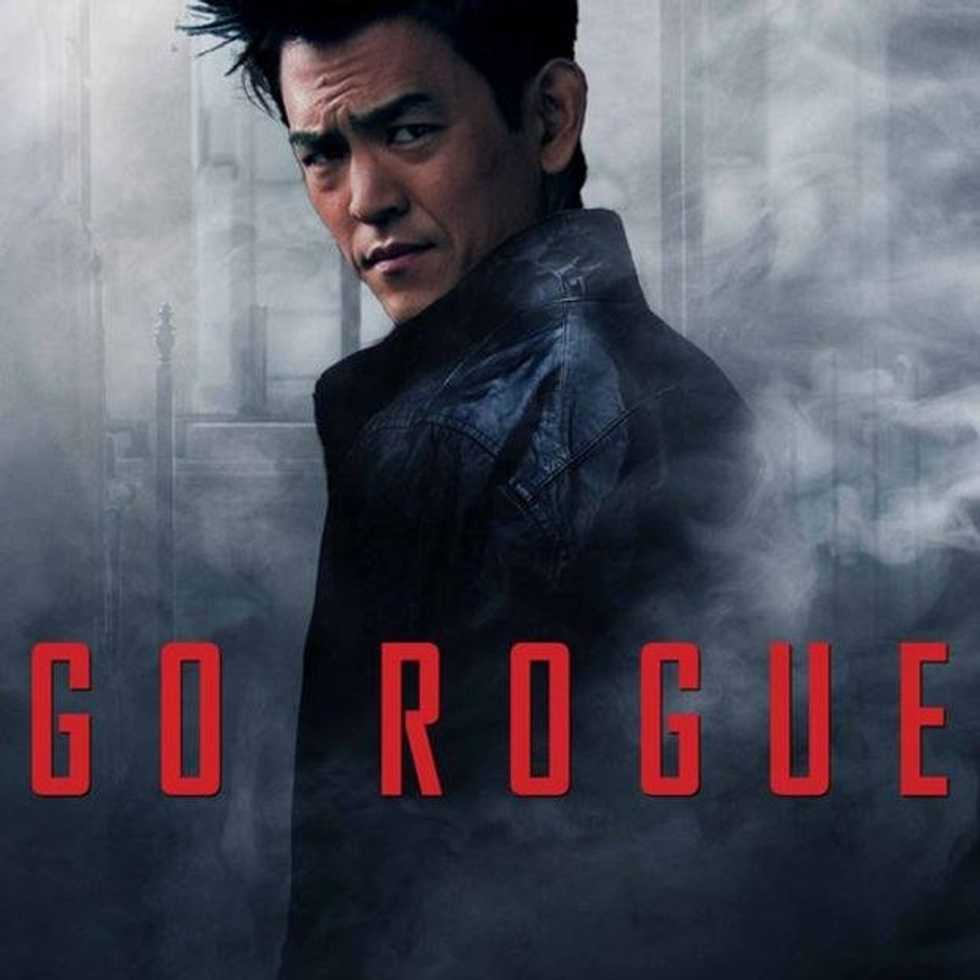
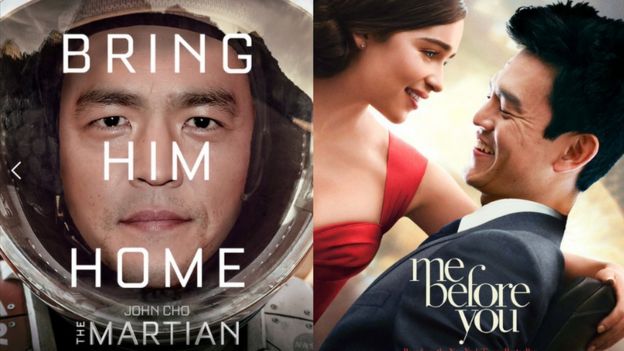
The issue of Asian-American identity in Hollywood will not cause a bloody war with armed soldiers marching to the battlefield. However, it will fuel a movement that seeks to reconstruct an American culture that is ironically unaccepting of the presence, prominence and appeal of its other subcultures and is practically deaf toward the voices of its minority members. In fact, the issue propelled a social media campaign #StarringJohnCho, the aim of which is to reimagine popular movie posters with John Cho as the lead actor. Who doesn't love the former teacher turned actor who starred in "Harold & Kumar Go To White Castle" and the reboot of the "Star Trek" movie franchise?
Let’s face the hard facts, being an actor is a difficult career path because it’s difficult to make a living if you aren’t a big name actor featured in the latest Hollywood films or Broadway plays. This reality is compounded by rice grain sized windows of opportunity for actors of color. If an Asian actor can’t land a definitively Asian role — like in the films "21," "Aloha," "Breakfast at Tiffany’s" (which is racist), or the upcoming "Ghost in the Shell"— how is it that some white actor has the cultural repertoire and understanding to play that same role?

What I say may seem offensive, but imagine a white guy trying to play the role of Cecil Gaines in “The Butler,” then try to imagine a white guy playing Madea in a Tyler Perry film. The films no longer have the same “flavor” to them when you switch in a white actor as other races and ethnicities are more strongly distinguished by their accompanying culture rather than skin color. It’s difficult for even the best actors to act well as a character whose culture and environment is foreign to them. If it is awkward for a white person to star in a definitively black role, then it should be equally awkward for a white person to star in a definitively Asian role.
I don’t mean to curse out and condemn white actors for taking a role as a colored character in film. A role in a movie is a job, and if you can get it then take it because you need to make a living. I’m cursing out the people in charge of the casting and screenplay for the stage and screen. The Hollywood big-wigs and corporate producers are to blame for a lack of sensitivity toward the casting of Asian-American actors and they are partially to blame for the reinforcement of stereotypes across a spectrum of cultures and countries.
I’ve heard excuses from friends and screen junkies on social media that downplay Asian actors because they lack visual appeal or star power and don’t see anything wrong with casting white people in colored roles, but I’m not buying it. If you’ve never heard of K-Dramas, K-Pop, C-Dramas, C-Pop, J-Dramas, or J-Rock then google it now and be prepared to get addicted because Asian television and music is amazing. If you think Asians aren’t attractive then try saying that after looking at pictures of prominent stars such as Lee Min Ho, Dara, T.O.P or Inoue Mao. Even Emma Stone, a top American actress, admitted to loving K-Pop and the girl group 2NE1 in an interview with Conan O’Brien— who also made a cameo in a Korean drama with popular Korean actress Jang Na-ra.

Only in recent years have Asian-American actors gained any sort of momentum in Hollywood with the introduction of shows such as “Fresh Off The Boat” or “The Mindy Project.” These shows help, but the issue remains that Hollywood still thinks that stories about white people are overwhelmingly universal and that anything else won’t make for good story material. I call bullshit on that because Asian culture and stories have a global fan base through Asian music, television, film, anime, manga, and novels (the Chinese Xianxia novels are especially exciting).
Asian-American actors may have been invisible, but if Hollywood doesn’t realize the commercial and social value of Asian-American actors and Asian culture then most of the entertainment we’ll get in theaters will remain the same “universal” straight white person story that comes out every month.

















