
Having spent most of his formative youth in countries like Great Britain and Canada, Martin Li, who is originally from Taiwan, chose to settle down in Ningbo – a coastal city in China - in 2005.
“(The decision) is not only about money and opportunities. The constantly improving quality of life in China made me and my wife feel like settling down here,” Martin, a university professor, told me.
The recent landslide victory of Mrs. Tsai Ing-wen, a pro-independence politician from the Democratic Progressive Party (DPP) in Taiwan, has led many to exaggerate the hostility of Taiwanese youth to mainland China, as if to forecast some impending break between the two.
However, the cross-strait relations is like a marriage, and it is never easy to break up. People who believe in the aforementioned argument just fail to acknowledge an important fact that Taiwan and China are currently more intertwined than ever, as exemplified by people like Martin.
The interdependence, be it social or economic, is at a historic high of the two. Under the leadership of President Ma Ying-jeou, Taiwan largely enhanced its social ties with China. Ma’s policy encouraged Taiwan’s young people to work and live in China. There is around four percent of Taiwan’s population having left Taiwan for China. Taiwan also opened up for Chinese people to visit, which benefited the island’s tourism sector.
On the economic side, many big Taiwanese firms have already successfully entered Chinese markets in recent years. These tycoons generally do not favor Mrs. Tsai’s advocacy, which is to shift their business focus to Taiwan’s old trade partners like Southeast Asia, Japan and the United States. Also, some Taiwanese doubt whether strengthening economic relations with these countries is an effective strategy to stimulate Taiwan’s ailing economy.
In the wake of election, the vast majority of Western media was caught under the impression that the younger generation in Taiwan hoped the world would recognize the island as a country. A survey in 2014 indicated that around half of the respondents in their 20s and 30s supported independence; the number was much greater than ten years ago.
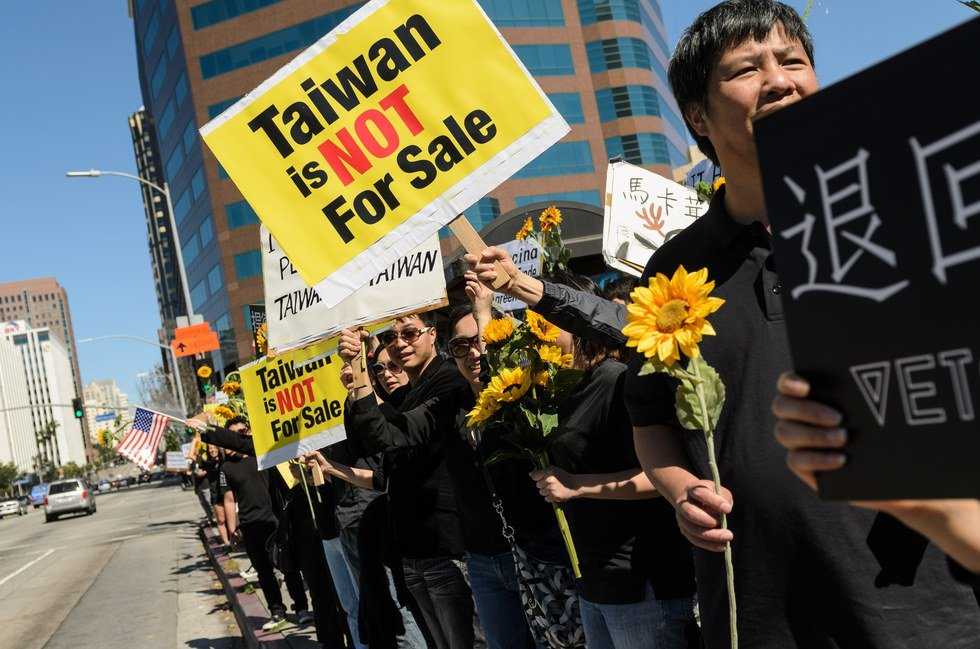
The call-for-independence image of Taiwan’s youth mainly came from the Sunflower Student Movement in 2012, which was a large-scale demonstration organized by youth to object to Ma’s Administration signing a trade deal with China. Participants of the demonstration thought that the deal was only beneficial to Taiwan’s rich class, but not to most the younger population, and Ma’s government lacked transparency when negotiating the deal with Chinese government. Such dissatisfaction has grown since then, and it contributed to the success of the DPP in the election.
However, it is premature to assert all young people in Taiwan support claims that were made by Sunflower Movement’s leaders. A recent survey reported by BBC showed one third of youth wanted to work in China; the number was larger than any period in the history. The same survey further demonstrated that the biggest consensus among Taiwanese on relations with Beijing is to maintain the status quo, as many people understood that it was unrealistic to disconnect with China either socially and economically. Therefore, independency and separation are just some wishful thinking of a few young political zealots. The Taiwanese society currently offers no ground for such a dream to be materialized.
The relations between Taiwan and China are rocky, but no one is serious about a “divorce”.