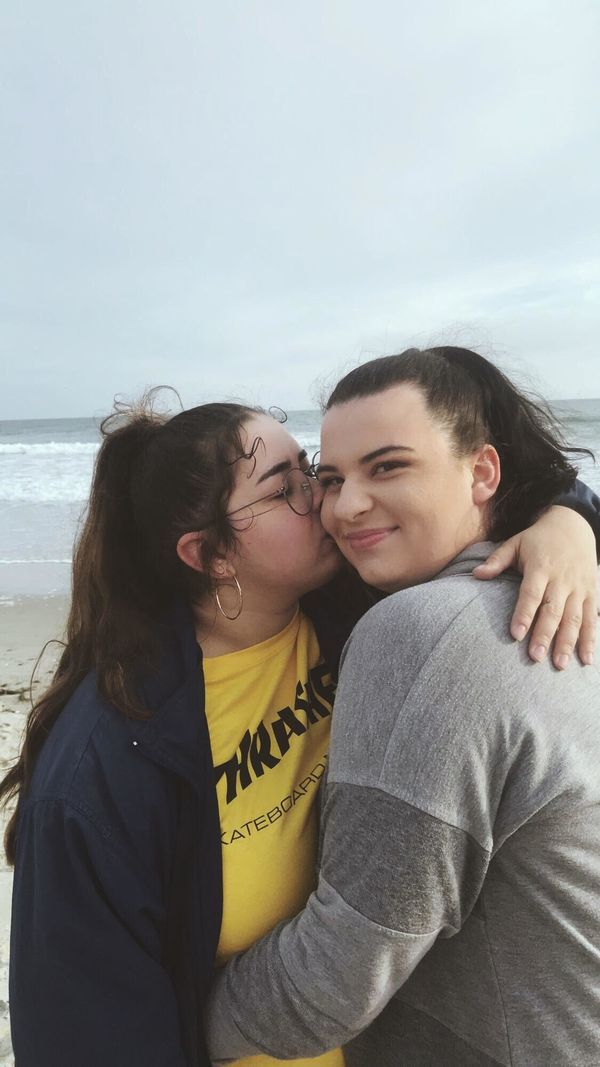
“I think I’m gay.” Sitting over a pungent skewer of seasoned lamb and veggies at Restaurant Marrakesh, Walt Disney World- Epcot’s one and only Moroccan eatery, my parents experienced their first soiree in life with a gay teen. Soon, wafts of turmeric and saffron took a backseat to a combination of supportive pats and “we-love-you-no-matter-whats.” Having deliberated this moment for months, revealing my sexual inclination towards women at the “happiest place on Earth” was not in the original plan. Just as my parents didn't expect to find out that their dress-wearing, make-up donning, boy-crazy teen had used their study abroad tuition money to explore her sexuality with a female roommate, I did not expect to purge my secret before dessert menus were even an option. In addition to showing up unprepared for the beginning of my authentic lesbian life, I was much more unprepared to answer the questions that followed: What do you mean you ‘think’? Is it just her? Have you told anyone else? And my favorite: Are you an Ellen or a Portia?
Before this question, I, like many, would have argued that the American people have come a long way towards opening their hearts and minds to accepting us queer folk in all of our myriad forms. Coming from the two people who created me, raised me and shaped the moral standards that I now hold myself to as an adult, I realized that monochromatic ideas of gender don't only permeate the cis population, but have seeped into the cracks of the LGBTQ community as well. Were my parents at fault for trying to label me as one or the other, or was this mode of thinking as inherent in them as being a lesbian is a part of me?
Although my initial reaction to Are you an Ellen or a Portia? was one of laughter, I remember feeling confused about how to respond. I immediately began attempting to determine whether my gestures, garments and physical appearance portrayed me as male or female. Did my inclination towards close-toed shoes, flannel shirts and short haircuts align me closer to the male population? Did the enjoyment I got out of being led out on the dance floor, applying makeup and watching rom-coms mean I was fundamentally more woman? The reality was, I didn’t have an answer. Today’s reality is, I still don’t.
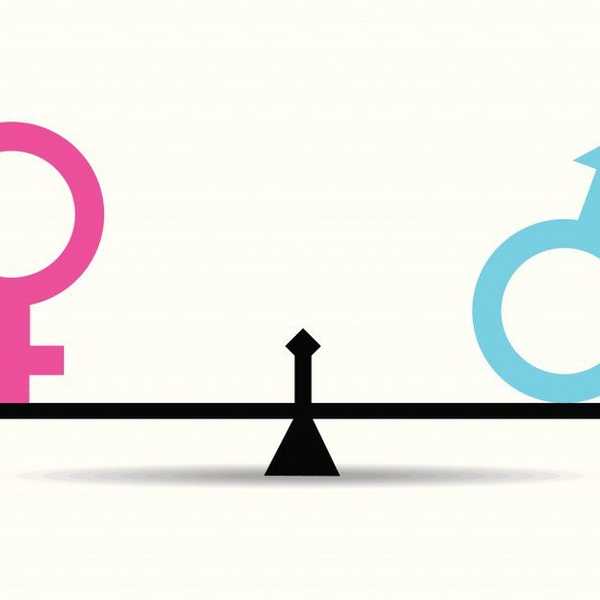
Being a lesbian does not define who I love, who I am, or who I will become just as much as the fact that I have female parts does not make me more woman than man. But at birth we aren't given much of a choice. In truth, robin’s-egg blue paint and toy cars cover the walls of nurseries before baby boys take a first breath. The “it’s a girl!” revelation sends future parents, family and friends to clean out every pink, purple and sparkly item from baby stores. We are gendered from the moment our little hearts beat for the first time. So, how do we account for anatomy AND the diversity of our tastes and feelings? What labels, if any, should we use, and how can we separate biology and gender in a way that makes sense?
According to www.genderspectrum.org, “Biological Gender (sex) includes physical attributes such as external genitalia, sex chromosomes, gonads, sex hormones, and internal reproductive structures. At birth, it is used to assign sex, that is, to identify individuals as male or female. Gender on the other hand is far more complicated. It is the complex interrelationship between an individual’s sex (gender biology), one’s internal sense of self as male, female, both or neither (gender identity) as well as one’s outward presentations and behaviors (gender expression) related to that perception, including their gender role. Together, the intersection of these three dimensions produces one’s authentic sense of gender, both in how people experience their own gender as well as how others perceive it.”
To put it simply, lesbians are individuals and — like all other people — individuals are different. My dominant nature does not outshine my emotional, sensitive responses. The fact that I have seen Because I Said So more times than I have fingers does not mean that I cannot find pleasure in watching a soccer match. As a woman, my appreciation for the female body does not make me wish to be a man, and my respect for the male body does not mean that I wish to be aggressed upon by a man. It would be a boring world if they did. No two of us are alike, and no body part, societal box or personality trait can represent a human being in summation. We are a sum of all our parts, and what dangles (or does not dangle) between our legs cannot and should not define us. America should be the happiest place on earth for ALL iterations of gender. Let’s work harder at that.