

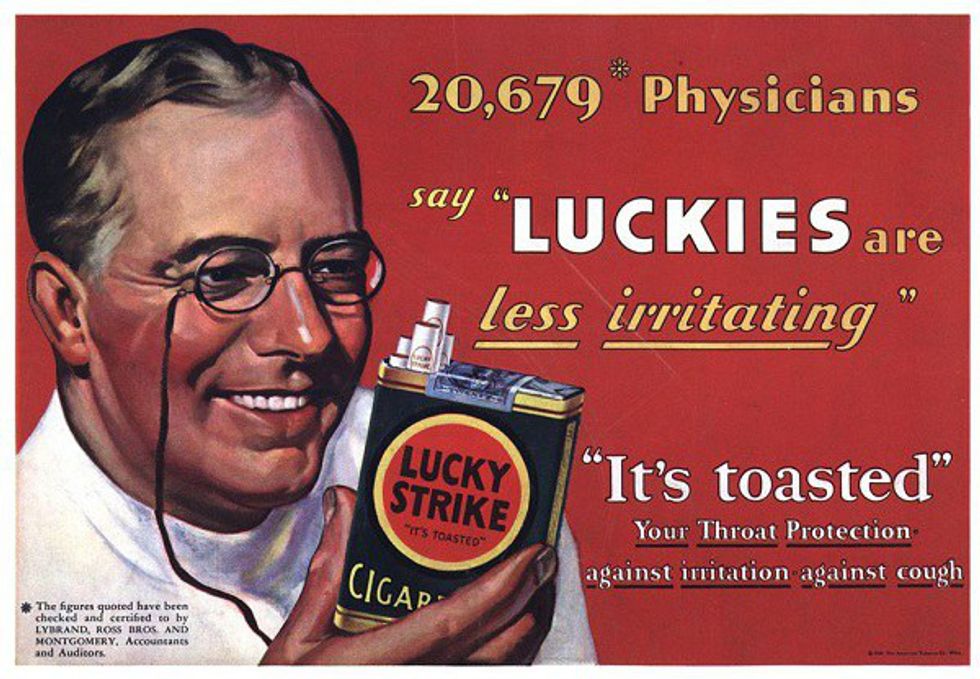
If life in the '60s was anything like "Man Men" makes it out to be (which, let’s face it, we hope it was, besides the awful greased hair and equally abhorrent treatment of women), people were smoking cigarettes 24/7 as if their lives depended on it. In some ways, their lives revolved around simple tasks like the small satisfaction of peeling open the plastic wrap of a new pack, offering a friend a light, and of course the long drags and quick exhales of smoke. Before the health consequences of smoking were widely accepted, and even as warnings became a necessary component of packaging, cigarettes remained a staple of cultural day-to-day life for most people. Cigarette companies were quick to come out with testimonials of physicians and users swearing by the mildness of their products, even as lawsuits began they were intent on selling their products. Yet, now we look back and wonder how smoking was so widely accepted for so long when it seems so obviously detrimental to health.
Getting on a train leaving Chicago around 6 p.m. earlier this week, I looked around the car I was in and realized that every single person around me had their head bent downwards at a 45-degree angle, mesmerized by the small glowing screen of whatever device they were currently engrossed in. The second a plane touches down, before the voice of the flight attendant reaches you to welcome you to your destination, it’s easy to be bombarded by a wave of passengers switching their phones off airplane mode, whether to tell someone they’ve landed or to just check whatever they missed during the flight. Working in a restaurant it was not uncommon to see parents immediately set up their young children with movies on iPads upon being seated, or to walk by tables where every single patron was staring at their phone. Professors are forced to decide whether they will allow the use of laptops or cell phones in their classes for fear of being completely tuned out by their students. We find we can get everything from our phones; attention, laughter, news, socialization, music, money or even a social crutch. But who is to say that we won’t look back on this time 40 years from now in disbelief at how addicted our society was to something so blatantly destructive?
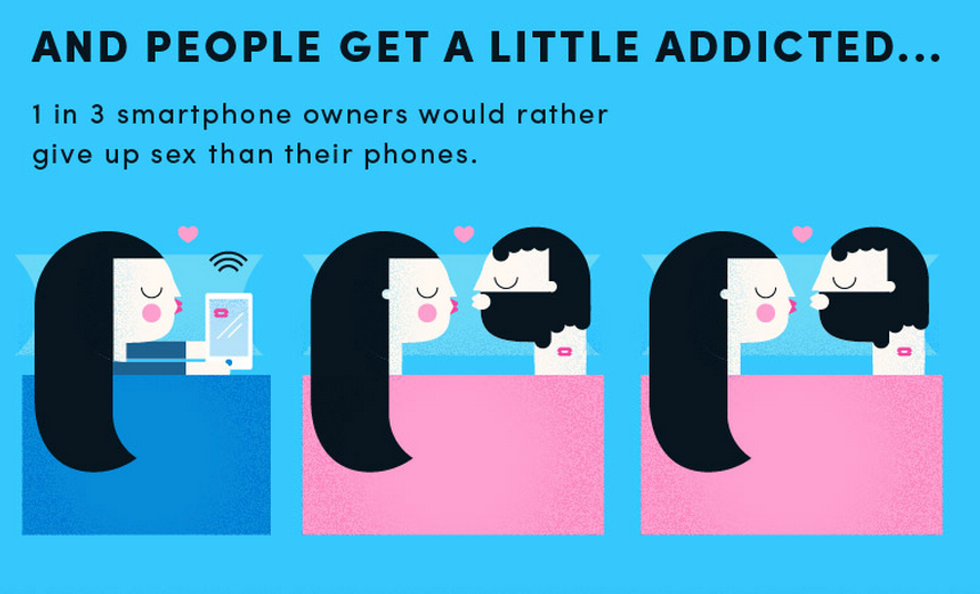
Cigarettes and smartphones are two of the most addictive, sought after handheld objects our society has ever seen. Letting a stranger use your phone would be the equivalent of letting one take a drag of your cigarette; similarly, you would let a friend do either without a second thought. As smartphones evolved to become more of a cheaper commodity, they fell into the hands of people of all socioeconomic statuses just like cigarettes. One can choose from Camels, Marlboros, American Spirits, Apple, Sprint, AT&T, Verizon, Motorola, etc. The media glamorizes both; the chances of seeing a character in a movie or music video using a flip phone are practically zero, just as the celebrities in the 60’s were rarely filmed or photographed without their most important accessories, cigarettes.
Both can also be considered integral parts of socialization; through smoking socially, giving or getting a cigarette from a friend, or striking up a conversation in order to use someone’s lighter, to abstain from smoking would be to miss out on all of these opportunities to connect with other people. Similarly, to have a flip phone instead of a smartphone would mean missing out on the constant flow of information and communication between individuals; you’d inevitably be somewhat alienated from your peers. There are also certain social spaces where these items aren’t permitted; you can’t smoke or use your phone on a plane, most hotel rooms now are non-smoking, and in movie theaters you are nearly forced to silence your cellphones.
Just as the age at which people started smoking seemed to get younger and younger, anyone from age 5 to 100 is likely to have their own smartphone or similar device. While most every day people ignore warnings about the addictive nature of phones just as they did cigarettes, legislature is once again attempting to catch up and stop a growing problem through laws prohibiting using your phone while driving. Most public spaces in the United States have become non-smoking because smoking is hazardous not only to the health of the smoker, but also to every surrounding person breathing in secondhand smoke. Similarly, when you text and drive you are not only jeopardizing your own life, but you are also responsible for the lives of those in your car and the surrounding cars if you get into a crash.
Not only are laws prohibiting cigarette and smartphone usage similar, advertising campaigns that aim to illustrate the dangers of both are eerily alike in the formula they use to create fear and draw on emotions. Anti-cigarette commercials that feature warnings from lifelong smokers with holes in their throats, barely able to speak are designed to elicit the same reaction as commercials that target texting and driving by displaying horrifically graphic images of people who have been in car crashes because someone was texting.

While their effects on our bodies may differ completely both physically and mentally from those of smoking, we don’t know exactly what prolonged exposure to smartphones will do to us simply because no one has fully lived through this technological age. But even if we did have credible information about negative consequences, looking with 20/20 hindsight at the precedent set by cigarettes suggests that we would not be able to put aside our addiction in pursuit of better health. If doctors and legislators were, or are, trying to send us a message, would we heed their advice? Or is history bound to repeat itself?