
Few people are really aware of the history of the Appalachians, but the area did contribute to one of the first major military victories during the war for independence. During the colonial period, prior to the American Revolution, the crown issued a proclamation that said that no men could cross a line drawn roughly across the Appalachians. The crown had valid reasons for doing this, not the least of which were tensions with the Native-Americans and the French. However, many prospective settlers chose to ignore it, either because they could not resist the lure of the land or because they perceived the declaration as tyrannical.
The men who ignored the proclamation were said to be "over the maintain." The phrase was later compacted into the "Overmountain Men." After violating the proclamation line, they received no defense from the crown against the initially agitated natives. There was also the strain of forming homesteads with little help and little food early on. Eventually, groups of settlers formed communities and leased their land from the Cherokee. They also created the Wautauga Association, the first independent government west of the Appalachians. Some native chiefs did not agree with the land lease and they led very frequent attacks against the Overmountain Men. It was in these settlers that the persistence and rebellious spirit that still pervades the area first took shape, the same spirit that would later play a pivotal role in the American Revolution.
British-aligned Cherokees managed to route the Overmountain Men at Nolichucky, which is now near Greenville, and Carter's Valley, now near Kingsport. After the onset of the American Revolution, General Cornwallis sent General Ferguson to subdue the area. Ferguson issued a warning that if the Overmountain Men did not disarm that he would: "March his army over the mountains, hang their leaders, and lay waste the country with fire and sword." The Overmountain Men did not take kindly to the message and they made efforts to prepare for invasion.
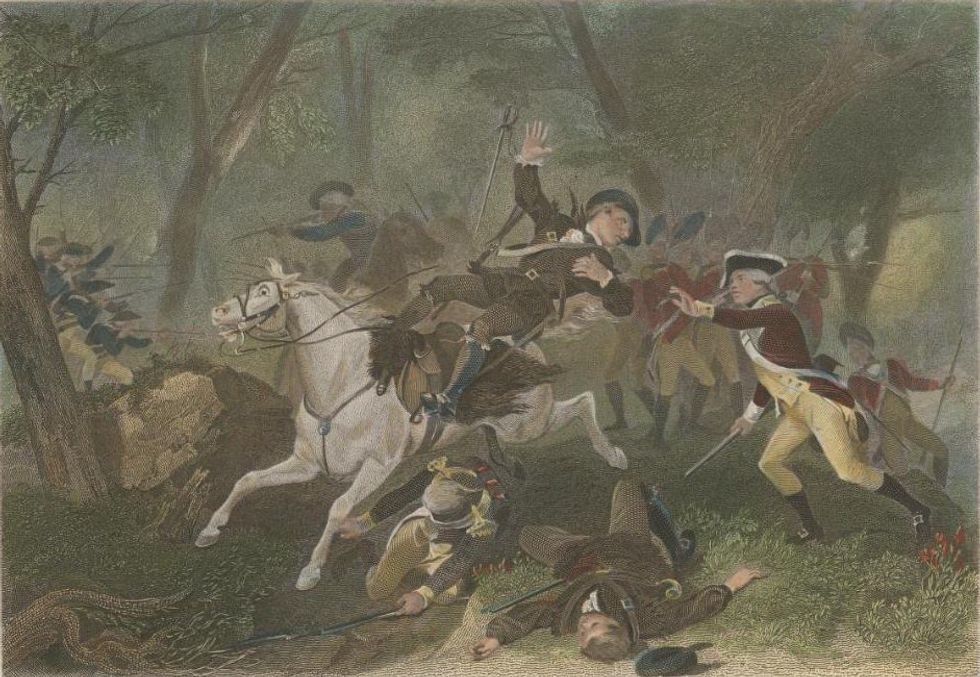
The conflict eventually resulted in Ferguson entrenching himself on King's Mountain and being utterly defeated by a joint force of men marching from what is now Abingdon and another group marching from Rocky Mount. The Overmountain Men formed a U-Shape around the mountain, effectively flanking Ferguson. Being experienced marksmen helped, but the men also carried superior longrifles. Eventually, Ferguson, who made the claim that only God could remove him from King's Mountain, died under the marksmen's fire. The remaining forces surrendered and Ferguson, true to his word, still lies on King's Mountain.