

Let me introduce you to college, different of types of students, and students who simply “learn in different ways.”
Here’s a little insight into my story. I have a slow processing/reading comprehension “learning difference” as well as difficulty with test-taking specifically. My mom knew something was up when in fourth grade she received my ERB test results and they were drastically lower than my fellow classmates. She then went to my teacher and was very confused. She said, “I don’t understand why Grace has good grades and does well in school, but the exams don’t match up with that.” My mom took action immediately and put me into testing to see if I could be diagnosed with any disability. I wasn’t formally diagnosed with a “disability,” therefore we didn’t believe I was able to get accommodations…little did we know, we were wrong.
I have been receiving accommodations for my learning difference since I was a senior in high school. Sure it was late, but it was such a relief. We turned in my testing documentation and I was given a 504 Plan, which is a federal civil rights law that prohibits discrimination against public school students with disabilities. Basically, it’s just documentation proving that I along with many other students, have accommodations to help me succeed academically.
In high school, I was given the accommodations of taking my tests in a separate room and with extended time. However, explaining this to my teachers was anything but easy. My teachers would single me out and make it a bigger deal than it needed to be. Often times they thought I was lying about my learning difference and my advisor would have to send them my 504 documentation to prove that I wasn’t. Unfortunately, many college professors haven’t made it any easier…In college, many of my professors understand with no questions asked, others don’t. My freshman year of college I experienced extreme resistance from some of my professors when I explained my testing accommodations. My CSD advisor had to email many of my professors explaining my learning difference and why exactly I needed to be taking my tests in a separate room with extended time. It is extremely frustrating when people don’t understand.
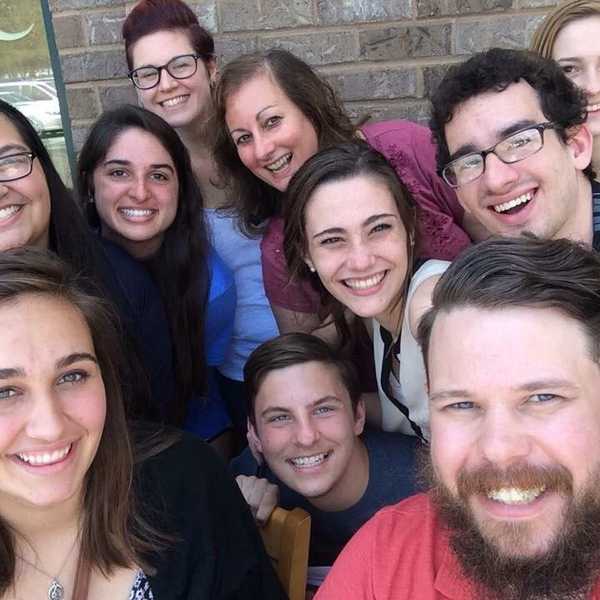
While attending a four-year university like DePaul, you are bound to be in a class with a student with a disability and probably not even know it, maybe even more than one. It always makes me feel better to know that I’m not alone and that there are people who deal with similar issues as myself. I interviewed Abby Kayman, who is also a CSD student in my sorority, Delta Gamma. She said something that really resonated with me:
“A disability doesn’t disable us; it makes us able in a different way.” –Abby Kayman, Class of 2019
Abby believes that disabled students are able in other ways. She believes that, “Putting students with disabilities in a college setting doesn’t just benefit the individuals with disabilities, it shows abled students and professors that people just learn and understand things differently. It’s not just students who need to be made aware, it’s professors too.” I couldn’t agree more. The more awareness students and professors gain on CSD students and learning accommodations in general, the less resistance us students with accommodations will have from everyone.
The bottom line is that regardless of what type of learning difference or disability a student has, they can and are still going to four-year universities just like any average student. The difference is, they’re just doing it their way. I think that is so empowering. After all, we are all moving through the world the best way we know how. Thanks for reading!