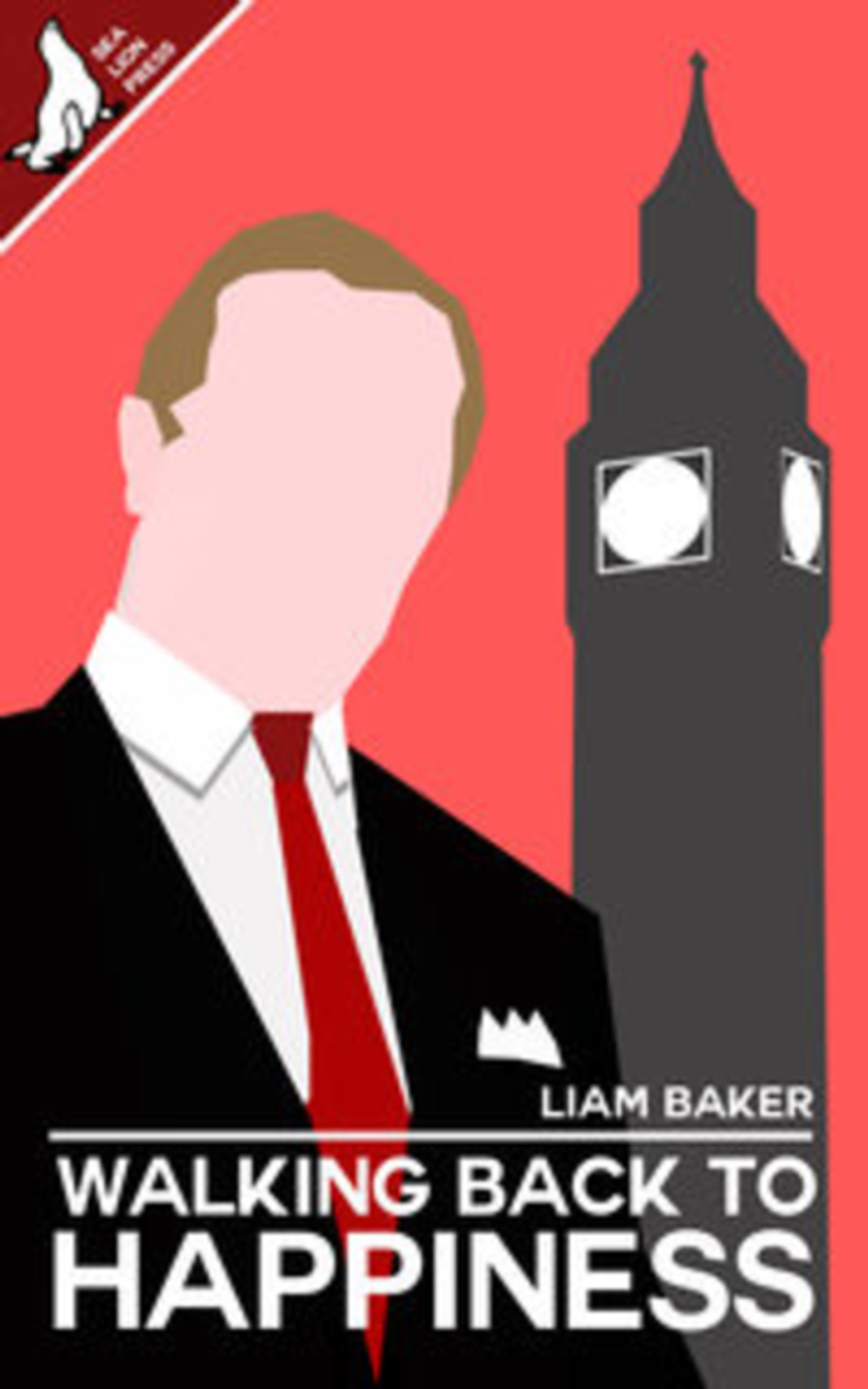
Liam Baker is the author of “Walking Back to Happiness,” a short story revolving around an alternate outcome to the 1960 Labour Leadership Election in the United Kingdom. The book can be purchased here.
Wallace: What made you start writing?
Baker: I don't think I can recall a time when I didn't want to write. I'd always had a sense of wanting to turn my imagination outward, to share what I had up in my head, and perhaps contribute something creative for both my enjoyment and the enjoyment of others.
Wallace: What made you interested in alternate history?
Robert Harris' “Fatherland.” I must have been ten or eleven when I first picked it up and saw the horror of a world unlike our own and yet not so far from us. The way in which the world was constructed and given so much life in the pages of that book left me in awe and, being the kind of person who'd grown up with history books as the "bread and butter" of my reading, I thought I might be able to imagine whole new historical timelines and events in much the same way.
Wallace: What gave you the idea for "Walking Back to Happiness?"
Baker: A book given to me as a Christmas present back in 2014. It was a biography of Barbara Castle and I absolutely loved it. I love it so much, I've even brought it to university with me. What immediately jumped out at me and gave me the impetus to go on and write "Walking Back To Happiness" was the section within the book that dealt with the 1960 Labour leadership contest and the circumstances of Harold Wilson's ascension to challenge the leadership of Hugh Gaitskell. For, as it says in the biography, the events were not exactly written in stone and it was seen as quite unlikely that Wilson might have been the left-wing candidate against Gaitskell. Instead, Anthony Greenwood - a far more sincere left-winger and loyal Bevanite (unlike Wilson) - was the first man to step forward. The idea that Wilson might never have intervened came to me at that moment, thus introducing me to the life of Anthony Greenwood and the possibilities of his leadership.
Wallace: What made you particularly interested in the 1960 Labour Leadership Contest?
Baker: There are two reasons I find it particularly interesting, I think. The first is that it decided who would become de facto leader the Labour left after Aneurin Bevan's death in 1960: it was the testing ground for the new "Bevan" of the 1960s, the person who could take power from the Gaitskellites and go on to form a radical Labour government. The second - and much more important - reason is because it had implications far beyond the Labour Party. Arguments about Britain's nuclear deterrent dominated the party conference that year and the future of Britain's defences under a Labour government cleaved the party in two, leading to an outright challenge from the unilateralist left: it was pivotal for not only Gaitskell and the right wing of the Labour Party, but also Labour's future electoral chances, the special relationship with the USA, and the course of the Cold War itself.
Wallace: Your book describes a world where Labour dominates British politics. Is this any sort of political statement?
Baker: If I'm guilty of anything, it's being a member of the Labour Party, and perhaps that does come through in my writing. But, I wouldn't say that I began writing my book with a Labour-dominated Britain in my mind. The statement I was really making (if I was making any at all) was that the 1960s was a time of lost opportunity for Harold Wilson's Labour government. From 1964 to 1970, the party let down its supporters on both left and right, leaving behind a legacy of division, disappointment and bitterness within the Labour Party. For a party that promised a new era of reform, echoing the days of Clement Attlee and the post-war Labour government, this was a depressing realisation. What I've tried to do is meet, where I can, the expectations of the left and describe a radical government that does fulfil its potential, for better or worse.
Wallace: What in particular was the appeal of Hugh Gaitskell?
Baker: Gaitskell was young, well-heeled, and a total departure from the "Old Labour" way. Whilst the comparison can often seem trite and lazy, there are few better examples that describe this sort of Labour leader than Tony Blair. Whilst not a perfect prototype for New Labour, Gaitskell understood the same tenets that Blair and his followers held to during the '90s and '00s: move Labour to the centre of British politics, stop trying to fight capitalism, and don't be afraid to be stylish and modern in order to appeal beyond the working class.
Wallace: Was there anything particularly notable about working with Sealion Press?
Baker: The great sense of friendship you get from working with Sealion Press was quite notable. What Tom Black and Jack Tindale, as the heads of Sealion Press, have done is create an atmosphere where work is sincerely valued and makes you feel more like a personal friend than just another writer among many.
Wallace: You're a member of a few years of alternatehistory.com. Has the community there influenced your writing in any way?
Baker: My writing has come along leaps and bounds because of alternatehistory.com. The community inspires confidence in good writing, makes constructive criticism when necessary, and always pushes for more and better content from its writers. Whilst the last point can seem daunting, there's no better inspiration than people demanding you write more because they can't get enough of what you do.
Wallace: What advice do you have for aspiring writers?
Baker: I'd just say this - the best writers doubt the quality of their work all the time, so never think that the smallest uncertainty is conclusive proof that you're a "bad writer".






 man running in forestPhoto by