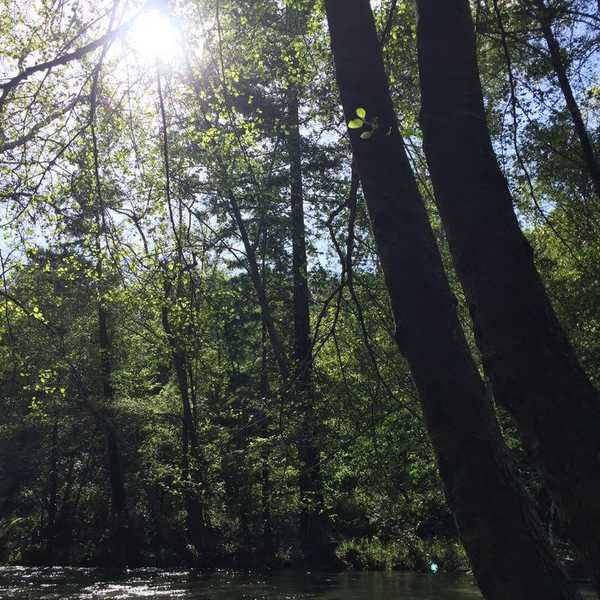
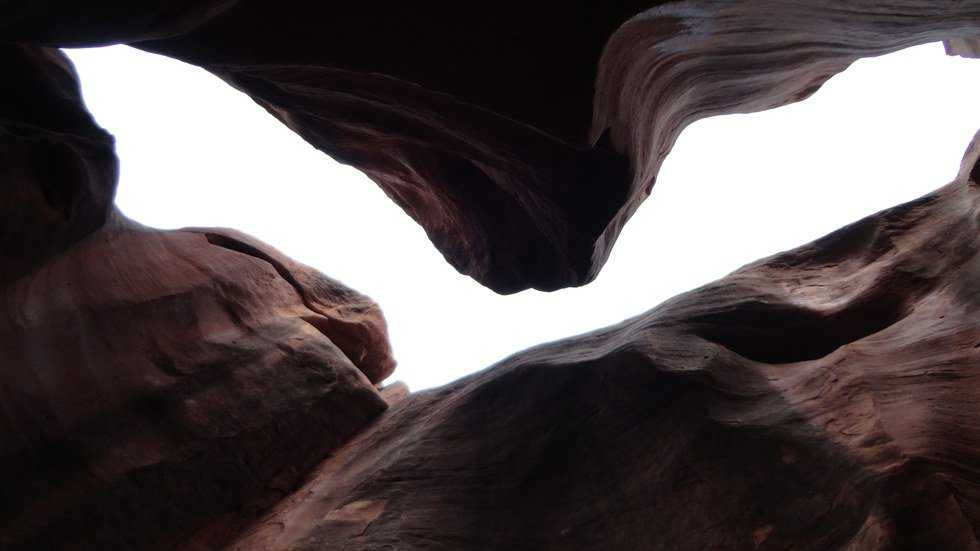
I was sixteen years old by the time I first experienced a completely raw and untouched wilderness. For two weeks, I found myself backpacking through the canyons in the southwestern corner of Utah, with a group of students who were equally as unaccustomed to such undeveloped land. And in these canyons, we witnessed Jacob’s Chair turn red under the rising and setting sun; we saw where the canyon walls were shaped by water and wind, and the tracks of lynx and jackrabbits that trekked the same ground, before us.
But it was not just the incredible beauty that we found in these canyons that struck me; it was the unrivaled freedom, the complete and utter escape from society, which came along with it. There was no access to the outside world, isolating us from world events, the chaos of our everyday lives, the expectations that are regularly set for us; leading us to feel as if we were no longer in the hands of broad societal confines, leading us to believe that we were truly free.
Looking back, I could not help but resent the fact that it had taken me sixteen years to experience not only the immense beauty of the untouched wilderness, but the freedom that came along with it. This resentment stemmed from my realization that our society’s vision of progress has always been that of development: a development of our world into a tamed, useable space; oftentimes resulting in the destruction of this natural world. Yet, I believe that it is unethical for humankind to continue in this taming of wilderness; for, the movement is not only diminishing the beauty and value of the natural world, but also destroying the notion of freedom, and the escape from societal pressures, that comes along with the existence of a purely undomesticated land.
There is no doubt that the wilderness yields incredible sights, that make up the most renowned paintings, photographs, and computer screensavers; yet, the wonder of this natural beauty is that it is not man-made; nor could it ever be manmade. Our modern world is trained to believe that we have the ability to create the “best of the best,” going hand-in-hand with the notion that we are able to create this “best” at the drop of a hat; for, what is man made can always be made again. And it is this modern concept of development; of never-ending production, that is steering us in the direction of destroying what little wilderness is left. Because wilderness can never be reproduced, once it is gone, there is no turning back. And the longer that this practice is allowed, less and less people are going to be given the privilege of experiencing the beauty of the untouched wilderness.
The same can be said for the literal value of untouched land; for, initially, the wilderness is ridden with copious natural resources such as coal, lumber, and oil. But as this land is further developed, and these natural resources are used in excessive amounts, the once great value of this land rapidly diminishes. With the increasing world population, and the corresponding increase in demand for energy and raw materials, the natural resources that the wilderness has to offer will no longer be in a stockpile, but rather, at risk of depleting completely. As we grapple to make use of these natural resources today, we are forgetting to look forward, and to think of the generations ahead of us who will have equal, if not greater, need for the same natural resources.
As Wallace Stegner, a world-renowned conservationist and author, explains, humankind is a naturally wild species, which has been shaped and developed by this raw, untouched nature. The constant pushback, the constant challenge, that this environment has handed to the human race is what has forced us to evolve into who we are today. In Edward Abbey’s words, “Something will have gone out of us as a people if we ever let the remaining wilderness be destroyed.” So much of what makes us human is completely dependent on our roots in the wilderness, and the farther we stray from that initial, natural state, and into the industrialized, developed world, the farther away we are moving from what makes us who we are.
Modern society has been developed and maintained nearly entirely by man -- yet, there is no question that this society is a somewhat tenuous system. Specifically, in the United States, Edward Abbey would argue that Democracy is truly a fragile institution that is at risk of falling apart at any given moment. Abbey predicts that, someday, “some of us may need what little wilderness remains as a place of refuge, as a hideout, as a base from which to carry on guerilla warfare against the totalitarianism of my nightmares.” To Abbey, the available wilderness holds refuge from society; yet, for others, it is far simpler. The availability of wilderness yields a certain level of sanity, an escape, of sorts, from our hectic lives that are so dictated by society: its simple existence yields an entire world of mental freedom.
And that is what should be emphasized: it's simple existence. Because, despite my resentment of the little amount of wilderness left, it is irrelevant whether or not we are all given the opportunity to spend weeks exploring undeveloped land, the real value lies in the notion of this beauty, the notion of these natural resources, the notion of this freedom: not that they should be used, but that they simply exist. The ethical choice is to preserve and conserve what wilderness is left, in order to maintain the sanity of today, and to prepare for what is to come, tomorrow.