
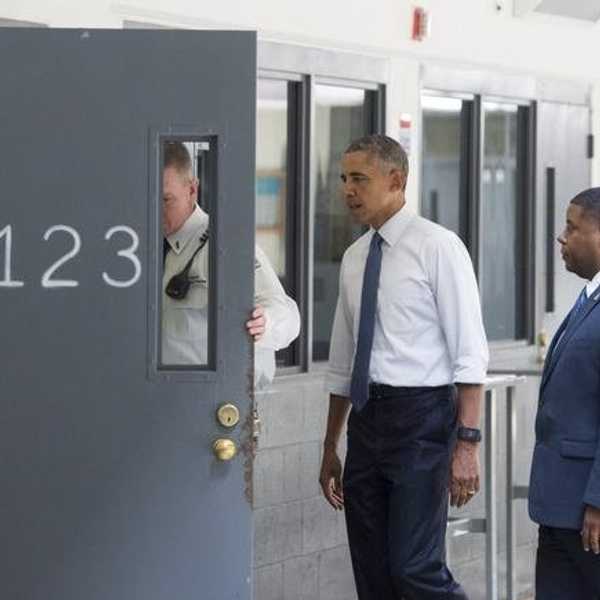

The penal system is a method of punishing those who have broken the laws in society by confining them for a relative period of time to maintain order in society. The United States does a great job in creating a system to punish criminals; unfortunately, this system does too well in incarceration that it forgets to follow the punishment with corrections, or integration back into society.
The United States holds around 2.2 million prisoners in confinement, in both federal or state prisons. As a result, it has the highest incarceration rate in the world, even higher than China, which has around 1.6 million prisoners.
If you want to get more specific, about half of the prisoners that are held in federal prisons were charged with drug offenses. That means 488,400 people were arrested for drug offenses in total in the past year. Compare this number from 2014 to that of 1980 --the year President Ronald Reagan got into office-- and you see that within 15 years, 447,500 more people are arrested for nonviolent drug offenses now than when the "War on Drugs" started.
Doing your time in prison is one thing, but trying to get readjusted into society is a completely different story, especially for those with a felony offense. In 48 states, a felony conviction can result in the loss of your voting rights, so over 5.85 million Americans today cannot give their voice in their community.
Many people who have paid their debt to society become homeless because they cannot get housing or even a job because of their criminal record. Some states have now started the "ban the box" momentum to remove the background check section on job applications, but many ex-criminals still can't get even the lowest-paying jobs. As a result, suicide rates among ex-criminals have spiked due to the lack of resources to make them contributing members of society in the US.
The problem is that this issue can be solved through some reforms in all levels of the prison system. This system needs to reduce its emphasis on punishment and shift it towards rehabilitation and readjustment to society. Since 56 percent of state prisoners have mental illnesses, it is no wonder why many of them resort to drugs or even suicide. Therapy and rehab sessions for many of them would fix that issue. The federal government should also reduce their strict enforcement against marijuana, since that is the majority of the drug offenses in the US. Many states, like Colorado, have legalized marijuana, and no major incidents have occurred as a result from its usage.

















