

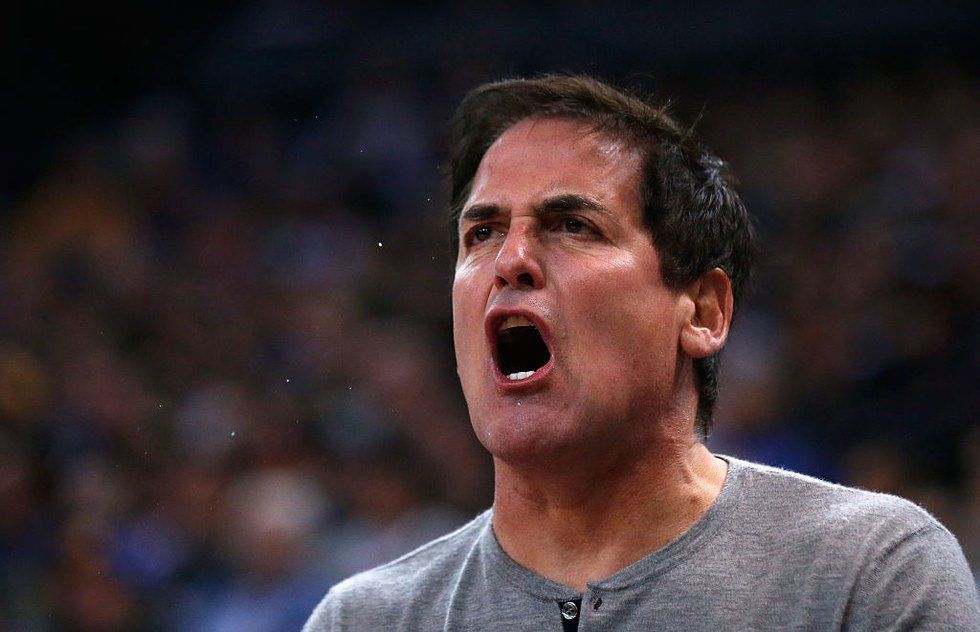
Over the past few months I have noticed some sobering realities in the Student Loan Market on which our system of higher education is built. Mark Cuban, billionaire investor, noticed the same trends – and believes that colleges will soon be going out of business.
According to Cuban, "It's inevitable at some point there will be a cap on student loan guarantees. And when that happens you're going to see a repeat of what we saw in the housing market: when easy credit for buying or flipping a house disappeared we saw a collapse in the price of housing, and we're going to see that same collapse in the price of student tuition, and that's going to lead to colleges going out of business."
The federal government wanted more Americans to own homes and go to college, so they began incentive programs to achieve both ends. In both cases, it worked. Through complex tax-exemption and subsidy programs, more Americans became homeowners and the number of college graduates sky rocketed. What the government did not predict was the 85% jump in housing prices between 1996 and 2006 and the 80% jump in tuition prices between 2003 and 2013. But as with any government incentive, the jump in housing prices eventually outgrew the demand and as a result, a bubble developed and the nation’s economy took a painful hit as the housing market corrected itself.
For more on the similarities between housing and student loan markets, click here.
Now, with 40% of Student Loan holders behind on payments or in default, the time to see a correction in the Student Loans Market is fast approaching.
In spite of the links between the two markets, mortgages and student loans are incredibly different animals for a few key reasons:
- The Housing Market was 10 times bigger in ‘08 than the Student Loan Market is today, so the fallout will not be global, but its effects will be felt for a long time in concentrated markets.
- You can’t repossess a College degree. There is no collateral so if a student defaults, the money must come from somewhere else.
- More than 90% of Student Loans are backed by the federal government, so it will cost the tax payers billions - banks will remain largely unharmed.
- Because there is no collateral to the loan, Student Loans are typically the last priority for those who are paying. Debtors will make their monthly mortgage and car payments before their student loans because their house and car can be taken away.
Unfortunately, the correction has already begun. A recent report by Moody’s – the bond credit rating corporation – projects that “The inability of small colleges to increase their revenue will result in triple the number of closures in the years to come.”
Whenever a Market hits a correction period, the first to fall are the smaller guys. In this case, it’s small, private liberal arts schools - defined by Moody’s as “any private school with operating revenues less $100 million.” In any market, smaller providers struggle to compete with larger providers in their scope, quality, and price of service. Likewise, smaller schools are more dependent on enrollment/tuition than their larger counterparts, so when enrollment decreases so does the quality and scope - though not the price - of their programs. This can cost a school its accreditation, which creates a decrease in demand for their services and drives an increase in tuition.
To compete, many of these smaller schools seek alternate forms of financing – commonly bank loans and large bonds backed by school assets - to finance their renovations, maintenance, and athletics programs with the hopes of increasing their enrollment. Eventually, these bonds will come due and schools that are unable to pay up and will be forced to close their doors.
As Mark Cuban predicts, the federal government will inevitably put a cap on student loan guarantees. When it does, the world of higher education will change drastically. Now the kind of schools that will close, it’s time to look at what will become of the survivors.

















