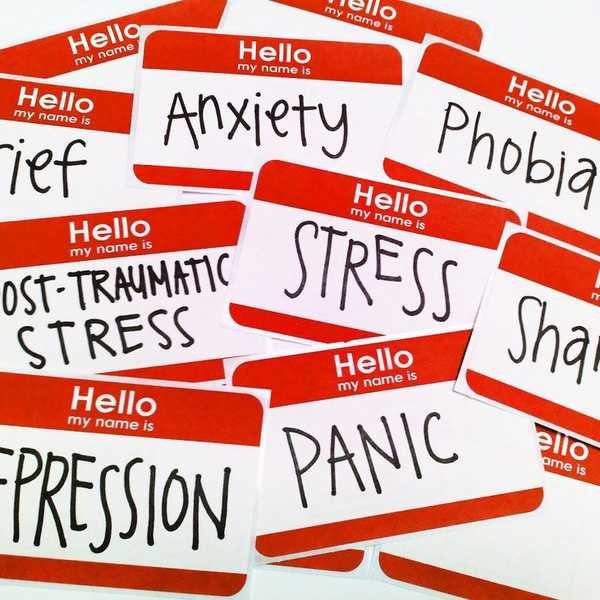


Every time there’s a mass shooting in America (so, monthly), two things happen: two issues are raised. Gun violence is the first one, and rightfully so. It’s a sexy topic for media outlets and all the people who somehow earn a Ph.D. in political science overnight. Nothing gets done about it and nothing will. We’re too far-gone. But I'm not here to talk about guns.
I’m here to talk about the second thing. That second issue getting raised every time this nation sees an act of mass violence. The issue of mental illness awareness.
Every time we’re torn down the middle on gun control, we all seem to agree on one thing and one thing only. There’s a severe lack of understanding on mental illness, not just nationally, but internationally. The conversation flares up for a few days then goes away like a bad STD. And as someone who’s struggled with severe mental illness for years, I know exactly why. It’s because no one in America wants to understand mental illness. I can’t blame them.
My story with mental illness:
For credibility, I can’t go on without telling you about my experience with mental illness so buckle down for a second and bear with me. In the summer of 2012 I was coming off an extremely successful first year at Texas Tech as a music major. I was in most of the top ensembles and set up to be in a leadership position with the Texas Tech Drumline. I had a wonderful girlfriend at the time and a whole army of friends who would have killed for me, as I would have for them. I had every reason to be the happiest dude in the world.
I was living in The University Fountains at the time in a tiny one-bedroom studio. There was this week that I didn’t leave the place. Getting out of bed was all of a sudden next to impossible. I remember my friends, girlfriend and family blowing up my phone with worrisome texts and voicemails, as I would never respond. I wasn’t eating; I wasn’t drinking (anything). Before I knew it, my mind told me that death was the better option. My mind told me that nothing in life was worth living for. So I tried to off myself. "Tried" being the operative word.
I had given one of my sidepieces a key to the place a few weeks before, and she burst in the joint after my friends ordered her to. She found me in my bed 15 pounds lighter, dehydrated and high; pills all over my apartment. She took me to the hospital where I spent the next couple of days not dying, mad at the world. Mad I was still here.
I went home to my family who told me the only way they’d support me ever again is if I got help. I was diagnosed with severe chronic depression, severe anxiety and neuroticism. They put me on all sorts of pills, and 30 days later I could finally lift myself out of this mental gutter. I still take twice-the-average dosage of Lexapro to this day. And while I was able to wean off other pills like Clonazepam, Xanax, etc., some of those dark thoughts never went away. I lost myself. I lost who I was.
Now, almost four years later, I’m trying to find out who I am. I still consider myself slightly unhinged. There are things that go on in my mind that I simply cannot talk about with my close friends or my family. Why? Because they have their own problems and burdening them with the weight of my problems would be selfish and wrong. Most people (or at least the people I’ve met) with mental illness feel this way.
Why we’re not ready for a mental illness movement:
Every time I see people broaching the subject of mental illness awareness I think to myself, “if only you knew.” If only you knew how dark, disturbing and screwed up that road is. If only you knew half of the things that race through my mind on a daily basis. If you knew any of this, you’d change your stance so fast it’d make your own head spin.
This is a long, dark and twisted road. People talk about mental illness like conquering it is something that can be done within a day, month or year. People talk about spotting those with mental illness and befriending them but guess what? No one with a mental illness wants you to know they have a mental illness!
You want to know what most of us do to manage? We pretend. We pretend that we’re fine. We put on a fake smile and bury our problems and emotions deep because we know that this nation has more than enough on its plate. Getting to the bottom of what happens in our screwes up minds would take years; possibly decades. We don’t want the spotlight. We don’t want the attention. We don’t want you feeling sorry for us.
We need to pump the brakes here. We need to focus on problems that we can actually solve because this isn’t one of them. Not now. Not yet.
“But Joey, I feel like I really need to help. What can I do?”
Let us handle us. Let the doctors, psychiatrists and counselors handle us. If you know someone with a mental illness, do not try to help him or her by yourself. It won’t work. Direct them to a professional. Direct them towards someone who can get them the professional help they so desperately need. Force them, somehow, to get real, certified professional help.
I’m not saying “don’t help people with mental illness.” I’m saying that we as a nation are not ready to take this on. This is an undertaking so massive, it’ll be years before we make a dent sizable enough to see a difference.
Writer's Note:
If you need help but don't know where to begin, start here at mentalheal.gov. There are plenty of resources that may help you find your way towards getting professional help.
If you're a Texas Tech student, visit the student counseling center or call them at 806-742-3674. You can either walk in and find a counselor without an appointment, or you can make an appointment to use their outstanding MindSpa equipped with all sorts of tools.