
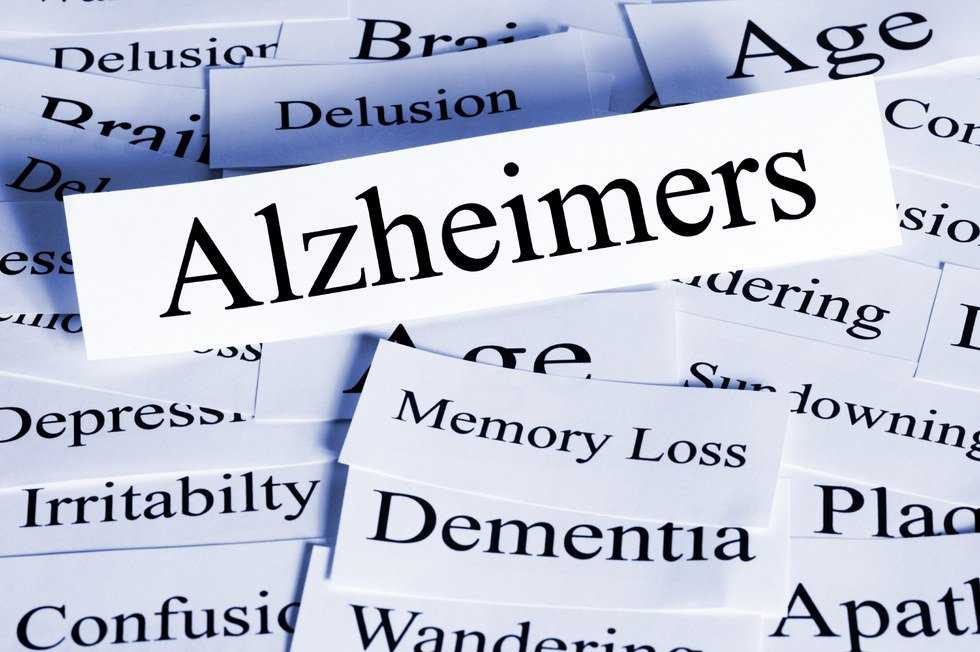
Alzheimer's is a type of dementia that causes problems with memory, thinking and behavior. Dementia is not a specific disease. It's an overall term that describes a wide range of symptoms associated with a decline in memory or other thinking skills severe enough to reduce a person's ability to perform everyday activities. Symptoms usually develop slowly and get worse over time, becoming severe enough to interfere with daily tasks.Did you know that almost two thirds of Americans with Alzheimer’s disease are women? Did you also know that Alzheimer's is the only disease among the top 10 causes of death in America that cannot be prevented, cured or even slowed? The purpose of this article is to generate awareness and support for Alzheimer's research.
The most common early symptom of Alzheimer's is difficulty remembering newly learned information. As Alzheimer's progresses through the brain, it leads to progressively severe symptoms such as disorientation, mood and behavior changes, deepening confusion about events, time and place and difficulty speaking, swallowing and/ or walking. People with memory loss or other possible signs of Alzheimer’s may find it hard to recognize that they have a problem. Alzheimer's is at the forefront of biomedical research and 90 percent of what is known about Alzheimer's, has been discovered in the last 15 years. One in three seniors dies with Alzheimer’s or another dementia. If you or someone you know is experiencing dementia-like symptoms, go see a physician as soon as possible.
Scientists have identified factors that increase the risk of Alzheimer’s: age, family history and heredity. Most individuals with the disease are age 65 or older. Developing Alzheimer’s doubles about every five years after age 65. One of the greatest mysteries of Alzheimer's disease is, why does the risk rise dramatically as we grow older? If more than one family member has the illness, the risk increases. The two types of genes that play a role in affecting whether a person develops a disease are—risk genes and deterministic genes. Risk genes increase the likelihood of developing a disease, but do not guarantee it will happen. Deterministic genes directly cause a disease, guaranteeing that anyone who inherits them will develop the disorder.
Alzheimer's disease advances slowly in three stages — mild (early-stage), moderate (middle-stage), and severe (late-stage). The disease affects people in different ways, with each person experiencing different symptoms - or progress through the Alzheimer's stages. Changes in the brain related to Alzheimer's will begin years before any of the signs of the disease become visible. This time period which can last for years, is referred to as preclinical Alzheimer's disease. Because of the early onset of the disease, it is vital that research be done continuously to combat such an aggressive attack on the brain. The Alzheimer's Association is committed to accelerating the global effort to eliminate Alzheimer's disease. They are the largest nonprofit funder of Alzheimer's research, known for awarding over $335 million to more than 2,250 projects related to the disease. They believe in the value of collaboration and are willing to project a time when there will be disease-modifying treatments, preventive strategies and gold-standard care for all people affected by Alzheimer's disease- Currently partnered with colleagues in government, academia, industry and other nonprofit organizations.
If you need information about early-stage caregiving, middle-stage caregiving or late-stage caregiving, the Alzheimer's Association is there to help. The help you or your love one need is out there and it is available- through your local chapter, message boards, support groups or care training. Join or start a team today and walk to end Alzheimer’s disease.