
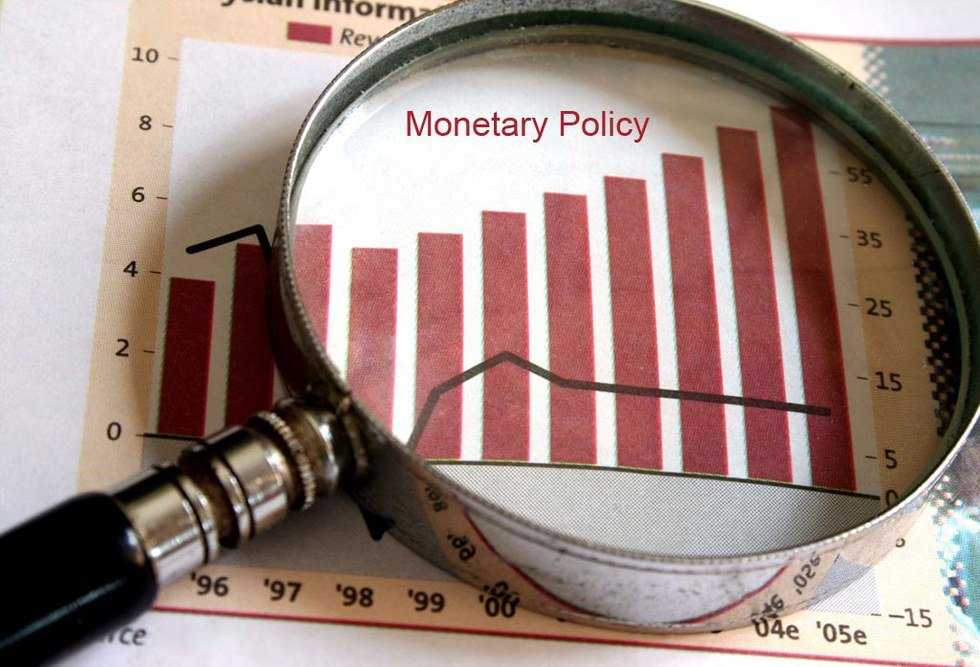
The U.S. central bank currently practices two main types of monetary policy, and recently a third type (prior to the 2007-2008 financial crisis). The two historically applied types are contractionary and expansionary. Contractionary refers to the federal reserve’s attempts to minimize the money supply that is in circulation by selling government treasury securities to large commercial banks. The act of a bank purchasing x amount of securities from the treasury means that monetary reserves are leaving the bank. And vice versa, when the treasury wants to expand the money supply within the economy, they will buy up a certain amount of short term government debt securities from within the commercial financial sector. The goal with expansionary policy is to lower interest rates within the financial sector, and as a result stimulate consumption within the greater economy through borrowing. However, this initiative can be exhausted, where the interest rate becomes so low it is no longer attractive to the lender, thus the Federal Reserve will apply a new policy attempt. This has been referred to as quantitative easing which was used in aiding the housing crisis. Where the federal reserve purchases not only debt securities from banks but also equity securities, and other toxic assets as well (i.e. mortgage backed securities). These are additional attempts to stimulate economic variables such as employment, consumption etc… this is a very new means of applying expansionary monetary policy.
One of the main goals for the Federal Reserve is to maintain a certain real GDP rate (a rate of economic growth where inflation is accounted for) through instruments such as monetary policy. However, there has been some interesting research suggesting that after the housing crisis the feds did not give adequate consideration to the natural market rate (the actual rate at which borrowers and lenders would interact with one another) when utilizing real GDP targeting attempts. As a result, the recession turned out to be a lot worse than perhaps it otherwise would have been, had the Feds used an alternative measure referred to as nominal interest rate targeting (targeting an interest rate that includes the inflation rate). The intriguing aspect of this type of interest rate targeting is that this is effectively tracked through the creation of a futures (derivative financial security where the future value is speculated upon today) security that tracks the market equilibrium nominal gdp rate. In effect, the fed is considering the market opinion regarding nominal GDP through the tailoring of its monetary policies to match that of the futures market determined nominal GDP. Results from this process would include the avoidance of future arguments in justifying government bailouts and stimulus spending in the aftermath of financial crises. Also this type of GDP targeting would allow for a greater level of information accuracy within fed policy initiatives.