
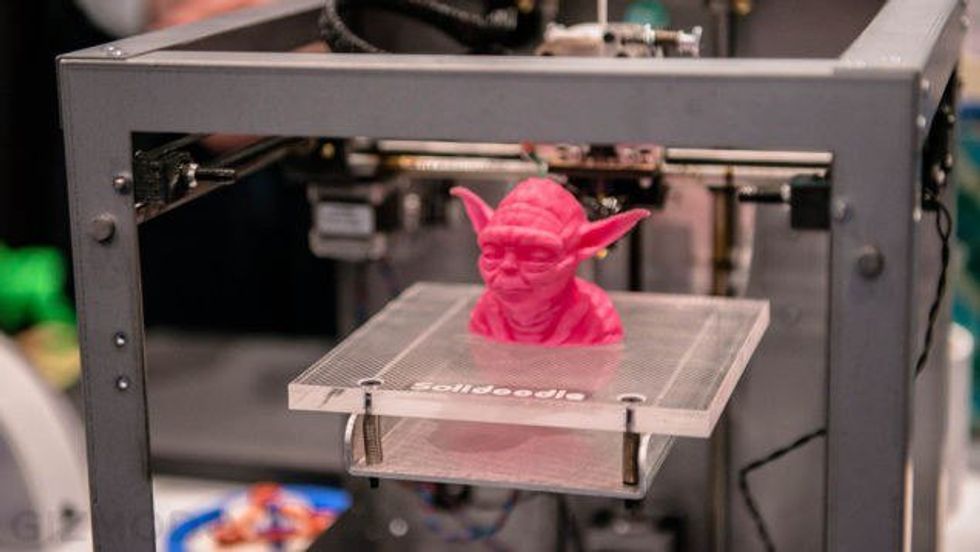
It was late at night when Chuck Hull discovered every engineer's dream and a Pandora's Box of possibilities. He was working on tabletop coatings, developing strong barriers between your tabletop and the abrasive, corrosive, world, by using ultraviolet light. His company had given him a lab for a few months, after he had come up with the idea of turning computer models into working photopolymeric prototypes. He had been experimenting for months, when one night, he hit one of his photopolymers with one of his UV lights. And the photopolymer turned solid. See, a photopolymer is an acrylic based liquid that turns to solid when exposed to higher frequency light, such as ultraviolet. He filled one of his molds with the photopolymers, shone some UV light and it turned into a working part! The first person he showed this to was, of course, his wife, who he recalls wasn't too happy about waking up in the middle of the night to see an exciting 3D printed tabletop anti-corrosive applicator.
3D printing is more than just making plastic prototypes nowadays; although these are becoming so common you can now buy Makerbots at Staples. The limitless possibilities of 3D printing have brought with it limitless applications to such a wide variety of fields. Chuck Hull didn't even realize the implications of his discovery until the recent blossoming of the 3D printing industry. His wife is probably glad now she got up to witness history and is able to witness the revolution that is 3D printing.
1. Organs

When you think of a 3D printer, you probably imagine a physical printer-looking object that draws on spools of plastic to make things. This is not the necessarily the case. In perhaps the most atypical of 3D printing, functioning organs are made from a patient's own cells in order to reduce organ rejection rate and may make organ transplantation obsolete. At Wake Forest Regenerative Medicine, Dr. Anthony Atala 3D prints a scaffold in the shape of an organ and then coats the scaffold with living cells. The cells then divide and grow around the scaffold, and form a tissue. So far, hollow organs like the bladder, blood vessels, kidney ureters, and skin have all been successfully scaffolded and transplanted. Dr. Atala is also working on printing the cells on the scaffold at the same time in order to print more solid organs like kidneys, which account for over 90 percent of patients on the transplant list. In his TED Talk, Dr. Atala discusses that while the development of solid organs will require more research and development, 3D printing is the brightest light to kidney patients in a long time.
2. Guns
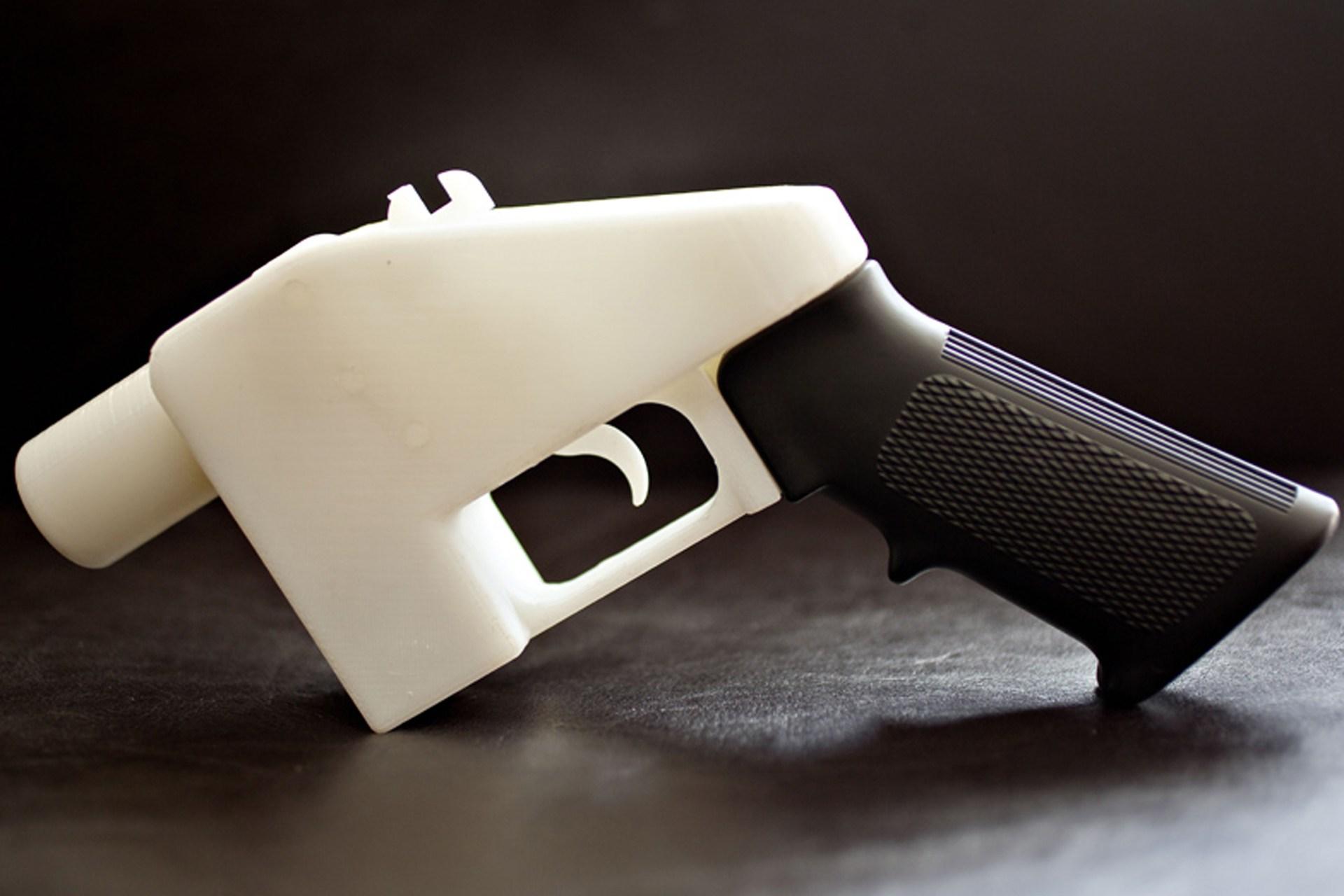
It's pretty scary that anyone can just plug in a machine and print out a firearm, but it is a reality. It's such a serious threat that the U.S. State Department is trying to figure out how to ban them. It's a tricky situation. While it seems logical to want to ban printed guns that can pass through metal detectors and kill people, on the other hand, there's this little known document called the Bill of Rights, which states that United States citizens have the right to bear arms and manufacture them as long as they're not selling them. Gunsmithing was typically an artisan's (or machine's) job since it takes a pretty high skill level to be able to weld metal and work wood, but with the advent of 3D printing, it seems almost anyone could make and use a working gun.
3. Drugs
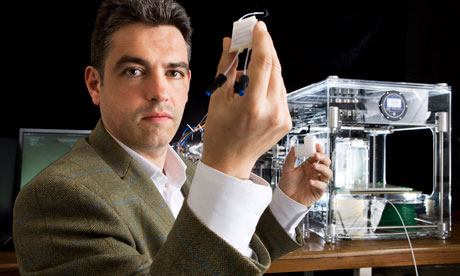
The idea of downloadable chemistry to your own chemical printer can be credited to Professor Lee Cronin, who coined the printing of one's own pharmaceuticals as a "chemputer." By having a printer with specific chemicals and reagents as the "ink," the printer could perform a series of reactions in order to build one's own pharmaceuticals or molecules in a lab. While the formation of such a printer is still in its very earliest stages, so far the rudimentary printers in Cronin's lab are working and created ibuprofen and some other basic molecules. The implications of such a system are huge: global access to drugs, eventual shut-down of the current US pharmacy system, and of course, the inevitable illegal printing of illicit substances.
4. Car Parts
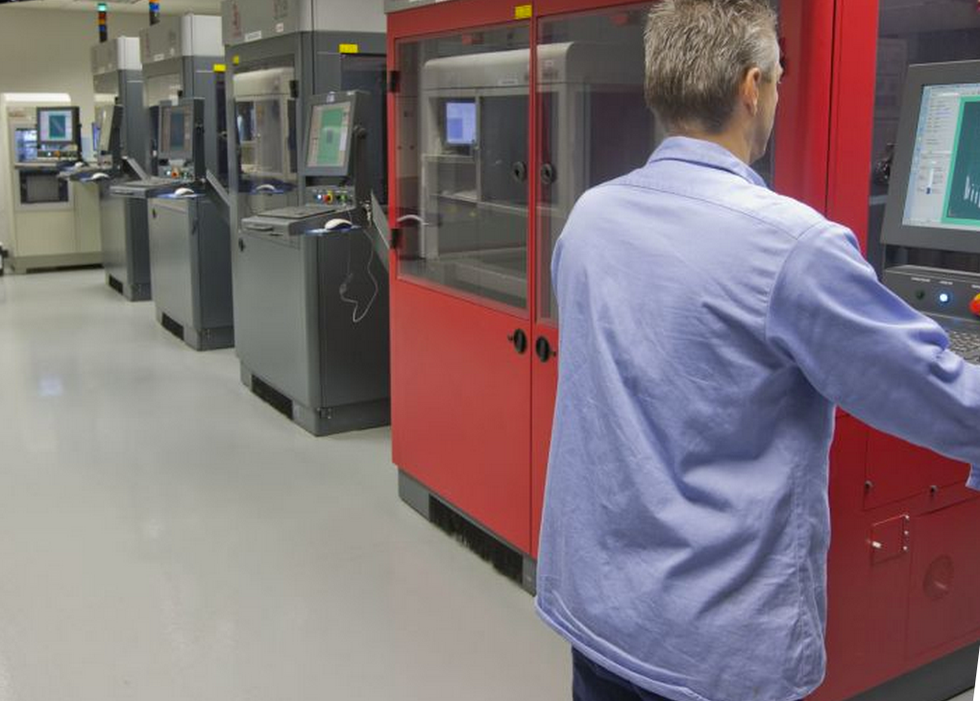
In an effort to reduce the manual labor of building automobiles, General Motors has employed the the use of 3D printing in its prototypes of the Chevrolet Malibu. Using the same idea of stereolithography (the hardening of polymers with light) as Hull, the smartphone holders, front seat back panels, and even the front fascia used to streamline the vehicle, were all 3D printed for the Malibu prototype. 3D printing is lighter weight for better fuel economy of the vehicle and cheaper to manufacture.
5. Aerospace Parts

A recent NASA rocket engine was 3D printed and withstood a major hot fire test, withstanding 10 times the thrust of any 3D printed engine in the past. Using a 3D printer that could manufacture parts with copper alloys, the rocket engine underwent 19 rigorous hot-fire tests in order to be deemed usable. The fact that the rocket engine passed the test is a milestone for NASA. 3D printing would allow aerospace engineering to be more efficient and cost-effective for the future.
6. Prosthetics

Buttercup the duck was born with a backwards left foot in a high school biology lab in Texas. Realizing that she couldn't survive in the wild like that, Mike Garey had her foot amputated and a 3D printed foot and sock put on. The foot and sock were printed out of silicon in order to enable the flexibility required to be able to swim. Today, Buttercup the duck performs all the other duck-like movements of Garey's flock. Check out Buttercup with her new prosthetic. Of course, not only can duck prosthetics be printed, but human ones as well. By delivering cheaper to manufacture prosthetics, more people would be able to access them and live the life they want to.
7. Actually Useful (or not) Housewares
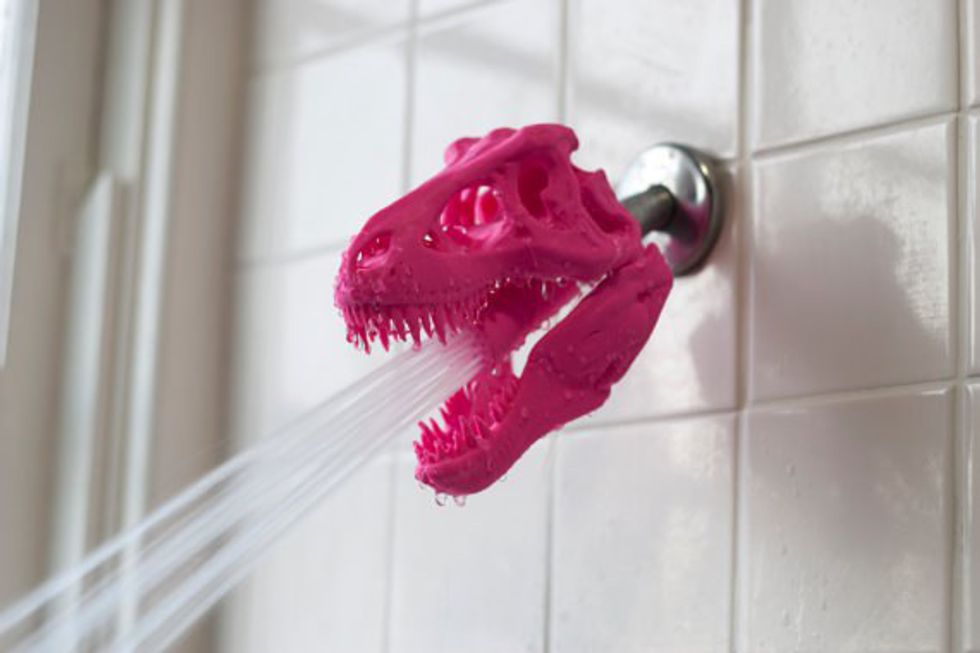
Okay, you probably did know you could 3D print any little trinket your heart desired, but these ideas are probably beyond what you imagined. Who knew you could print a citrus juicer, a toothpaste squeezer, a bottle opener, or even a T-Rex shaped shower head? A polymer 3D printer could prove to be very useful to the average American throughout their entire home.
8. Senses
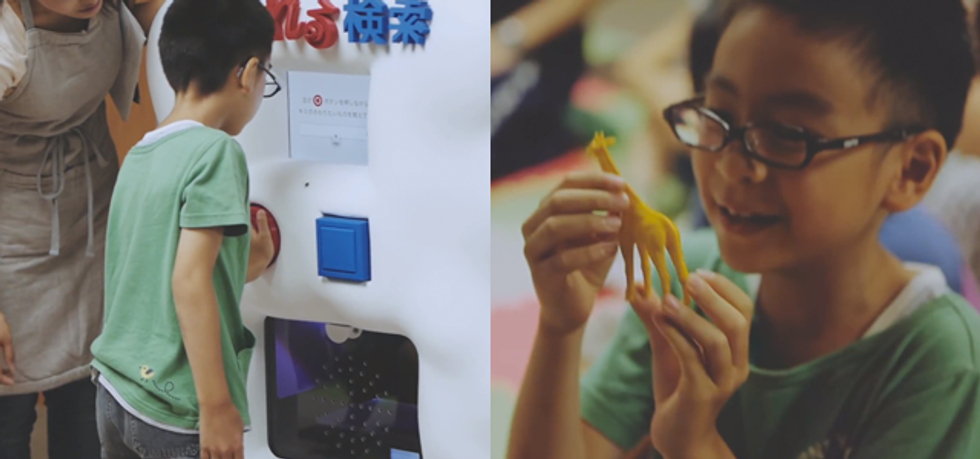
By combining voice recognition technology with a 3D printer, Yahoo! is making feeling possible for a school of the visionally impaired in Japan. The Hands On Search turns voice queries into physical objects. There's not much else to see except that the wonderment and joy of the children feeling a giraffe or a tree for the first time is truly a heartwarming, if surprising, use of 3D printing.